Allergen Control For Caterers
Around 2 million people in the UK currently suffer with a food allergy, and this number is increasing by five percent each year. New food allergen regulations are in force and non-compliance could lead to expensive fines. This means there’s no better time to refresh your training.
Reportedly, some managers and even restaurant owners are not aware of the laws at all. Does your business already have an allergen safety checklist? What allergies does tofu contain? Which allergen is likely to be present in paella? Read on to find out more about allergens, legislation and how to prepare your business.
What Are Allergen Foods?
Allergen foods are usually harmless but cause an immediate allergic reaction to a susceptible person. Ingesting allergens is not the only way to cause serious reactions, as the smallest particles can also react with the skin or get into eyes. In the most serious cases, a severe allergic reaction is known as anaphylaxis and can be life threatening.
By law, businesses including restaurants and takeaways are required to tell customers if their food contains any ingredients known to trigger allergies. So what are the allergen requirements of your customers and how can you be sure your food is allergen-free?
Which Foods Are Gluten-Free?

Foods that are naturally gluten-free include rice, corn, soy, potato and beans. Food groups such as fruit and vegetables, meat and poultry, fish, dairy and legumes are also gluten-free.
Roughly 1% of the UK population are intolerant to gluten, a condition known as coeliac disease. Gluten is present in malt, wheat, barley and rye which means that their derivatives like durum, spelt and semolina will too. Foods that are most likely to contain gluten include pasta, noodles, cereals, breads, pastries and anything that contains wheat flour as an ingredient.
Ingredients such as wheat grass and barley grass are actually gluten-free, but must be harvested and processed carefully to remove the seeds because these do contain gluten.
Tip: Wheat-free does not necessarily mean gluten-free. This highlights the importance of food labelling and knowing what information you need to display to customers.
Allergy vs. Intolerance
A food allergy means that a person’s immune system detects a particular food as harmful and activates the body’s defence system. Symptoms can vary from itching and discomfort to breathing difficulties, swelling and shock.
Food intolerance does not usually involve the immune system and the symptoms take longer to develop. Intolerance can also affect long-term health and has been linked to IBS.
Food sensitivity is a bad reaction to food that is otherwise perfectly safe to eat.
What is cross-reactivity?
Cross-reactivity can occur when a protein is similar to an allergenic protein. People who have a latex allergy, for example can be associated with a number of food allergies including banana, avocado, chestnut, apple, carrot, celery, papaya kiwi, potato, tomato and melons.
Allergen Food Labelling and Display
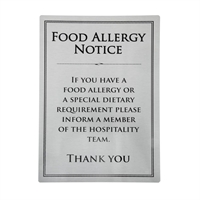
Food labelling laws mean that catering businesses must provide information to customers about any of the 14 food allergen groups (see the bottom of the page) used in food that they make or sell. This applies to restaurants, cafes, delicatessens, butchers and bakers as well as any other forms of catering. It also applies to any food given free of charge such as samples or complimentary bar snacks. Food allergens must be displayed on the menu, or it must be clearly signposted where the allergen info can be retrieved.
This could be in the form of a table notice or mounted sign. This information can also be provided verbally if there is a document to support it either written or digital form. In a buffet, allergen information should be provided for each food item separately. Vehicles and mobile stalls must also follow the same rules and legislation on allergen labelling.
Ready-to-use food labelling is simple and clear, easy for staff to implement and a safe way to reduce the risk of contaminated food.
How Can You Ensure You Have The Correct Allergen Information on the Packaging of a Product?
Foods which are prepacked for direct sale do not generally have to be labelled with ingredients by law. These foods are defined as those which have been packed on the same premises as they are being sold. This is on the basis that the customer should have an opportunity to speak to the person who made or packaged the food to ask about the ingredients. Examples of these foods include pies and and sandwiches made and sold pre-packed or not pre-packed from the premises in which they were made. As mentioned above, signs and notices can act as a reminder to encourage customers to seek advice before they eat.
But the responsibility doesn’t just lie with you and your business.
Your customers also have a duty to:
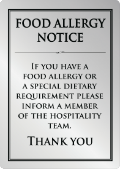
- Inform you about their allergy and the severity
- Check first with waiting staff about each menu item ordered for allergens
- To be aware of any dishes or types of food that are likely to contain allergens
- To be aware of any information and risks regarding possible cross contamination
Guide: For more information on how to store food safely and keep it for longer, read our full length guide to Food Storage for Restaurants.
Preparing Allergen Foods
Front of House

Sooner or later, a customer will want to know specific information about your menu. It is best practice to nominate a member of staff who is responsible for providing information on allergens and food safety. However all staff should receive training on allergen awareness, ensuring that a member of staff is always available during working hours to answer any queries.
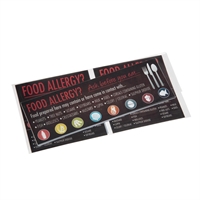
Using food allergen wall and window stickers will create awareness and help keep customers safe by warning of potential allergens on the menu. All businesses from pubs and cafes to hotels and restaurants can apply these easily, with a polite reminder to 'ask before you eat'.
Cleaning
Even trace amounts of allergens, especially nuts, can cause severe allergic reactions for some people. Cleaning thoroughly is the best way to reduce these risks. Although some recommended cleaning procedures are ideal for hygienic purposes, they may not necessarily be suitable for removing allergens.
Devising your own routine will help you fit around the size and specifics of your business. Machines and appliances need particular attention if they expose areas for dust from allergens to settle. Visit our ultimate kitchen cleaning guide for a complete walkthrough and to use as a template for your cleaning rota.
Shop Cleaning Equipment NowColour Coded Kitchenware and Utensils

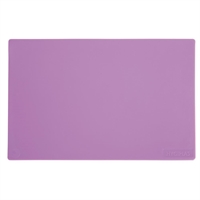
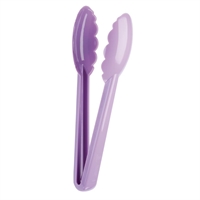
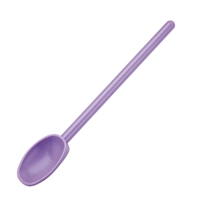
Separating your chopping boards, knives and utensils for use with each food group is the safest way to avoid contamination of allergens. Colour coded utensils are becoming more frequent in commercial kitchens, but purple colour coded utensils and equipment are specifically designed for the preparation of allergen-free food and are therefore ideal for implementing an allergen colour coded system.
Shop Allergen Colour Coded Utensils NowArticle: For more information about food hygiene and safety, read our ultimate food safety guide.


Checklist
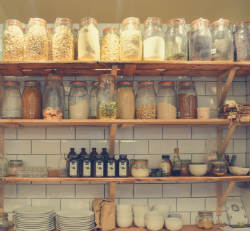
- A storage system must be in place to prevent cross-contamination of ingredients such as milk powder, soya and nuts.
- When transferring ingredients from packaging into storage containers, allergen information as well as date and batch codes must be recorded.
- Separate storage containers and colour coding for allergenic ingredients are recommended practice for preparing and managing ‘free-from’ foods.
- Your delivery checklist should include guidance for staff to check for allergen ingredients, including any replacements.
- Ensure all food and ingredients are labelled in English. Your supplier should also provide any information in English, ensuring that you can show customers what any menu items contain.
- You may be asked what steps you have taken to prepare safe food, for example written records. How frequently are the records made, and who checks that the information is being recorded accurately.
- Any staff training should be recorded and kept on file. Refresher training can also be given on a regular basis.
- Display notices to remind staff of the risks and importance of storing ingredients separately.
- Make sure there is a person that can answer any questions on allergens if the designated member of staff is absent.
Allergen Food Categories
Allergen foods are classified into 14 groups. You’ll need to show this clearly to customers if any of these are included in your menu:
Celery
This includes stalks, leaves, seeds and even stock cubes. The root of celeriac, some meat products and soups are also included.
Likely contained in: Vegetable juices and stock, curry, soup and spice mixture.
Gluten
Gluten is present in wheat, oats, rye and barley. Naturally these can be found in foods containing flour such as pasta, pastry, sauces, cakes and bread. This may also include batter, breadcrumbs, baking powder and of course any foods that have been battered or dusted with flour.
Likely contained in: Bread, chocolate, cereals, pasta, baked goods.
Crustaceans
Any crab, lobster, prawns and scampi could pose a risk to allergy sufferers, and any paste or puree made of these which are common ingredients in many foods.
Likely contained in: Paella, fish paste, fried rice, num pla (Thai fish sauce).
Eggs
Even in powdered form, egg is widely used in many products including mayonnaise, quiche, sauces, custard, waffles, pasta and some beverages such as hot chocolate. Egg whites are also sometimes used in the production of wine.
Likely contained in: Meringues, mayonnaise, marzipan, marshmallow, tartare sauce, hollandaise.
Fish
Surprisingly, fish can be found in Worcester sauce as well as bisques, soups and pasta sauces. It will be present in stock cubes, relishes and dressings. Blue chopping boards are suitable for preparing raw fish.
Likely contained in: Barbeque sauce, dips, gelatine, relishes, num pla (Thai fish sauce), salad dressing and flavourings.
Lupin
Lupin is a flower, and often used as flour, seeds or beans. Both four and seeds are used in bread, pastries and pasta.
Likely contained in: Baked goods, pastries, waffles, pancakes, pasta, vegetarian meat substitutes.
Milk
A main component of butter, cheese, cream and yoghurt, milk can also be found in glazes, sauces and various powders used in the kitchen.
Likely contained in: Yoghurt, ghee, chocolate, custard, cheese, and margarine.
Molluscs
Shellfish, snails and squid are part of the mollusc family. Oyster sauce, fish stews and broths often contain whelks and mussels too.
Likely contained in: Soups, sauces, chowders, and ethnic foods.
Mustard
Prepared mustard, as well as seeds and powder can be found in many foods from salad dressings and marinades to sauces, soups and curries. Some bread and meat product also contain mustard.
Likely contained in: Sausages, processed meat, marinades, sauces, chutney, piccalilli, salad dressings, Indian food.
Nuts
This group includes nuts which grow on trees, such as cashews and almonds. These can be found in biscuits, crackers and bread but also ice cream, marzipan, nut oil, powder and sauces.
Likely contained in: Chocolate, salad dressing, pesto, cereals, crackers, BBQ sauce, baked goods.
Peanuts
This group is classified by the way the nuts are grown, peanuts come from small pods in the ground. These are commonly found in biscuits, cakes, and curries as well as oil and flour.
Likely contained in: Chilli, marinades, dressings, marinades, sauces including satay, enchilada and gravy.
Sesame
These seeds are a common ingredient in bread, breadsticks, buns, and deserts. Sesame oil is also widely used in many types of cooking.
Likely contained in: Bread, crackers, dips, dressings, hummus, chutney, marinades and tahini (sesame paste).
Soya
Soya is present in miso paste, bean curd, tofu and is a staple of many asian foods. It is also commonly found in ice cream, desserts, meat products and sauces.
Likely contained in: Teryaki sauce, tamari sauce, miso, bean sprouts, surimi, and canned tuna.
Sulphur Dioxide
Sulphur dioxide, and sulphites (SO2) are found in many dried fruits like raisins, dried apricots and prunes. However, they are also used in meat products, soft drinks, wine and beer. These can also be expressed as E220.
Likely contained in: Cooking wine, juices, tomato puree, colourants. Also canned, frozen and dried fruit can contain sulphur dioxide and sulphites.
Tip: Are you using wooden boards in your restaurant? Read our full-length guide on how to keep your wooden boards food safe.