
Restaurant accounting: A beginner's guide to balancing the books
There are a lot of things you have to consider if you are thinking about branching out on your own. You may know everything about producing quality food and providing excellent service, but you'll have to get to grips with some basic business skills and understand how to balance the books if you want to make your new venture a success.
Why do you need to know about restaurant accounting?

If you are a budding hospitality entrepreneur deciding to venture out on your own, it might well be the first time that you are to become more than a chef or a member of the waiting staff team.
Your natural habitat may well continue to be the familiar confines of the commercial kitchen or restaurant, but you are also now a businessperson charged with the task of embracing new challenges that will take you out of your usual comfort zone.
Producing quality food and providing quality service may remain your areas of expertise, but those will pale into insignificance if you fail to couple them successfully with an ability to manage your bottom line to consistently yield an above average profit margin.
Why is restaurant accounting so important?
A lack of business knowledge has been sighted in several bankruptcy studies as the major contributing factor behind almost half of new business failures (Parsa, Gregory, et al., 2015).
Failing to track financial performance due to an inability or an unwillingness to keep accurate and methodical records will leave you in danger of inflicting terminal damage on your business.
It is important to have organised information to help maintain strict controls on things such as revenues, operating expenditure, food usage and labour costs.
Accounting for every penny will help you to craft a flexible business strategy to cope with changes in other social and external variables - such as fluctuations in costs - that may have an effect on the sustainability and longevity of your restaurant.
Where do I start with restaurant accounting?
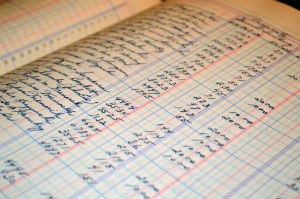
You may be more familiar with a carpaccio than a calculator but there is nothing to stop you from managing your own accounts.
The first thing you’ll need to do is set aside some time away from distractions because accuracy is critical in an industry that generally operates on pretty thin profit margins.
A simple way for the less experienced or the layman to keep track of finances is to compile a profit and loss statement on paper, in an accounting book, on a digital spreadsheet or in a specialised computer-based programme.
Profit and loss statements will help you identify the profitability of your business over a specific period of time. Many restaurants currently prepare their profit and loss statements on a four week, 28 day cycle in order to retain the same amount of days in each record for more accurate comparison data.
What information will I need to put on my profit and loss statement?
- Sales: Record exactly how much money is going into the till in exchange for the food and drink you are serving
- Cost of food and supplies for service: You’ll need to know how much you are spending on produce and consumables to satisfy the demands of your menu and service
- Labour costs: Make a note of how much of your turnover is being spent on employees
- Inventory value: It’s important to know the monetary value of the stock you are holding at all times
- Fixed costs: Make a note of how much money goes out on things such as rent, utilities and waste disposal
- Miscellaneous/one-off costs: Anything you spend money on that isn’t a regular expense
What does an accurate profit and loss statement tell you?
Interpretation of the data on your profit and loss statement will tell you a lot about the current financial state of your business.
The information will also highlight areas where spend may need to be subject to stricter controls. There are a number of financial ratios that will help you make sense of the collected data to devise a coherent business strategy.

An example of a basic profit and loss statement
What are the basic restaurant accounting ratios?
- Gross profit = total sales – cost of goods sold: Indicates production efficiency and is a figure used to set prices and sales targets
- Gross profit margin = (gross profit ÷ revenue) x 100: Shows as a percentage the mark up on the cost of food ingredients purchased for sale only. Helps you to determine pricing strategy by retaining an awareness of food costs. Sustainable restaurants tend to operate on a gross profit margin upwards of 60%.
- Operating profit = gross profit – operating expenses: This is the amount left over after labour costs, rent and other expenses are subtracted from total gross profit. Labour costs should usually be no higher than 35% of gross profit, while rent should ideally be between 5-10% dependent on quality of building and location.
- Net profit = operating profit – taxes and other expenses: This figure is essentially the ‘bottom line’ and will determine ultimately whether you are in the black or in the red.
Keeping Financial Records
If you are running your business as a private limited company, you are required by law to prepare annual accounts and file company tax returns. To complete these tasks you are legally bound to keep physical or digital accounting company records that include:
- all money received and spent
- details of assets owned
- debts owed or owing
- stock owned at the end of the financial year
- Evidence of how you calculated the stock figure
- all goods bought and sold
If you don’t have adequate and organised storage space for paper documents, you can scan and save as files on your computer or store digitally in your bookkeeping software. Alternatively, you can just give them to your accountant!
Whatever system you have in place, it is important that your records are backed up in case they are lost, stolen or damaged. They must also be accurate and up to date in keeping with HMRC guidelines or you could be fined £3000 or barred from acting as a company director.
You must keep company records for 6 years from the end of the last financial year or longer in special circumstances. It is a good idea to speak to a financial advisor or an accountant if you want to know more about how these financial records requirements relate to you and your business.
What is Banking Reconciliation?
It’s important for you to know that the amount of cash your accounting records say you have is actually in your company bank account.
The process of banking reconciliation confirms if these two totals are the same by comparing the transactions recorded in your accounts to those on your bank statement.
Banking reconciliation should be carried out on a regular basis to make sure any potential discrepancies are identified as quickly as possible.
Accounts Payable
If you receive the essentials you need to run your business from numerous suppliers, it can be difficult to keep track of who is owed what and when. Suppliers will generally give their business customers a line of credit extended over a certain period of time before they expect payment in full. On average, UK businesses with annual turnover of less than £1 million waited 71 days for payment in 2016.
With sometimes months between receiving supply and making payment it is imperative to keep all of your invoices safe and organised or pay/employ/delegate someone to take responsibility. Failure to pay bills on time can leave your business with a bad reputation amongst suppliers.
Cash Flow
Cash flow is the money you have coming in and going out of your business, usually tracked over a short period of time. Your business may be operating profitably, but profit isn’t always realised as immediate cash. If, for example, you are catering for other businesses services as opposed to retail customers, a lot of your money could be tied up in invoices or with account customers.
It is therefore important to be on top of your cash flow to ensure that you have funds to cover seasonal downturns, variable costs, or emergencies like heavy duty kitchen equipment such as fridges, ovens or deep fryers breaking down.
There are options to get around unexpected one-off costs in the event of low cash flow. You can lease equipment that you need immediately by spreading the cost over a period of time. We offer 12 months interest free agreements on all Polar and Thor commercial kitchen products costing over £500.
Do I need restaurant accounting software?
There are hundreds of different restaurant accounting software packages available on the market that help you to compile accurate financial records quickly and efficiently. You can get a desktop package for a reasonable one-off cost or alternative cloud-based solutions are available for a monthly fee.
The features of the separate packages vary wildly from the very simple and basic to the complex and intricate. As well as organising inventory counts and transactions, some advanced programmes have payroll management, menu planning features, sales reports and methods of payment.
TIP: Be clear on the features that are important and relevant to the size and nature of your business. It is advisable to get some specialist advice and do some research about what features different software packages offer before making a purchase.
Do I need a Point of Sale (POS) System?
Businesses with annual revenues that amount to upwards of several hundreds of thousands of pounds are likely to be most in need of the time savings that a computerised payment system can offer. A POS tracks orders and cash/credit card payments and has features that allow the information to be consolidated into sales reports quickly and easily to save you or your accountant time.
Inventory levels can also be tracked to help with buying the right amount of stock, while best-sellers on your menu can be easily identified for marketing and advertising purposes. Most commercial POS systems can also be used in tandem with third-party financial accounting software and range from around £500-£3000 in price.
The exact cost will be dependent on the amount of hardware (touch screen cash terminals, chip and pin machines, receipt printers) and features you feel will be of benefit to your business. In many cases, however, traditional cash registers can meet the needs of small businesses, start-ups, mobile caterers, street food kiosks, staff canteens, independent pubs and small cafes.
Can you get someone else to look after the accounts?

Chefs who become first time business owners probably find the drama of flambéing more preferable to the rather more mundane tasks of recounting figures and compiling spreadsheets. That’s perfectly understandable. In these circumstances an accountant can be hired to take care of the numbers for you.
Passing on the books to a qualified accountant allows you the time to really focus on providing the things you do best; quality food and excellent service. They can also offer you financial advice and other services, such as the time-consuming process of payroll management.
There is, of course, the additional cost to consider at a time when money may be tight as you attempt to get your business up and running. Those extra costs are often offset by the time you save to focus on other areas of the business.
You will also be at a reduced risk of receiving fines for late payments of things like employees' tax and of the business failing due to financial mismanagement. You’ll still have to do some of the basics such as a profit and loss statement to give your accountant some figures to work with on a pro-rata basis unless you can afford the expense of hiring one full-time.