
What is a Convection Oven?
Often called a fan oven, a commercial convection oven cooks with a uniform temperature throughout the cabinet, no matter where the food is placed within. The fan evenly distributes heat throughout the oven, helping to not only reduce preheating times, but lower overall cooking times and temperatures by around 25%. Unlike conventional oven ranges, convection ovens rarely include gas or electric hobs on top.
SHOP CONVECTION OVENS NOWWhy Use a Convection Oven?
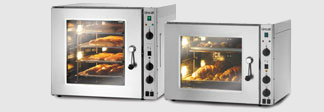
There are many reasons to consider using a convection oven over conventional style ovens.
- Cooks Faster: By blowing hot air directly over the food, it cooks roughly 25% faster in a convection oven. This increases your output and means shorter waiting times for your customers.
- Cooks Even: As heat naturally rises, conventional ovens tend to be hotter at the top of the cabinet. Convection ovens circulate the heat, ensuring a consistent temperature throughout the oven cavity. This is especially useful when cooking large batches of similar products such as pies, croissants or bread, as it’s harder to burn the tops of food whilst leaving the base partially cooked.
- Better Browning: The hot air blowing directly across the surface of the food helps to render fat and brown skin faster, meaning it’s easier to cook meats such as chicken and turkey with visually appealing and tasty results.
- Better Yield: As food cooks faster in a convection oven, there’s less time for meats to shrink. Juices are retained and there’s more product for you to sell. Reduced cooking times and higher yields help you to save time, save money and improve your margins.
Size, Power and Features
Whilst convection ovens are available in gas or electric configurations, all of them still require an electricity connection to power the fan. As such, electric convection ovens are far more widespread and popular in commercial kitchens.
Oven sizing and positioning are critical considerations to take into account. It needs to be large enough to match your day-to-day business needs, whilst not being an unnecessary obstruction in your kitchen. Efficient positioning can help reduce time spent travelling between stations and also helps to reduce accidents. Make sure to measure access and the end position before purchase to confirm the product will fit well into your kitchen. Check out our handy video for more information.
- Manual or Programmable: Many professionals are perfectly happy to set the temperature, set the timer and leave the oven to it. However for maximum precision, a programmable convection oven enables the chef to take full control of the cooking process with automatic adjustments to heat and fan speed at the touch of just a single button. Perfect for multiple site venues such as chain restaurants or bakeries.
- Plug or Hardwired: Some of the largest convection ovens require a permanent connection to a mains power supply via either three phase or single phase connection. Whilst this ensures a reliable supply of cooking power, the oven can become harder to move and could require professional installation. Smaller plug-in convection ovens have the benefit of being mobile and can be used for events off-site or mobile catering.
- Gastronorm or Baking Trays: Traditional baking trays are perfectly suited for use in convection ovens, thanks to the shallow sides which allow better air flow across the food. Similarly, gastronorm compatible ovens have the benefit of cross-compatibility with other kitchen equipment, such as bain maries, blast chillers or trolleys. This is especially useful you can transfer food directly from one appliance to another without having to pour the contents into a different container.
- Core Probe: Typically seen in programmable convection ovens, a core probe is inserted into the meat to monitor the internal temperature of the food. Once the required temperature is reached, the oven can be set to reduce the heat automatically or notify the chef that the cooking is complete.
- Counter Top, Stand or Stacking: As the needs of commercial catering establishments can vary, so does the requirement for cooking capacity. Whereas a small village cafe might only need a countertop convection oven for the morning croissants, a busy city centre bakery might need multiple large stacked units. If this is the case, you can purchase stacking kits to help make more efficient use of your kitchen space.
Buying Guide: For more information about other types of commercial oven, check out our Picking a Commercial Oven guide.

Reduced Price

Reduced Price
