
Buying a Catering Water Boiler
If you’re offering tea, coffee or other hot drinks, a professional water boiler helps you to keep a constant supply of piping hot water on tap. However, it’s not always easy to know which is best for your business, so we’ve put together this easy to follow guide to help you make an informed decision.
Types of Water Boiler
There are three main types of water boilers used in catering and hospitality. Manual Fill Boilers, Automatic Fill Boilers and Electric Airpots.
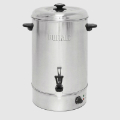
Manual fill water boilers (sometimes called tea urns) are portable units, ideal for mobile catering or sites with limited access to a mains water connection. As the name suggests, water is added by removing the lid and manually filling the internal tank.
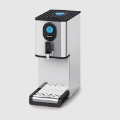
Automatic fill water boilers are directly plumbed into a mains water connection and as such, are kept in a static location such as behind the counter in coffee shops or in a self-service area in canteens. As they automatically fill with water, you save time and effort in comparison to their manual counterparts. Automatic fill boilers are available in countertop or wall mounted versions.
Within this section are the hugely popular Lincat water boilers.
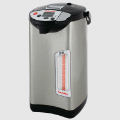
Electric airpots are the smallest type of commercial water boiler (aside from commercial kettles). Mainly designed for portability, light duty electric airpots quietly heat water and efficiently keep it at the desired temperature – ideal for meeting rooms, functions or self-service areas.
TIP: If you plan to move a manual fill water boiler or electric airpot, make sure to empty it first!
WATER BOILERS VS KETTLES
A common misconception is that water boilers and kettles do exactly the same task. So what is the difference between a water boiler and a kettle? The table below highlights the main variations in the types of boiler.
| High Water Capacity (10Ltr+) |
Portable | Automatic Reheat | Fast Boiling Speed | Commercial Warranty | |
|---|---|---|---|---|---|
| Manual Fill Water Boiler | ? | ? | ? | ? | |
| Auto Fill Water Boiler | ? | ? | ? | ||
| Electric Airpot | ? | ? | ?* | ||
| Commercial Kettle | ? | ? | ?* |
*Domestic kettles do not carry a commercial warranty. Electric airpots have light duty commercial warranties.
What to Look for in a Water Boiler
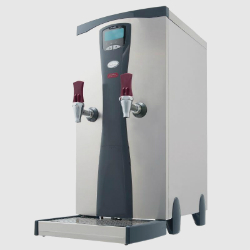
Once you’ve decided on the type of water boiler for your business, you should also consider other variables that can have an important impact on the amount of hot water that can be produced.
Capacity
Capacity indicates the amount of water that the boiler can hold in its internal tank. In manual fill boilers, a larger capacity will generally mean a longer heat up time – sometimes more than an hour in the largest versions. However, a high capacity 40Ltr boiler can dispense around 180 cups of piping hot water in a single fill. If you have the time to allow it to boil, it may be worth using a large capacity boiler to prevent constant refilling, especially if you’re expecting a busy service every day.
In automatic fill water boilers, capacity again refers to the internal tank, however capacity is the limit of water that is immediately available at the required temperature (called rapid draw off). If the rapid draw limit is exceeded, cooler water will be dispensed until the boiler has a chance to reheat.
Power
Water boilers range from 750W as seen in electric airpots, all the way up to 6000W in the largest countertop boilers. Power directly relates to how fast water is brought up to the right serving temperature.
Power Type
Water boilers are generally available in gas (natural or propane) or electric (13A, single or three phase) configurations. When choosing a power type, consider that propane gas and plug-in manual fill boilers can be transported, making them perfect for mobile catering, whereas hardwired or mains gas models may require an electrician or gas safe engineer to install. Hardwiring is generally reserved for the most powerful water boilers.
Built-in Water Filtration
Mainly seen in automatic fill boilers, built-in water filters ensure the very best quality water and reduce the wear and tear on the boiler. Especially useful in hard water areas, filters reduce lime scale and remove other contaminants which can make water cloudy or unpalatable. Although filters help to produce premium quality water, factor in the cost of occasional replacement filters (they usually require changing around every six months depending on usage). It's worth noting that some sites with mains inline water filters may not require a built-in water boiler filter. Manual fill water boilers must be descaled regularly - see below.
Taps or Push Button
Being simple and effective, most water boilers and tea urns feature sturdy taps to dispense water. However some businesses may prefer the functionality of push-button control. Push-button control has the advantage of being able to portion water to perfectly fit your cups, reducing waste or mess. In addition, some of these machines can also restrict the dispensing to users with electronic fobs, promoting safety and security.
Programmable
Some premium water boilers can be programmed to ensure water is ready when you need it. Using a built-in timer, the machine heats up ready for service, removing the need for you to come in especially early to warm up the boiler. A programmable water boiler can sometimes be set to keep precise water temperatures - perfect for specialised teas.
Thermal Cut Out
One of the most common safety features in water boilers is the thermal cut-out. During a busy service, it can be easy to lose track of how much water is left in the internal tank - even if the machine has a water level gauge. If this runs dry, most boilers are designed to cut power to the element to prevent damage to the machine. If this happens, the boiler will be fitted with a reset button so you can safely refill the machine before switching it back on.
DESCALING
Especially so in hard water areas, commercial water boilers can quickly build up large quantities of lime scale. This reduces the quality of the water and makes the water boiler work harder to reach temperature. Over time, scale can cause significant damage and may cause a boiler to fail. It’s worth noting that damage caused by lime scale is not covered by warranty so it’s vital to address the problem as soon as it arises. All water boiler user manuals provide information on maintenance and descaling – ensure you have a regular descaling schedule in place. To help reduce the impact of limescale, consider using a water boiler with filtration. Many machines with filtration will prompt you to change the filter when required.