Which Light Bulb Do I Need?
Different light bulbs are designed for different needs, environments and situations. If you need a bulb that will last a long time, save you money and deliver bright light, then an LED light bulb with a high lumen output is best for you. If you want a light bulb that is budget-friendly, stylish and great for decorative lighting, then a candle-shaped halogen bulb with a low colour temperature is what you need.
When it comes to finding out which light bulb you need, it boils down to six key factors:
Understanding each of these six factors will give you all the information you need to find the right bulb for your business and your lighting needs.
SHOP LIGHT BULBS NOWLight Bulb Wattage
What Are Watts?
Watts, or wattage, simply refers to the amount of energy that’s needed to power a light bulb.
Before new technologies and types of light bulbs were introduced onto the market, shoppers would use the watts of a light bulb as a measure of its brightness – with the higher the watts the brighter the bulb.
Now with more efficient technology, energy-saving light bulbs, such as LED and CFL bulbs, are able to produce similar levels of brightness as incandescent lamps while using considerably less energy. As such, lumens should now be the only measure of a light bulb’s brightness.
What Bulb Wattage Do I Need?
To find out what watt bulb you need, you should first look at the maximum wattage your lighting fixtures can take. Installing any light bulb with watts that exceed the maximum wattage of a lighting fixture puts you at risk of starting a fire.
Watts can also be used to see how efficient light bulbs are. Bulbs with low watts and high lumens are generally far more efficient than a bulb with the same amount of lumens but greater wattage. So if you want to cut your energy bill, look for light bulbs with a low wattage and high lumen output.
Light Bulb Lumens
What Are Lumens?
Lumens are a measurement used to refer to the level of brightness that a light bulb produces. As mentioned, the power and luminosity of a light bulb was traditionally measured in watts. But with developments in technology, newer energy-saving light bulbs are able to offer similar levels of brightness while consuming much less power.
Therefore, the brightness of a bulb should only be determined by the number of lumens it produces.
How Many Lumens Do I Need?
When it comes to working out how many lumens you need, you should think about where you are going to be placing your light bulbs. Intimate dining areas may require a soft light of 500 lumens, whereas a busy fast food counter may need a brighter light of around 2,000 lumens.
If you are replacing incandescent lamps - and so would generally use watts as a measure of brightness - the following chart can be used as a guide to find how many lumens you will need.
| Replacing a 40W Incandescent Bulb | Look for around 450 lumens |
|---|---|
| Replacing a 60W Incandescent Bulb | Look for around 800 lumens |
| Replacing a 75W Incandescent Bulb | Look for around 1,100 lumens |
| Replacing a 100W Incandescent Bulb | Look for around 1,600 lumens |
Scroll left and right to view the table on mobile
Light Bulb Colour Temperature
What Is Colour Temperature?
Colour temperature is used to describe the appearance, or tint, of a bulb’s light.
Colour temperature is measured in degrees Kelvin on a scale from 1,000 to 10,000, with the lower the bulb’s temperature, the warmer the light. The colour of light according to the Kelvin scale ranges from a warm yellow at the lowest end, with white in the middle and a blue tone at the higher end.
Generally, warmer colour temperatures offer a more calming and relaxed glow, while cooler white temperatures are best used to liven up a room and encourage concentration.
What Colour Temperature Do I Need?
Most modern light bulbs are available in a wide range of colour temperatures.
Picking the wrong temperature can significantly affect the overall feel of an area. A colour temperature that is too low can impact visibility, while a temperature too high can ruin a relaxed ambience.
2,000–3,000k: Warm White
Light bulbs with colour temperatures ranging from 2,000k to 3,000k emit a calming, warm glow that makes them perfect for use in:
- Bedrooms
- Living Rooms
- Dining Rooms
- Hotel Lobbies
- Guestrooms
- Decorative Outdoor Lighting
3,100–4,500k: Cool White
Light bulbs with colour temperatures ranging from 3,100k to 4,500k emit a balanced yet lively light that won't tire eyes. This makes them perfect for use in:
- Washrooms
- Retail Stores
- Bedrooms
- Offices
- Stairs and Corridors
- General Lighting in Kitchens
4,600–6,500k: Daylight White
Light bulbs with colour temperatures ranging from 4,600–6,500k emit an invigorating and energetic light (similar to sunlight) that encourages concentration and provides the greatest contrast amongst colours. This makes these light bulbs ideal for use in:
- Hospitals
- Security Lighting
- Reading Rooms
- Warehouses
- Floodlighting
- Task Lighting in Kitchens
Understanding Light Bulb Cap Types and Base Fittings
Choosing the correct cap type or base fitting is the most important step when it comes to finding the right light bulb. The cap type or base fitting both conducts electricity to the light bulb and secures it into the fixture. Buying a bulb with the wrong cap or fitting simply means your lamp will not fit into the fixture – so it’s incredibly important you get it right.
All light bulb cap types and base fittings are labelled with a code consisting of various letters and numbers. While these codes can initially be confusing, understanding them will make it far easier for you to find the correct cap or base for your fixtures.
TIP: Before purchasing a light bulb, you should always make a note of the fitting code listed on your light fixture.
The first letter of the code tells you the base or cap type of the bulb - such as a Bayonet Cap or Edison Screw Base.
The numbers reveal the diameter of the base, or the distance between the pins. This is listed in millimetres.
Some codes will also have additional letters after the numbers. This shows the number of pins or contacts the base has – such as ‘s’ for single, or ‘d’ for double.
So for example, the most common Bayonet Cap base fitting is listed as a B22d fitting. The ‘B’ stands for Bayonet Collar, while the ‘22’ means the base is 22mm in diameter. The ‘d’ at the end of the code means the base has two pins.
The table below shows the codes for some of the most common base and cap types. The table also shows the codes used to indicate the number of pins or contacts on a fitting.
| Light Bulb Base & Cap Type Codes | Number Of Pins Or Contacts |
|---|---|
| B – Bayonet Collar | S – Single |
| E – Edison Screw | D – Double |
| F – Single Pin | T – Triple |
| G – Multiple Pin | Q - Quadruple |
| R – Recessed Contact(s) | |
| W – Wedge Base |
Scroll left and right to view the table on mobile
Below are some of the most common cap types and base fittings for light bulbs.
Bayonet Cap

The bayonet cap, often referred to as a BC, is one of the common light bulb fittings in the UK. Featuring a smooth metal base and two small pins that stick out of the side, the bayonet cap is secured into light fixtures with a simple ‘push and twist’ action. The two pins ensure the bulb is locked securely into the fixture, preventing accidental removal if knocked.
While the B22d is the most common form of the bayonet cap, there are many other sizes available on the market – most notably the small bayonet cap. The small bayonet cap, commonly called the SBC or B15d, works in much the same way as the large bayonet cap fitting, but measures 15mm in diameter.
Edison Screw Base
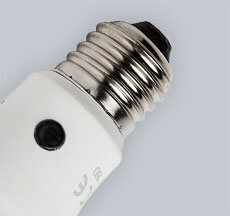
The Edison screw base is another of the most commonly seen base fittings in the UK. As their name suggests, Edison screw bulbs simply screw into the socket of a light fixture.
The most frequently seen size of the Edison screw is the E27 – a fitting that measures 27mm in diameter across its base. Other sizes of Edison screw are available, such as the E17, E26 and E39, but the E27 is the most commonly used in the UK and Europe.
E27s are available in a wide range of wattages and are used for a variety of applications.
Small Edison Screw Base

The small Edison screw base, also known as the SES or E14, is simply a smaller form of the E27.
With a base measuring 14mm in diameter, the small Edison screw is most commonly used in table lamps, chandeliers and other decorative light fixtures.
The small size means the E14 is also frequently used in appliances.
R7 Linear Light Fittings

The most common fitting for linear light bulbs is the R7. These linear bulbs have an R7 cap at either end of the lamp.
The R7 cap itself is a bowl-shaped, recessed single contact measuring 7mm in diameter.
G4 & G9 Capsule Fittings
Capsule bulbs, sometimes called capsule lamps, use a ‘push-fit’ base. Rather than being screwed or twisted into the fitting, these capsules have two pins in the base that allows them to be pushed into a fixture.
These small capsules are named and categorised by the distance between their two connecting pins. The G4 is one of the most frequently used bases for capsule lamps, and has pins that are 4mm apart. The G9 fitting is also used for capsule bulbs, and features pins measuring 9mm apart.

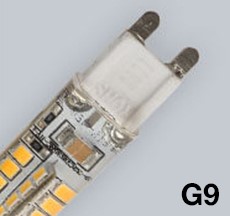
The key difference between the G4 and G9 fittings is that G4 bulbs are used in low-voltage applications, while the G9 is suitable for mains-voltage use. This means a G4 bulb will require a low voltage transformer or LED driver in order to run on mains voltage, while a G9 can be plugged in and used right away.
GU10 & MR16 Spotlight Fittings
Spotlight bulbs tend to use a variety of 'G' fittings – meaning fittings with multiple pins. Two of the most common of these fittings are the GU10 and GU5.3, commonly referred to as an MR16 fitting.
The GU10 fitting features two pins that ‘twist and lock’ into the light fixture. As the name would suggest, the two pins of the GU10 fitting are 10mm apart. GU10 bulbs are used for mains-voltage applications.


The GU5.3, or MR16, cap is different from the GU10 in several ways. Firstly, the fitting’s two pins are 5.3mm apart, compared to the GU10’s which are 10mm apart. Secondly, the MR16 is locked into light fixtures with a ‘push-fit’ action, as opposed to the GU10’s ‘twist and lock’ action. Finally, the MR16 base is designed for use in low-voltage applications, compared to the GU10 which is suitable for mains-voltage applications. This means MR16 bulbs require a low voltage transformer or LED driver in order to run on mains-voltage circuits.
TIP: The ‘U’ in ‘GU’ stands for universal. This means ‘GU’ caps will safely fit into GU, GY, GX and GZ light fixtures – provided the distance between the pins is the same. For example, a GU10 bulb can fit into both a GU10 and GZ10 light fixture, while a GZ10 bulb can only fit into the matching GZ10 fixture as it is not a ‘universal’ fitting.
What Types of Light Bulb Are There?
Because incandescent light bulbs have been phased out across Europe due to their inefficient performance, there are now only three main types of light bulb available:
- LED Light Bulbs
- Halogen Light Bulbs
- CFL Light Bulbs
Each of these three types of light bulb offer different lifespans, energy-saving abilities, benefits and drawbacks which you need to consider before making a purchase.
LED Light Bulbs
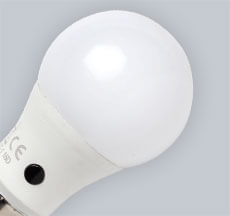
LED (light-emitting diode) light bulbs use semi-conductor technology to turn electricity into light. Whereas incandescent lamps would pass electricity through a filament to heat it and generate light, LED light bulbs use only semi-conductors which create little heat and waste far less energy. This makes LEDs the most energy-efficient light bulbs on the market.
There are also many other benefits to LED bulbs. As most LEDs don’t use a filament or glass tubes, and are made with sturdy components, they are also remarkably tough and durable. This allows them to withstand shocks, vibrations and knocks without breaking. This means they are also suitable for use in extreme temperatures, such as cold rooms and outdoor areas.
LED light bulbs are also fully recyclable and don’t use any toxic elements like mercury. This makes them kinder to the planet than other light bulbs and enables environmentally responsible disposal once finished with.
Finally, LED light bulbs deliver instant light. While some light bulbs can take minutes to reach maximum light output, LEDs have no such problem. There is no warm-up period once turned on, and frequent switching on and off won’t affect their performance or lifespan.
How Much Energy Does an LED Light Bulb Save?
LED light bulbs use almost 90% less energy than traditional incandescent models.
How Long Does an LED Light Bulb Last?
LEDs boast approximate life expectancies of around 25,000 hours. This means if you leave an LED bulb with an average rated life of 25,000 hours on for 14 hours a day (from 9am til 11pm), it could potentially last you as long as 1785 days – or just under five years – provided you turn it off when you leave.
This long lifespan and energy-efficient performance means that while the initial cost can be more expensive than other bulbs on the market, LEDs will give you huge financial savings in the long run.
SHOP LED LIGHT BULBS
Reduced Price

Halogen Light Bulbs
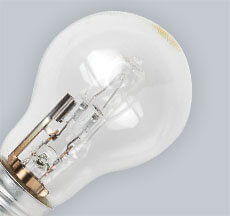
Halogen light bulbs are a type of incandescent bulb, and operate in a very similar way to traditional incandescent lamps as they both use a tungsten filament to generate light. However, unlike incandescent lamps, the tungsten filament in halogen bulbs is sealed and surrounded with halogen gas - usually iodine or bromine. This prevents the burning filament from fastening to the glass which can reduce clarity and light output. This process also returns tungsten back to the filament to preserve the life of the light bulb for longer.
The use of halogen gas ultimately means halogen light bulbs use slightly less energy and last longer than standard incandescent alternatives, making them more efficient. However, they are the least efficient of the three main types of light bulb.
Halogen bulbs are preferred by many as they produce a warmth of light that is most similar to traditional incandescent lamps. While LED and CFL bulbs now offer a range of different colour temperatures, halogens are considered the most effective at producing warm glows seen in incandescent lamps.
Halogen bulbs also reach maximum light instantly after switching them on, saving you time in busy services.
TIP: Halogen light bulbs can become extremely hot. As such, you should never touch them with your bare hands. Instead, you should always turn these bulbs off, leave to cool for several minutes and use gloves when handling them.
How Much Energy Does a Halogen Light Bulb Save?
Halogen light bulbs use around 20-30% less energy compared to traditional incandescent lamps.
How Long Does a Halogen Light Bulb Last?
Halogen light bulbs can last almost twice as long as traditional incandescent lamps – with average rated lives of 2,000-4,000 hours. While they have the shortest average lifetime of the three main types of bulb, halogen light bulbs are also generally the cheapest. This means they will often pay back the cost of investment in energy savings before their end of life.
SHOP HALOGEN LIGHT BULBSCompact Fluorescent Lamps (CFL Light Bulbs)
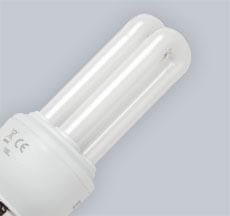
CFL bulbs, officially called compact fluorescent lamps, are one of the most common types of light bulb. They are essentially smaller versions of the fluorescent tube lamps used in offices and car parks.
CFL bulbs do not use a filament to produce light. Instead, these light bulbs feature a glass tube filled with mercury vapour and gas. Once an electric current is passed through the gas, the mercury vapour is ignited – releasing an ultra-violet light. Ultra-violet light is invisible to the human eye, so CFLs feature a phosphor powder coating on the inside of the glass tube which emits light when the ultra-violet photons interact with it.
While compact fluorescent lamps are sturdy, long-lasting and more efficient than incandescent and halogen bulbs, there are some drawbacks that you need to bear in mind.
Some CFL bulbs can take up to two minutes to achieve maximum brightness which can be an inconvenience if you need bright light quickly – particularly in front-of-house areas. CFL bulbs also have a reputation of emitting a cool light that is not well suited to creating a warm and inviting ambience. That said, there is an ever-increasing number of CFL bulbs on the market available in warmer colour temperatures.
Regularly switching CFL bulbs on and off can also shorten their lifespan, so consider installing them in areas where they will be kept on for lengthy periods of time.
Finally, as CFL bulbs contain mercury, they can be potentially dangerous to handle – particularly if broken. This means CFL bulbs also require careful disposal and should be recycled in a specialised facility that accepts hazardous waste.
How Much Energy Does a CFL Light Bulb Save?
CFL bulbs boast energy savings of approximately 80% compared to traditional incandescent lamps. This makes them second only to LED bulbs when it comes to energy efficient performance.
How Long Does a CFL Light Bulb Last?
Most CFL bulbs feature average rated lifespans of between 8,000-10,000 hours. This makes them some of the longest-lasting light bulbs on the market.
SHOP CFL LIGHT BULBSUnderstanding Light Bulb Shapes
The shape of a bulb will determine what type of light is produced and the width of the beam. For example, GSL and Globe models will generally allow for a 360° distribution of light, while Spotlights and Reflectors deliver a more concentrated, narrow beam of light.
As well as the beam angles, the shape of your light bulbs is important when it comes to the aesthetics of your venue. Some bulbs are naturally more stylish than others both when switched on and turned off - making them better suited to front-of-house areas. Consider where your bulbs will be positioned and whether they are going to be used for decorative lighting, general lighting or task lighting.
Finally, you need to think about how the light bulb will fit into your light fixtures. Even if you have found the correct cap type, you need to ensure the height of the bulb is suitable for your fixtures. If you have a small lamp shade or short fixture, you would not want a long stick bulb that protrudes out. Similarly, you wouldn’t want a compact bulb to be used with a long and narrow fixture.
Below are some of the most common light bulb shapes:
- GLS/Standard Light Bulbs
The GLS design, also known as a standard or Arbitrary model, is one of the most common shapes of light bulb.
GLS light bulbs feature a pear-shaped design that delivers an almost 360° spread of light, ideal for lamps and overhead lighting fixtures in living rooms, commercial kitchens and dining rooms.
GLS light bulbs are typically fitted with a BC bayonet cap or E27 Edison screw base.

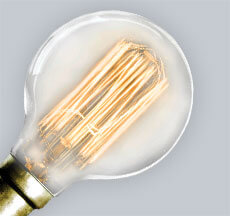
- Globe Light Bulbs
Globe light bulbs feature a large, round design that makes them perfect for decorative lighting in bars, restaurants and hotels.
The spherical shape ensures a wide distribution of light, while the large size gives them a striking and eye-catching look ideal for glamorous interiors. While the large size means they are often not well suited for smaller lamps and fittings, globe light bulbs can be particularly effective when paired with pendant light fixtures and chandeliers, or suspended from high ceilings.
Most globe light bulbs are fitted with either a B22 bayonet cap or E27 Edison screw base.
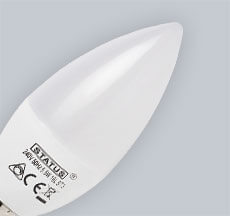
- Candle Light Bulbs
Candle light bulbs feature a design based off the flame of a candle. This attractive ‘flame’ shape naturally gives them a decorative, elegant and vintage look perfect for ornamental lighting in hotels, restaurants and bars. As such, candle bulbs are most commonly used as decorative light bulbs in chandeliers, wall lights and exposed fixtures.
Candle light bulbs are generally fitted with an E27 Edison screw base, E14 small Edison screw base or B22 bayonet cap.
- Spotlight Bulbs
Spotlight bulbs are designed to emit light in a particular direction, perfect for attractively highlighting spaces and objects.
When buying spotlights, it’s important to bear in mind how narrow or wide the beam angle of light will be. Spotlights emitting a narrow beam of light between 20-40° are best used to highlight specific items or areas in your room - such as a walkway or bar. However, these narrow angles can often leave other areas in the dark which can be impractical for busy kitchens. Wider beam angles are better suited for general lighting or for lighting larger areas in a room.
Most spotlights are fitted with the GU10 ‘push-and-twist’ or MR16 ‘push-fit’ bases.

TIP: Consider how far away from the ground your spotlights will be positioned. Spotlights placed on a tall ceiling will produce a wider beam of light than the same spotlight placed closer to the ground.
- Stick Light Bulbs
The Stick design is one of the most common shapes used to make CFL bulbs. These CFL stick bulbs are also often called CFL tube bulbs. The stick shape features a number of straight fluorescent tubes rising from the base of the bulb. This tends to make stick light bulbs much longer and narrower than traditional designs.
While this long design means stick bulbs can protrude above the top of small lamp shades and fixtures, it does make them ideal for long, slender lighting fixtures such as wall sconces. The unconventional design also means CFL stick bulbs will work well in venues with a minimalist or modern décor.
CFL stick bulbs are generally fitted with a BC bayonet cap or E27 Edison screw base.
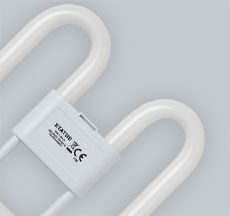
- 2D Light Bulbs
2D light bulbs, sometimes called DD bulbs, are another popular form of CFL bulb. With a single tube curved into a ‘D’ shape, 2D light bulbs are extremely slim and compact – allowing them to conveniently fit into short fixtures while still offering superb brightness levels.
The small footprint and high levels of brightness make 2D bulbs perfect for commercial use as they are easy to position and can fit into both wall and ceiling-mounted fixtures. As such, 2D CFL bulbs are commonly used in stairways, hallways, warehouses, offices, car parks and storage rooms.
2D light bulbs feature a simple-to-install 2-pin or 4-pin fitting.
- Linear Light Bulbs
Linear light bulbs are long, narrow lamps with a double-ended fitting. This shape is often used to make linear halogen bulbs. Bright and compact, linear halogen bulbs are generally used in floodlights, security lights, wall fittings and floor lamps. The linear design is also often used for infrared heat lamps.
Linear bulbs have a 7mm R7 cap at each end of the lamp.

- Reflector Light Bulbs
Reflector light bulbs use a reflective surface to direct light in a forward direction. This concentrated-light effect makes them perfect for use in spotlights, floodlights and recessed lighting.
Like spotlights, reflector bulbs with narrow light beams can be used to attractively direct attention towards a specific area or object in your venue.
Most reflector bulbs are fitted with GU10 ‘push-and-twist’ or MR16 ‘push-fit’ bases.

FAQs
Why is my LED light bulb flickering?
LED light bulbs can flicker if the current to them doesn’t remain constant. Unlike incandescent, halogen and CFL bulbs, LEDs will stop emitting light immediately when the power supply to them is switched off – which is why they are most prone to flickering.
There are a few common causes as to why your LED light bulbs are flickering:
Your light bulbs may not be compatible for dimming: Some LED bulbs may simply not be compatible for dimming. Non-dimmable LED bulbs have different components to their dimmable alternatives, so placing a non-dimmable bulb in a dimmable circuit can result in electrical issues and flickering.
You may be using an incorrect dimmer switch: The two most popular types of dimmer switch are ‘leading edge’ and ‘trailing edge’ dimmers. Leading edge dimmers are traditionally used to dim incandescent and halogen light bulbs. This means they tend to have a high wattage range – generally between 250-1,000W. As LED bulbs need far fewer watts to run, they are often unable to work with leading edge dimmers, which can result in flickering.
Trailing edge dimmers were designed specifically for use with LED bulbs and have a much lower wattage range. If you are using a leading edge dimmer, calculate and check if the LED bulbs in your circuit are able to meet its wattage range. If they are unable to meet the wattage range, consider switching your leading edge dimmer for a trailing edge alternative.
You may have faulty electrical connections: Flickering lights can often be caused by faulty or loose connections in the circuit. Ensure there are no loose wires, the lighting fixture is tightened and secured in place and the connection point hasn’t become loose.
What causes a light bulb to explode?
Generally, heat is the main reason why light bulbs explode. Other than LEDs, all bulbs produce noticeable amounts of heat when turned on. Bulbs that have been improperly insulated can overheat, melt the socket and ultimately explode. Bulbs with watts that exceed the maximum wattage of your lighting fixtures can also overheat and explode.
How to dispose of a light bulb?
Not every light bulb can be disposed of in the same way. Some bulbs are suitable for recycling, while others should be disposed of along with your general waste.
How to Dispose of Incandescent and Halogen Light Bulbs: Incandescent and halogen bulbs should be disposed of with your general waste. It is difficult and costly for recycling facilities to separate the filament from the glass in these bulbs. Because of this, most recycling centres will not accept them.
How to Dispose of CFL Light Bulbs: As CFL light bulbs contain mercury, they are classified as hazardous waste. If CFL bulbs are broken, this mercury can be released and harm both the environment, your employees and waste management workers. So you should never put them in your general waste or recycling bins. Instead, you should contact a specialised recycling service who can collect and properly dispose of your CFL bulbs.
How to Dispose of LED Light Bulbs: While LED light bulbs can be safely disposed of with your general waste, there are many recycling centres and waste management facilities that will accept them for recycling. Speak with your current waste management provider to see if they will accept your LED bulbs for recycling.
TIP: When disposing of these bulbs, you should wrap them up or place them in a box to prevent injuries if they shatter.