
Colour coded cleaning is a hygiene system created by BICSc in the late 1990s and endorsed by the FSA since 2006. It uses four colours, red, blue, green and yellow, to separate areas such as bars, public spaces, kitchens and food prep areas and washrooms. Each colour is assigned to specific equipment to minimise the risk of cross-contamination between these areas.
Benefits of colour coded cleaning
By implementing a colour-coded cleaning system in your workplace, you can boost hygiene standards while making staff training and daily cleaning routines more efficient. Assigning specific colours to tools based on the area they’re used helps staff quickly identify the right equipment. This prevents cross-contamination and ensures each area is cleaned with the appropriate, dedicated tools.

How Colour Coding Prevents Cross Contamination
The core principle of colour coded cleaning is simple. By making sure cleaning tools aren’t used in different high-risk areas, colour coding stops germs from spreading from one surface to another. This is especially important in places like food preparation areas and toilets, where preventing cross-contamination is crucial to safeguard public health and food safety.
Meet the Red-Blue-Green-Yellow Rule
In hospitality, red is usually for washrooms, yellow for kitchens and food prep, blue for restaurant and bar areas, and green for public spaces like lobbies and hallways. This separation helps ensure staff don’t accidentally use cleaning tools from a high-risk area, like a washroom, in a low-risk spot, like a food counter.
Where Is Colour Coded Cleaning Used and Who Uses It?
The colour coordination of cleaning products can vary from business to business and the system you choose is entirely up to you. However, the above guide is the most broadly accepted system that most catering establishment adhere to. The colour you assign to each area is your choice, so long as your staff members are trained on the system you choose. There are, however, laws and regulations for healthcare establishment that must be followed to ensure patient care.
UK Colour Coded Cleaning Standards
Following the red, blue, green and yellow rule isn’t just best practice. It’s backed by industry guidance and widely recognised standards. By sticking to this colour system, venues can stay aligned with expectations set by bodies like BICSc and the Food Standards Agency.
It’s also a practical way to meet the requirements set by Environmental Health Officers (EHOs), who inspect and enforce hygiene and safety standards across a wide range of settings. EHOs respond to concerns around food quality, cleanliness and safety, and help ensure that both working and living environments remain safe and sanitary.
Because of this, colour-coded cleaning has been widely adopted across catering businesses, offices, retail environments and factories.
Is It a Legal Requirement to Follow the Colour Coded System?
No, it’s not a legal requirement to follow a specific colour-coded system. However, businesses do have a legal responsibility to take all practicable measures to reduce the risk of bacterial cross-contamination in food premises. Ensuring that cleaning equipment does not contribute to cross-contamination is a key part of this responsibility. Restricting staff to using cleaning equipment only in designated areas is an effective way to prevent it.
While businesses are free to use any system that suits them, it’s crucial that all colleagues follow the same procedure. A standardised colour-coded system can help with this, as staff who have worked in other food businesses are likely to already recognise and understand it.
A Simple Way to Show What Colour Goes Where
Want to make sure everyone understands your colour-coded cleaning system? An easy way to do that is by displaying a clear, visually appealing wallchart in places like the staff room or cleaning cupboard. It acts as a quick reference, so staff always know which colour to use for each area or task.
Colour Coded Cleaning Equipment
At Nisbets, we make it simple to set up and maintain a colour-coded cleaning system for your workplace. With a wide selection of mops, brushes and buckets in red, blue, green and yellow, it’s easy to match the right tools to the right areas and cut down the risk of cross-contamination.


Suitable for use in restaurant and bar areas - including dining and café lounge spaces.
Shop now >
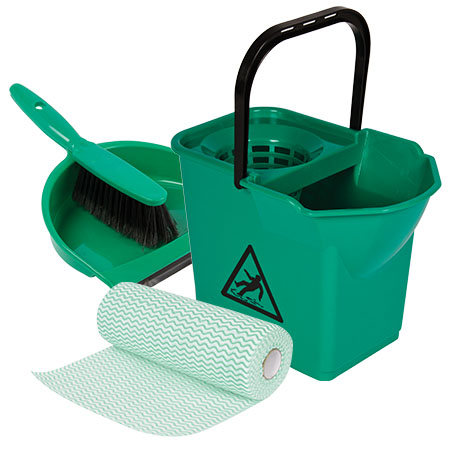

Suitable for use in kitchens, food stations and any area where food is kept or prepared.
Shop now >


