
Help ensure excellent food safety and hygiene throughout your business with colour-coding systems. From chopping boards to utensils, cleaning equipment to bin bags - colour coding helps ensure specific items for each task and reduces the risk of cross-contamination. There are two distinct-colour coding systems used: one for food preparation and the other for cleaning, and its important to know the difference. Using both of them effectively will help you maintain a safe and efficient working environment.
Why should you colour code your kitchen?
Colour coding your kitchen enables you to clearly separate tools and equipment for different tasks, which helps to uphold hygiene standards and minimise risk. It reduces the chance of cross-contamination between raw and cooked foods, allergens and high-risk areas. Colour coding also helps staff work more efficiently, as it creates a clear visual guide that supports best practice in every area of your kitchen.
HACCP Food safety
If you’re already identifying food safety risks in your kitchen and taking steps to manage them, you’re putting HACCP - Hazard Analysis and Critical Control Points - into practice.
Food Standards Enforcement Officers will look for clear evidence that your HACCP system is being followed. While you may know which tongs are used for raw chicken and which are for salad, an inspector needs visible proof. Colour coding makes this easy: red tongs for raw meat, yellow for cooked meat and so on.
Colour-coded Equipment
Although not a legal requirement, colour coding your kitchen utensils is a practical way to simplify food preparation for your staff. And as dietary needs grow more complex and allergies become increasingly common, customers want reassurance about what their food has come into contact with. By putting a clear and standardised process in place, you’re not just setting expectations for your staff - you’re creating an environment where everyone feels confident following the same food safety practices, shift after shift. Whilst ensuring that allergy and dietary requirements are handled with care.

Which colour utensils should you use with which food groups?
- White - bakery and dairy products
- Yellow - cooked meat
- Brown - root vegetables
- Red - raw meat
- Blue - raw fish
- Green - salad, fruit and fresh vegetables
- Purple - allergens
For the standard colours used in cleaning, check out our buying guide here.
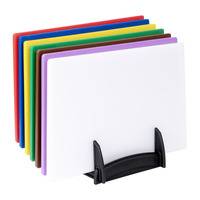
Colour-coded Chopping Boards
In a professional kitchen, colour-coded chopping board sets help staff quickly identify which board to use for each food group - reducing the risk of cross-contamination between different food groups, as well as allergens. This clear system supports food safety procedures, makes staff training easier and helps maintain consistency across shifts.
Beyond food safety, colour-coded boards can also help improve workflow in busy kitchens. With each board dedicated to a specific task, chefs can work more efficiently, knowing they’re using the right equipment for the job. It also makes it easier to spot when a board is missing or in the wrong place.
SHOP COLOUR-CODED CHOPPING BOARDS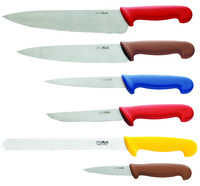
Colour-coded Kitchen Knives
Using colour-coded knives helps prevent cross-contamination by ensuring each is used for a specific food type. It also gives staff a clear, visual guide for safe knife use during busy prep periods.
In addition to improving food safety, colour coding makes it easier to manage knife storage and organisation in fast-paced environments. It allows teams to work more efficiently, reducing the time spent searching for the right knives to use.
SHOP COLOUR-CODED KNIVESColour-coded Labels
Colour-coded labels make it easy to identify different food types, allergens or storage requirements at a glance, helping to prevent cross-contamination. They also support effective stock rotation by clearly marking use-by dates and handling instructions.
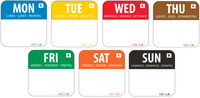
By providing a quick visual reference, these labels help staff work more accurately and efficiently, especially during busy prep times or stock checks. Not only do they reduce the risk of human error and make it easier to follow food safety procedures, but they help reduce food waste and improve kitchen organisation.
SHOP COLOUR-CODED LABELS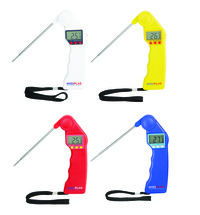
Colour-coded Thermometers
Colour-coded thermometers help staff match each probe to a specific food type, reducing the risk of cross-contamination. They also improve efficiency by making it easier to monitor food temperatures accurately during busy services.
This not only helps teams stay compliant with HACCP procedures but it also simplifies staff training and improves team efficiency.
SHOP COLOUR-CODED THERMOMETERS
Colour-coded Tongs
Tongs are among the most frequently used utensils in any kitchen, making them especially prone to cross-contamination. Using colour-coded tongs is a reliable way to ensure food is handled safely and hygienically during preparation and service.
They also help maintain a well-organised kitchen, especially during busy periods. With a clear colour system in place, it's easier reduce errors and ensure that food safety protocols are consistently followed across shifts.
SHOP COLOUR-CODED TONGS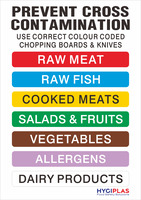
Colour-coded Wall Charts
Colour-coded wall charts provide a quick visual reference that helps staff follow correct food safety procedures. By clearly displaying which colours correspond to specific tasks or areas, these charts support training and reinforce hygiene practices.
Placing these charts in key locations - such as prep areas, wash stations or cleaning cupboards - ensures staff can easily refer to them throughout the day. This not only reinforces good hygiene, but also helps new team members learn your colour-coding procedures.
SHOP COLOUR-CODED WALL CHARTSCOLOUR-CODED CLEANING

Colour-coded cleaning works differently to food prep systems, but it’s just as important to maintaining a safe, hygienic kitchen. By assigning specific colours to equipment for areas - such as red for washrooms and toilets, blue for public spaces - you help prevent cross-contamination between high and low-risk areas. This visual system not only supports compliance but also makes it easy for your team to follow cleaning routines.
Applying the same approach to bin bags helps staff identify which area each bag should be used for. It also makes waste management more efficient by creating a simple system for separating food waste, recyclables and general waste.
Want to know more about colour-coded cleaning? Then check out our comprehensive guide that explains why it plays a vital role in the day-to-day operation of your business.
SHOP COLOUR-CODED CLEANING EQUIPMENT