
What is a Combi Oven?
A combination oven (or combi steamer) is a highly advanced machine which cooks food using steam, convection or a combination of both. These powerful appliances are often amongst the largest and most expensive pieces of equipment in the professional kitchen, so it’s important to choose the one that best meets your kitchen needs.
This guide explains the main features and terminology seen in combination ovens, as well as some of the considerations you should have in mind before purchase.
What are Combi Ovens used for?
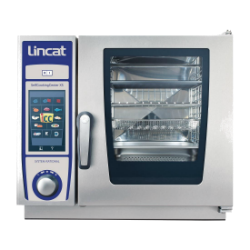
Combi ovens really are amongst the most versatile machines used by chefs. These powerful machines can roast, poach, steam, grill, bake, shallow fry and even sous vide or smoke food.
Breakfast is easy in a combi. You can quickly cook large quantities of bacon, sausage, eggs, mushrooms and tomatoes, all at the same time – mostly with the touch of a single button. Croissants and delicate pastries can be cooked to perfection too. Some advanced combis will provide all the timings, making one less thing to worry about.
Lunch service is equally simple. Whether you’re baking jacket potatoes, roasting a joint of beef or grilling steaks, a combination oven can produce deliciously tender results, with a much higher yield* in comparison to conventional ovens and ranges. Combination ovens can also be used to hot hold meats for extended periods, meaning you’ve always got the next joint ready for carving.
Dinner is covered by a combi too. Delicate fish can be poached or steamed to keep all its flavour and nutrients, whilst vegetables are steamed carefully to keep their crispiness and fresh taste. Even consistently-cooked desserts such as soufflé and crème brûlée are made possible.
* Yield refers to how much meat is left after the cooking process.
How does a Combi Oven work?
At its basic level, combination ovens are rather simple. A fan (or multiple fans) are used to distribute dry heat evenly throughout the cabinet – very much the same as a standard convection oven.
If needed, the oven will then inject water or steam into the oven which quickly raises the humidity to the required level. The combination of heat and steam helps to seal in flavours, improve yield and cook faster.
Combi ovens can also remove moisture from food. By venting humidity (releasing steam), food is cooked faster and crisps perfectly – ideal for bacon or pork crackling.
It’s really as simple as that. The following video is a good demonstration of the internal workings and features of a modern Unox Combination oven.
Combination Ovens - What you Need to Know

The right combination oven can save you vast amounts of time, energy, space and money. However, buying the wrong one could prove costly, so it’s vital to be in the know before you buy. Here is a brief checklist of the most important considerations.
- Size/Space: Combi ovens range in size from compact 2/3rd gastronorm compatible versions which can be built in, all the way up to huge roll-in models which can hold around 40 full size GN pans. Some models can also accommodate full-size bakery trays as well. Although a larger oven means a higher capacity, it also means it might not fit in your kitchen. Check dimensions before purchase.
- Power Supply: Options available are usually LPG or natural “mains” gas, as well as single or three phase electricity. There’s not a huge difference in performance between electric and gas, although three phase versions tend to be more popular than single phase ovens. The decision is usually determined by your existing kitchen power supply. See our single vs 3 phase power guide for more information. Remember that even gas combi ovens usually also require an electricity connection.
- Control: Ideally, the easier the better. Control on combi ovens falls broadly under the Manual or Programmable bracket, although even manual ovens have the option to pre-set the various cooking modes. Generally, manual models have buttons and dials, whereas modern programmable ovens have large tablet-style touchscreen panels.
Some chefs may prefer the hands-on feel of manual control. However, programmable versions make it much easier for inexperienced cooks to produce good results. - Extraction: Combi ovens can produce a lot of steam and heat, so it’s vital to have sufficient overhead extraction. In most cases, extraction is a legal requirement. Some advanced combination ovens may have the option for built-in extraction at an additional cost.
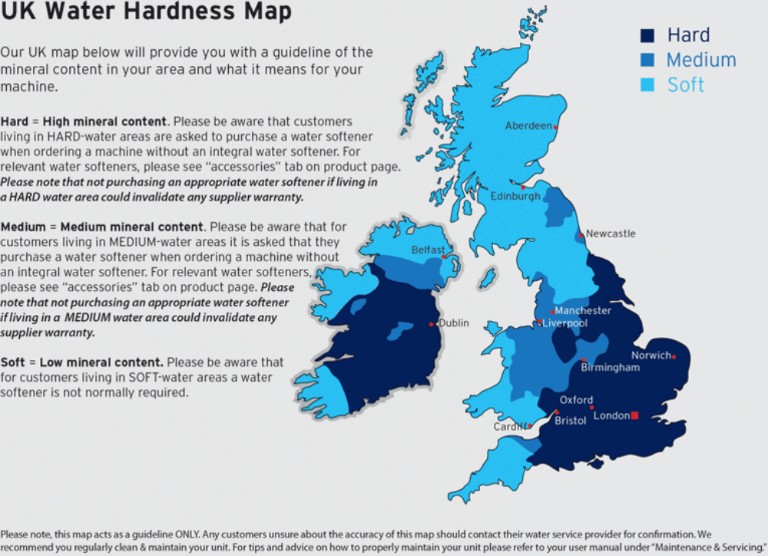
- Water Softener: almost all combi ovens require a permanent water connection to provide adequate steam during the cooking process. As mains water can contain limescale and other contaminants, a commercial water softener is usually recommended simply to prevent build-up inside the machine.
Limescale can seriously damage combination ovens and not using a water softener can often invalidate the machine’s warranty. The graphic below provides a guide to relative water hardness throughout the United Kingdom.

Which Combi Oven is Best?

On the outside many combi ovens look very similar, so it’s hard to tell on first glance which one would be most suitable. However, the best combi is the one which meets all the demands of your kitchen.
Whilst the latest models feature some of the most advanced technology in the kitchen, you may not need all that functionality. Likewise, if you have many kitchens spread across the country, the additional investment may pay for itself quickly in terms of staff training and oven output.
Whether you invest or not, it’s important to know what you’re buying, so here are some other features and accessories you should consider before purchase.
- Cleaning: Most modern combination ovens have a self-cleaning cycle which leaves the unit sparkling clean after use. However, each manufacturer has developed their own methods of cleaning, alongside different types of cleaning chemicals. For example, Rational and Lincat Combi Ovens use detergent tabs, which look quite similar to household dishwasher versions (although commercial tabs are far more powerful). Others commonly use pre-mixed chemical, which is added to a container attached to the oven. When handling any combi oven cleaning chemical, it's strongly recommended to wear suitable PPE.
- Temperature Probe: Almost all combis have either a detachable or fixed temperature probe. When inserted into food, the probe provides constant feedback on the cooking progress, so some ovens will adjust temperatures and cooking times according to the results. This means you can start the cook and let the oven do the rest. Probes can also record temperatures for HACCP compliance.
Note that temperature probes have “points”. This refers to the number of parts of the probe that temperature is recorded. Generally, the more points, the more accurately the oven can cook as more of the food is monitored. Some premium ovens will allow multiple probes to be used simultaneously. - Hand Shower: A hand shower brings much-needed convenience. Usually simply just clipped to the side of the oven, the shower is designed to help quickly fill pots and rinse food debris away from the oven floor to make cleaning easier. Note that it’s not supposed to be used for cleaning the hot interior panels of the oven – the cleaning routine will almost always leave the oven absolutely spotless.
- Stand: Although the largest combi ovens are freestanding, some of the smaller versions will require a base. This can either be a dedicated stand with shelves or a Low Fridge depending on your requirements. Either way, if the fridge or stand has castors, the oven can be positioned for easy cleaning. Stands are usually available in the Spares and Accessories section.
- Connectivity: Modern combi ovens give you the option of saving your cooking routines and HACCP data onto a USB stick or even to the cloud via Wi-Fi. This is particularly useful in multi-site chains, as you can ensure new menu items are all cooked the same, even across potentially hundreds of different buildings.
Installation and Site Surveys

So, you’ve chosen a combi for your business. What next?
As with any large piece of commercial catering equipment (such as pass-through dishwashers or cold rooms), a site survey may be arranged prior to installation. A site survey is when a fully qualified engineer visits your kitchen to ensure that the combination oven is compatible with your setup.
Assuming the survey is successful, installation will be arranged at a time convenient to you. It’s common for the oven to be delivered a day or two before the engineer is booked.
Once installed, the combi will be ready to use. Make sure to read the instruction manual carefully and train staff on the safe use of the machine. A good combi oven can give you many years of dedicated service if looked after.
Frequently Asked Questions
What’s best... separate steam and convection ovens or a single combi?
Individually, steam ovens and commercial convection ovens usually cost less than a combi. However, a combi takes up much less space and can do the job of both machines and more. In addition, you won’t need to transfer pans between units, meaning a safer and more efficient kitchen.
How to descale a combi?
You shouldn’t really have to descale a modern combination oven, as most should have a water softener fitted in hard or medium water areas. If you notice limescale, there may be another issue, perhaps with the water softener unit itself. Check the user manual.
Can you prove bread in a combi oven?
Whilst in theory it’s possible to prove bread in a combi, most models tend to have a minimum temperature of around 100°C – too hot for proofing. Some chefs do get creative with various methods of keeping the door open, however it’s not recommended! A commercial bread proofing oven would be far more suitable.
How do you clean a combi oven?
Cleaning a combi is actually really easy. Usually, all you need to do is press a button and the routine will start. It’s worth noting that there are usually a few different cycles available, from “quick rinse” to “intense clean”. Whereas a fast clean can take around five minutes, a full clean can take up to two hours, depending on the model.
What is a boilerless combi oven?
Conventional combi ovens create steam with a built-in water boiler. That’s why they usually take a short while to heat up before service. Combi ovens with built-in boilers have more moving parts and could, over time, require more servicing.
However, a boilerless combi-steamer injects water directly from the mains onto the cooking elements. This means they are generally smaller as there’s no need for a large water chamber.
It’s widely accepted that conventional “boiler” combination ovens are best for when your menu has frequent, heavy loads of steamed products. Boilerless versions are useful for when space is limited or when your menu doesn’t call for high volume steaming.
Boilerless combination ovens usually have a higher up-front cost, although they operate more efficiently, meaning an overall reduction in running costs.
Reduced Price
