
BUYING A PROFESSIONAL FRYER
Whether you’re frying fish, chicken, doughnuts or chips, a Commercial Deep Fat Fryer is the ideal appliance to produce deliciously crispy and succulent foods. However, choosing the right fryer from such a vast range could seem overwhelming at first. For many businesses, a professional fryer is the primary cooking appliance, so it’s vital to understand the features and limitations of the machine before purchase.
Types of Commercial Fryer

Fryers fall broadly into three categories – Countertop Fryers, Free Standing Fryers and Induction Fryers.
- Countertop Fryers are generally smaller and are designed to be positioned on a worktop or counter. Great for sites with limited space. Available with single or double frying tanks.
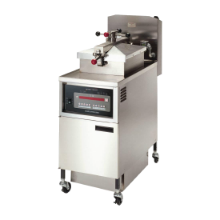
- Free Standing Fryers are high capacity, high output fryers, ideal for constant everyday use. Many free standing fryers have filtration units built into the base to help remove debris from the cooking oil.
- Induction Fryers can be either countertop or freestanding. Using the latest induction cooking technology, these fryers are designed to improve operational efficiency by reducing running costs and making cleaning faster.
There are other specialised fryer types that are designed to excel at particular tasks, such as Doughnut Fryers and oil free fryers, as well as combi fryers which are combined with other appliances for maximum versatility.


Features & Benefits
- Power and Capacity: Whether you're expecting spikes in demand or a consistent, high turnover of food, careful consideration needs to be made to the power and oil capacity of the fryer. Higher power fryers generally heat up and recover temperature faster (sometimes called the response time), meaning more food can be cooked in a smaller time frame.
Likewise, if you only use the fryer occasionally, a smaller light duty fryer could be more efficient in the long term. Although using a higher capacity fryer gives you the facility to cook more in one frying cycle, it also generally means a bigger fryer and more oil, which could use a considerable amount of valuable kitchen space and energy. - Power Type: Commercial fryers typically use gas or electricity connections, with the most powerful versions requiring a direct, permanent hardwired connection to the mains to operate effectively. With the difference between the performance of gas and electricity versions being marginal, the decision would generally be down to user preference and the availability of a gas or electricity connection. For more information about electrical power types, see our Single Phase vs Three Phase Power guide.
- Single Tank or Twin Tank: This relates to how many separate oil compartments there are. The main benefit of twin tank fryers is the ability to independently fry two separate food types at different temperatures without the risk of cross-contamination. In addition, a twin tank fryer is sometimes considered more efficient as you can choose to use a single tank when it's quiet. Conversely, a large, single tank fryer can accommodate bigger frying baskets, allowing bulk frying during busy periods.
- Number of Baskets: Multiple baskets allow you to cook more than one food type at a time, albeit with smaller quantities than large single baskets. Using a large single tank fryer gives you the option of using either single or multiple basket configurations depending on your menu.
- Manual or Programmable: Commercial kitchens can be pretty busy places, so some fryers have the option to notify you when the cooking is completed. Some of the very top end fryers even raise the fryer basket for you once the food is cooked. Although programmable fryers can cost more, they can save you a significant amount of time.
- Running Costs: Without doubt, the most costly ongoing expense when operating a professional fryer is the cooking oil. Once oil is spent, the quality and taste of fried food can deteriorate - so oil should be changed on a regular basis. Many modern fryers are designed to extend the life of its cooking oil by intelligent filtration or by implementing cool zones which prevent food sediment from burning and contaminating the oil. Due to the size and complexity of filtration systems, they are mainly seen within the stand on free standing fryers.
Oil life can also be extended by manually removing food debris using a skimmer (commonly called a spider) or by using additives such as Frypowder. Other more powerful filtration methods are also available, such as the innovative Vito Oil Filters. Check out our Frying Oil Filtration category for more information.
TIP: Used oil can usually be recycled. In fact, some companies may even pay you to collect it. Check online for local collection options. Used oil can quickly block drains, so make sure to dispose of it responsibly.
- Size: Free standing fryers can range in size from compact, narrow FriFri fryers to the largest Falcon fryers with twin pan, twin basket versions. As there's such a vast variation in sizes available, it’s important to make sure the fryer will fit in to where you want it to go. For more information about sizing, check out our large item delivery video:
Cleaning & Maintenance
Cleaning is one of the most time consuming kitchen tasks, so it’s important to take into consideration how long your new fryer will take to clean and maintain. The easiest method to remove spent oil is by using a front-mounted drain valve, which is seen on many commercial countertop and free standing fryers - just make sure to allow the oil to cool before draining and use a suitable receptacle for oil collection, such as a stainless steel bucket. If the fryer doesn’t have a drain valve, the oil tank and heating elements can usually be completely removed from the fryer to make draining and cleaning easier.
Most fryer baskets can usually be cleaned in a commercial dishwasher or utensil dishwasher, or depending on the material of the handle, could even be placed overnight in a decarboniser for the most effective, hygienic cleaning.
The exterior of the fryer can generally be cleaned in exactly the same way as your other catering appliances.
Frequently Asked Questions
What is an Induction Fryer?
An Induction Fryer is a new and unique type of fryer. Rather than having the elements immersed in the cooking oil, the tank itself is heated through induction. This has numerous benefits. It's efficient, faster to heat and is much easier to clean - especially in comparison to fixed element fryers. A good example of a commercial induction fryer is the Buffalo Induction Fryer.
Do I need to buy a lid for my fryer?
Whilst many fryers will come with lids as standard, not all of them will. Even though lids aren't used whilst a fryer is on, they are effective at preventing debris getting into your oil when the fryer isn't in use.
Why has the fryer just turned itself off?
Oil catching fire is highly dangerous, so most fryers have a built-in safety system which automatically shuts off the machine if the temperature gets too high. You can usually simply push the reset button to resolve this, however it's worth investigating the causes of the overload if it's a common occurance.
Where can I buy fryer spares?
There's a huge amount of genuine replacement parts such as baskets, elements, timers and thermostats within our Spares and Accessories section.