
Catering Health and Safety Tips for Business Owners
Health and safety is a big concern in the hospitality sector.
From cuts in the kitchen to slips in the serving area, you’ll know a restaurant, bar or hotel can be a hazardous place to work – or visit – if the proper precautions aren’t taken.
For establishments serving food to the public, unhygienic or unsafe food can pose a further risk.
With all this in mind, making your business safe can seem a daunting task. Luckily, this handy guide will help you do just that.
shop all Jantex cleaning products nowStaff Health & Safety
Catering health and safety falls into two categories: staff safety, and safety of the public.
As you’ll know, the Health and Safety Executive (HSE) inspects businesses to ensure staff are provided with a safe working environment.
TIP: The HSE's requirements for a safe working environment include having sufficient first aid supplies - so make sure your first aid kit is fully stocked up.
Responsibility for this lies with you, and failure to do so can result in failed inspections, fines and worse.
But keeping staff safe has other benefits – and could even save you money. A slip in the kitchen could cause a long-term injury that leaves you short-staffed – eating in to your profits. That’s before considering compensation pay-outs and potential fines!
Accident-proofing therefore makes both legal and financial sense – so keep an eye on these areas to ensure your staff stay safe.
Slips, Trips & Falls

According to the HSE, slips and trips are the most common accidents in the catering industry.
Kitchens are hotspots for spills and other trip hazards, and with staff spending hours on their feet in these often hectic environments, accidents can happen.
To minimise slips and trips:
- Mop up spills immediately: Keep blue roll or mops on hand, and ensure spills are caught before they become a problem. Oil and grease are much harder to mop up than water and may require specialist floor cleaner. Make sure this is on hand too!
- Use wet floor signs: A simple way to avoid slips
- Ensure staff wear specialist anti-slip footwear: Extra grip means fewer slips
- Put down non-slip anti-fatigue mats: These not only prevent slips, but also minimise strain from long periods of standing
- Fix leaks: Preventing puddles is key to minimising slips and trips; fix leaky pipes as soon as possible
- Move trip hazards: Store boxes, bags, cables and all other trip hazards in cupboards or lockers, especially in high traffic areas
- Fix your flooring: Replacing loose tiles or carpet is a quick and easy fix that’ll pay off in the long-run
Manual Handling
Manual handling injuries are among the most common in UK workplaces. This is no different in the catering sector.
Reorganising the layout of busy areas is the easiest way to prevent these injuries. This could mean doing something as simple as making commonly used utensils easier to reach by storing them lower down on a set of shelves, or moving your chillers closer to where fresh goods are brought in to minimise carrying time.
If reorganisation isn’t an option, try these quick fixes instead:
- Provide trolleys for transporting heavy loads
- Store heavier items at waist height to reduce stretching and strain
- Place heavy equipment like fridges on castors to make cleaning around them easier
- Provide dishwashers to take the strain out of hand-washing and train staff to not overload dishwashing racks
- Provide food prep machines to minimise manual work with sharp knives
- Provide smaller refuse bags to minimise lifting of heavy waste loads
TIP: Many of these pointers will require investment. But eliminating these common workplace injuries is guaranteed to pay off in the long run.
Kitchen Safety

A safe kitchen means safe staff. Follow these simple tips to keep your cooking areas accident-free.
Knife Safety
Small nicks and cuts are part and parcel of life as a chef. But more serious injuries can bring your service to a halt - and maybe even leave you a team member short when you need them the most.
Luckily, ensuring your chefs have everything they have to use knives safely is simple and – in most cases – cheap.
Sharpening
Although counter-intuitive, the sharper the knife is, the safer it is to use.
Blunt knives are more likely to slip and require more force to chop with, increasing the strain on chefs’ wrists, elbows and arms.
Whetstones, sharpening steels or knife sharpeners are all easy to use, and will ensure your chefs have sharp, safe blades.
For tips on safe sharpening, check out our complete sharpening guide.
Storage
Storing knives safely is another quick step you can take to minimise accidents. Leaving sharp blades out on chopping surfaces or chucking them in a disorganised drawer is a recipe for an accident.
A knife block or magnetic knife strip will greatly enhance the safety of your kitchen. Having knives readily to hand will also streamline your kitchen and cut down on time lost searching for missing kitchen kit.
Technique
Proper chopping technique can turn a sharp and otherwise dangerous knife into an indispensable, efficient and - above all - safe kitchen tool.
Cutting and chopping will be second nature to most who work with food – but the safest and often quickest techniques aren’t always used.
Ensuring your staff stick to tried and tested techniques is one of the most effective ways to minimise kitchen accidents. And even if your staff do know the ins and outs of proper knife technique, a refresher is always useful.
Article: We have several quick and simple chopping technique articles that’ll keep your chefs’ knife-work on point.
Dermatitis
Dermatitis is a skin disease triggered by frequent contact with food, water and harsh cleaning chemicals.
The sore, dry and irritated skin that results can render employees unable to work for long periods. Those working in the catering industry are particularly susceptible.
However, simple steps can be taken to prevent it:
- Provide utensils so staff only have to touch food when necessary
- Provide gloves for those working with cleaning chemicals
- Provide sensitive hand wash and moisturiser to replenish the skin’s natural oils
- Ensure staff check their hands regularly for the early signs of dermatitis, i.e. itchy, dry or red skin
Food Safety

Next to staff safety, food hygiene is everything in the catering industry. Failed inspections and large fines await any business that fails to take it seriously.
Hygiene ratings are given to every foodservice business in the UK by the Food Standards Agency (FSA). Rebuilding the public’s trust after receiving a low rating can be extremely difficult.
The FSA breaks food hygiene down into four sections, known as the Four Cs:
- Cross-contamination
- Cleaning
- Chilling
- Cooking
By sticking to the rules for each of the Four Cs, you have nothing to worry about. And the simple tips below will help you do just that.
For the full legal requirements, visit the HSE’s website.
Colour Coding
Colour coding systems are a simple but effective way to keep your food safe. Anything from knives and chopping boards to tongs and food storage containers can be colour coded in the kitchen.
The concept is simple: different coloured equipment is used for different food groups.
Businesses can have their own colour-coded system, but in general the following is used:
- Red: Raw meat
- Blue: Raw fish
- Yellow: Cooked meat
- Green: Salad & fruit
- Brown: Vegetables
- White: Dairy
By sticking to this system, you can avoid the cross-contamination of bacteria and allergens by ensuring raw and cooked ingredients are separated, and allergens are kept away from non-allergenic ingredients.
Cleaning Your Kitchen
A clean kitchen is a safe kitchen.
Not only will a poorly cleaned kitchen affect your hygiene rating, but cross contamination and bacterial transfer are much more likely in a dirty food prep area.
For a complete breakdown of what needs to be cleaned and how often, see our ultimate kitchen cleaning guide.
But, for a general overview, the following should be cleaned at least this often:
- Surfaces & Utensils: After each use
- Ovens: Weekly
- Sinks: Between uses and throughout the day if used frequently
- Fridges and freezers: Monthly
- Bins: Weekly
- Ventilation Systems: Every three months to a year, depending on use
You can improve your kitchen hygiene further by colour coding your cleaning kit. Just like with food prep equipment, this involves using a certain colour implement for a certain job. You might use yellow mops to clean your kitchen and red for your washrooms.
What Can Your Staff Do?
You could have the cleanest kitchen in the world, but without staff taking food hygiene into their own hands – literally – bacteria will continue to spread.
These small measures will help your staff make a big difference.
Wash Hands
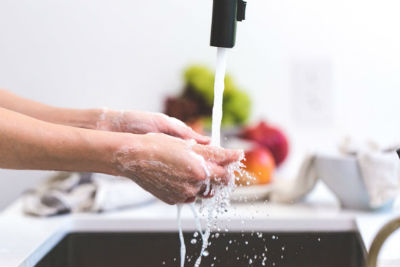
Common sense hygiene practises can make all the difference when working with food, and washing your hands is one of the simplest ways to stop the spread of bacteria.
Ensure staff wash their hands:
- Before, during and after preparing food
- After touching raw food
- Before and after treating a cut or wound
- After touching rubbish
It might seem obvious, but washing your hands properly is crucial. The NHS recommends washing your hands in the following way:
- Wet your hands
- Apply soap to cover the whole hand
- Rub hands palm to palm
- Rub the back of your left hand with your right palm while interlacing your fingers. Repeat with the other hand
- Scrub your palms together with fingers interlaced
- Rub the backs of your fingers against your palms with fingers interlocked
- Clasp your left thumb with your right hand and rub in rotation. Repeat with your right thumb
- Rub the tips of your fingers in the opposite palm in a circular motion. Repeat for the other hand
- Rinse hands
Wear Hairnets or Hats
No one likes a hair in their food – least of all inspectors!
Hair nets, beard nets and hats prevent rogue hairs from ruining otherwise perfect meals.
And they needn’t be unsightly. Stylish chef’s hats, caps and more can do the job just as well as hair nets, and keep your staff looking sharp - especially if you have an open kitchen.
Study the Law
The tips above will boost you’re the safety of your business. But you still need to read up on the relevant hygiene and health and safety laws.
Sticking to these laws is the best way to earn your customers’ trust. And, as you’ll know, customer loyalty is the key to success.