
Buying Kitchen Utensils
Are there any utensils you could manage without in the kitchen? Dating back to the Stone Age, we've always had a close relationship with utensils. Thankfully they are less labour-intensive these days and more task-specific. But this means there's a huge choice available. Don't worry though, this guide is here to help you find the right tools for the job. If you are looking for the ultimate list of utensils, you've come to the right place.
Choosing the right utensils helps take the time out of preparing, cooking, portioning and serving food. This is essential when working in a professional kitchen under time constraints. Apart from the obvious benefit of speeding up food prep tasks, utensils also make these processes safer. So how many utensils do you need? Are plastic utensils safe? Read more to find out.
SHOP ALL CATERING UTENSILS NOWMaterials
Fundamental actions such as stirring deep in the bottom of pots can take their toll, but the right choice of materials will ensure your utensils are much kinder to your cookware. For instance, metal utensils are hard-wearing but can damage non-stick coatings such as Teflon, so plastic, rubber or wooden utensils are better suited to use with these types of pots and pans. However, when cooking at high temperatures, rubber and plastic utensils can melt, so it’s crucial to ensure you know how you’re going to be cooking before you make a purchase.
- Wooden utensils are perfect for salads, shallow frying and are generally used for stirring and serving. They are also preferred for their traditional look and feel over more modern materials.
- Plastic utensils are generally lightweight and easy to use, but as mentioned above, they can’t resist high temperatures, making them more suited to service rather than preparation. Spatulas and spoons are the most common types of plastic kitchen utensils.
Are plastic utensils safe? Plastic utensils are absolutely safe to use when preparing food, when they are properly maintained. It is not advised to use scratched, badly worn or cloudy plastics with food. Any plastic utensils showing these signs should be replaced for best hygienic practice.
- Nylon utensils are strong enough for stirring anything, are heat resistant but should never be left in the pan for long periods. They are also easy to clean and to care for.
- Exoglass utensils are also strong and durable, designed not to deteriorate or rust. They don't scratch non-stick coated pans and are ideal for mixing and folding ingredients.
- Aluminium is also used commonly in scoops and presses, a material that is strong and light.
- Stainless steel utensils are by far the most common type, as they have the highest resistance to temperature and regular use. Stainless steel is also extremely easy to clean, making it hygienic and perfect for daily use in commercial kitchens.
- Silicone is unable to warp or chip or corrode like other materials can. They are great for stir frying and can be left alone in the pan without any risk of heat damage. Silicone utensils are also water-proof and stain resistant, so can be left in the sink without developing staining and will keep their colour.
Essential Utensils
How Many Utensils Do I Need?
Your menu can help answer this question. It's a great indicator of the required actions in service, helping you select the right tools for the job. Look through each of your dishes and ingredients in detail. It will soon become apparent if you'll need just the bare essentials like tongs and spatulas, or specialist utensils such as a triturator, blow torch or fin shears.
Using the wrong utensils can mean extra work, or even having to start a dish from scratch which is incredibly wasteful. Below, the main types of utensils are outlined to help you find the right products for your needs.
Chopping Boards and Racks
Before reaching for your chefs knife, a hygienic platform is a necessity whether used at home or in a professional kitchen. A full set of coloured boards is highly recommended for food safety, to ensure each is used for a specific food group. As a bare minimum, raw and cooked food should be prepared on separate boards.
TIP: Our complete guide to Colour Coded Chopping Boards is full of resources and information on this topic.
Thermometers
Though integrated appliance thermometers are convenient, they cannot replicate the accuracy of a dedicated thermometer. These are vital for food safety measuring both the internal temperature of cooked meats and the surrounding environment.
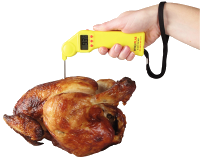
Due to the nature of safety and hygiene requirements, many data sets may be recorded for room temperature, buffet display, oven and cooked food temperature. Keeping this data in an orderly fashion with a log book or data recorder will not only save you time, but ensures data can be called upon at a later date, not to mention the positive impression on the inspector.
Probe and infrared thermometers make readings fast, accurate and hygienic. They will remove any guesswork from oven cooking but still, checking the performance of your appliances regularly is highly recommended.
Tip: Need help choosing the right thermometer? Our guide to thermometers contains all you need to know.
Tongs
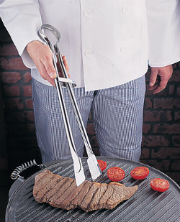
Tongs are one of the most common kitchen utensils, always useful from turning food on the grill and serving salads to mixing pasta like spaghetti or linguine with sauce.
For the vast number of jobs they can perform, several pairs of tongs are always recommended. From the weighty feel of BBQ meat tongs to the fine precision of miniature plating tongs, each have different roles. A selection of colour coded serving tongs is vital for a modern kitchen. These make preparing allergen dishes much safer, and are the most effective way to avoid food poisoning at the source.
Spatulas, Turners and Spoons
Turning foods regularly is essential for achieving even cooking results, and made easy with slotted and high heat turners, scrapers and spatulas. These utensils include softer silicone, traditional wood and durable stainless steel as a choice of materials to match your cookware.
Kitchen Scissors
A pair of good kitchen scissors is an essential tool for preparing many foods. Poultry secateurs and fish scissors, for example, are specialist tools that speed up preparation tasks and cannot be substituted.
Serving Spoons
These utensils are common both at the front and back of house. This is why a polished buffet serving spoon looks quite different to other serving spoons, even though they serve the same purpose. These large utensils are ideal for serving controlled portions on the plate, with perforated and slotted options to drain water and keep it off the plate.
Spoons and Spoonulas
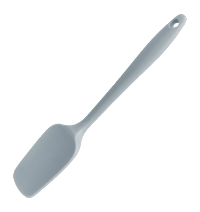
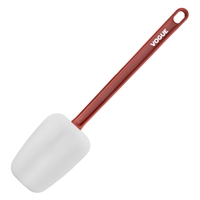
Spoonulas are a great alternative to a spatula or wooden spoon, as they have many other uses. As they have a soft edge, they are perfect for stirring without any risk of damaging your cookware, but they can also spread glazes, sauces and batter evenly over food.
Slicers and Lifters
For portioning delicate foods such as fish, egg and tarts lifters and slicers ensure great presentation, which is all part of delivering a first class service to your guests. Some also feature a serrated edge, to make sure cutting a portion of lasagne is simple and clean. There are also slicers with long handles, and circular pizza or cake lifters for transferring food safely and accurately.
Whisks and Mixing Paddles
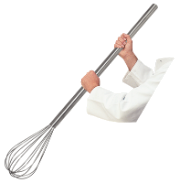
What volume of batches will you be making? Will you be making soups, gravy or pancakes? Whisks differ mainly by the number of wires they use and their length. They can range from a 9" magiwhisk ideal for whisking up smaller ingredients to a 40" balloon whisk which is perfect for reaching into the deepest pots and pans.
Balloon whisks are easily the most versatile type, and they are mostly made of stainless steel making them robust and highly durable. However, silicone coated whisks are especially kind to non-stick pots and pans, making it an excellent choice for smaller pans.
Scales, Jugs and Measuring Cups
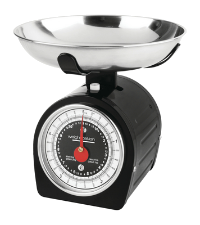
The importance of measuring and weighing ingredients is still underestimated. Accurate scales are necessary for portion consistency as well as keeping waste close to zero. Compact digital scales are not only incredibly precise but use up very little worktop space. You can also decide on a removable platform for easy cleaning.
Graduated mixing and measuring jugs are a fast, easy way of measuring liquids. There's no need for applying conversions either, the extra calculations are unnecessary when you're busy cooking, and you can read the measurements directly from above in most cases.
Potato Mashers and Ricers
Achieve a fine texture from celeriac, potato, suede and practically any root vegetable with a ricer. While ricers tend to produce a smoother texture, a classic flat potato masher gives you mash with more bite. Naturally, in a professional kitchen a heavy duty ricer is recommended for the larger volumes and reliability. Adjustable ricers can also be beneficial if your menu demands different consistencies of mash, these allow for fine, medium and coarse mash.
Peelers, Graters and Garnishing
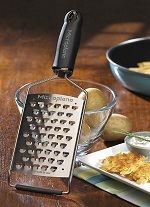
Peelers and graters are used early in the food preparation process, and used to apply finishing touches too.
When looking for peelers, swivel heads and serrated edges are key features that will speed up the process. Though these are hand tools, comfort and a quality blade make all the difference both in terms of results and the lifespan of the tool.
Mandolines are a brilliant invention, capable of producing a variety of cuts including thin julienne strips. Cutting root vegetables into thin crisps is no easy task without one, for example.
Colanders, strainers and salad spinners
When it comes to sifting and straining, specialist tools are the only way to guarantee best results. Lifting food from hot oil can be a dangerous task without the right implements. Kitchen spiders are the best tools for this job, and come with long handles to keep heat sources away. Removing foams and skimming broths is also made easy with the spider.
For squeezing ingredients into fine purees, a moulin or triturator is best suited to the task. These intricate tools work similarly to a food mill, but instead use a fine mesh and miniaturised components to ensure optimum flavour extraction. This also means fibres, seeds and husks cannot pass through for a smoother result. For bisques and fine sauces or purees the triturator really is your best kitchen companion.
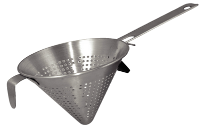
The benefit of buying a professional chinois or conical strainer is that it is unlikely to warp over time. Lips around the edge also provide more stability when set over a mixing bowl, and are ideal for achieving separation.
Can Openers
When deciding on the best can opener for your needs, the most important factors are the number of cans per day that you will need to open and the size of the cans. Heavy duty bench can openers will open 4 to 6 cans per minute, so are designed for frequent use. Large cans can prove to be a struggle without bench openers.
However, if you only need to open a few smaller sized cans per day then a handheld opener is probably the best option. Pressure absorbing, anti-slip handles are important features to look for when buying these utensils.

Multibuy savings



Food Plating and Serving Utensils
Presentation and service is such a key component of dining and thankfully there's an abundance of tools to help you even under the pressure of a busy service.
Ladles and Spoodles
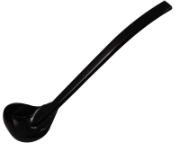
Essential for portioning soup and vegetables, a kitchen ladle has a very clear purpose. Designed with a long handle and deep recess, these utensils can deliver portions accurately without spills and waste. Made from silicone or stainless steel, they are best selected by their capacity, so you know exactly how much goes in to every serving.
Scoops and Portioners
If you're serving ice cream, portioners are standard equipment and their size defines how many portions per litre they will serve. Controlling portion sizes is not just for consistency, but to reduce waste and extra cost to your business.
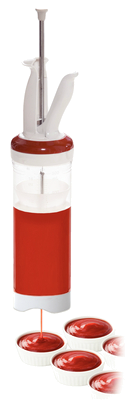
Squeeze Sauce Bottles and Dispensers
From food stalls and canteens to cafes and restaurants, practically every catering venue needs sauce bottles. But it's not all about providing condiments for your customers. Sauce bottles with thinner, longer nozzles can also be used in food plating, creating attractive droplets to make the perfect presentation.
Squeeze bottles can also help to reduce waste with non-drip dispensing valves. They also come in a variety of colours for easy identification of sauce.
Garnishing and Plating Tools
It's true that even basic cutlery can be used to great effect when plating up food, but there's no substitute for a plating mould, melon baller or butter curler. Tweezer tongs and saucier spoons are also items that would be hard to replace. These are just a few examples of the utensils which can turn great food into a feast for the eyes, creative ways to upscale a dish and stand out from competitors.
Article: For more information on food plating tips and trends read our full length guide to The Art of Food Plating.
Gas Igniters and Blow Torches
Blow torches are the perfect tool for many tasks such as finishing crème brulées and browning the topping of many savoury dishes. But they also bring several hidden benefits to the table. For example, they can be used to ease puddings from moulds, and coax stubborn mousses and meringues out of hiding. Perfect if you need a quick fix just seconds before service!
Tip: See our guide on How To Use A Kitchen Blowtorch for tips on best usage and other creative ways in whcih they can be used in the kitchen.

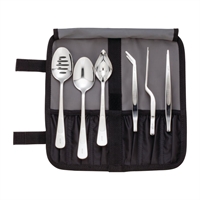


Meat and Fish Utensils
When it comes to preparing meat and fish, you need tools which are designed for safety. Removing bones, fins and scales is especially important and this can be done without tearing into expensive cuts of fish when you have the right tools
Fish and Seafood
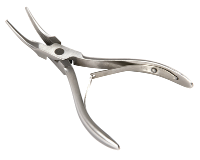
When providing delicate and expensive ingredients on the menu, you need the right tools to make the most of delicate ingredients, ensuring nothing is left to waste. But these utensils are also about presentation and keeping kitchen staff safe. Prizing open oysters is a great example of this, which is why such a specific utensil exists.
Descaling fresh fish and removing bones is not just important for safety, but part of delivering a first class service to customers. Implements that can remove bones without tearing into flesh are a vital part of your toolkit in this case. You can also find shears for removing fins from fish and ducks, as well as an oyster knife which can save some painful accidents.
Meat Preparation Utensils
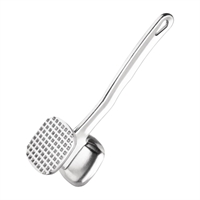
Both for before and after cooking, meat prep tools shorten the time and give you better presentation. Shredding claws will chew through duck and pork, making it look more appetising. A meat tenderiser not only softens tough cuts of meat but it can flatten them to an even thickness. Butterflied cuts of meat can also be pounded for tenderising before cooking.

BBQ & Pizza Utensils
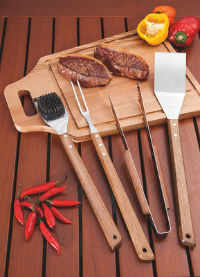
When preparation and serving food within a pizzeria or whilst barbecuing outdoors, using utensils which are designed for specific tasks not only speeds up processes but also creates a safer working environment. For instance, a pizza peel will save staff from burning their hands or wasting ingredients.
Pizza Utensils
For any restaurant or tratoria offering a takeaway pizza service, utensils such as pan grippers, cutting wheels and pizza peels are standard fare. From oven brushes to pizza stones, these tools are the lifeblood for any takeaway service offering a selection of pizzas, calzones and garlic bread. Even when serving pizza at home, pizza scissors and wheels save time and effort when dividing slices effortlessly and speedily.
BBQ Utensils
Safety is key when cooking on a naked flame, which is why skewers, tongs and carving tools designed for use with a barbecue have extra long handles and are made from strong, highly durable materials.
When cooking on a barbecue or plancha, you'll need some extra implements such as a grill brush to remove charred food and keep your grill in top condition. Some of these tools are also available as a set, and travel bag for the ultimate convenience.


Baking Utensils
In any venue that prepares and cooks food, you could be losing profit without a set of accurate scales and measures. But there are many true essentials that bakers of all levels couldn't live without.
Mixing bowls
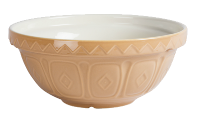
Blending ingredients together and storing mixtures for later is such common practice in the kitchen that mixing bowls can also be termed chefs' bowls. As is the case with many utensils, different materials all have their benefits. For example, for preparing salads and marinating meats, then metal bowls would be the best choice.
As most utensils are made from stainless steel, a hard-wearing metal bowl is likely to stand up to pressure and last you longer
However, if you will be re-heating food regularly you need it to be microwave-safe, and in this case a plastic bowl comes highly recommended.
Shop Mixing and Ingredients Bowls NowCooling Racks
Practically any food you bake needs good air circulation both during cooking and for cooling down afterwards. This ensures quicker cooling but also an even finish all around, so a simple but often overlooked item is the humble oven grid or wire cooling rack. These are also known as patisserie grids.
Baking Mats
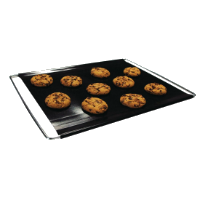
Allowing moisture to escape from the bottom of your bakes ensures a crisp finish, which is where baking mats become incredibly useful. Using a non-stick coating they make pastries easy to remove and are also easy to clean.
If air circulation is not essential in your baking, a cooking liner is also a wise investment. A good oven liner will help you remove food easily, and also protect your oven from excess oils and grease, making it easier to clean.
Rolling Pins
There is still no obvious substitute for a traditional rolling pin when flattening dough. However, with ball bearings in the handles and the inclusion of polypropylene pins, there is still a wide choice available to suit your baking needs.
Rolling pin guide rings should also be a consideration, because for very little cost you can easily and accurately adjust the desired thickness of your dough when rolling.
Sieves
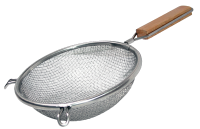
If you are working with cakes and pastries the classic frame sieve is an essential item, but flour sieves are less common and serve as reliable tools for clumpy flour, giving you better control over dustings and fine touches.
Cream Whippers
There's more than meets the eye when it comes to cream whippers. These can be very useful in making infusions, foams and flavoured cream. They can also store delicate mixtures efficiently, so there are many hidden benefits.
Article: For tips on troubleshooting, how to use and clean your cream whipper read our guide on How To Use A Cream Whipper.
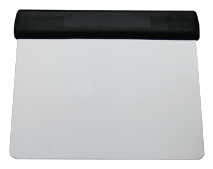 Pastry Cutters and Scrapers
A bench knife or pastry scraper might just be one of the most underrated tools in your box. A baking essential for manipulating dough, this handy tool also tends to be the go-to utensil for clearing down prep tables.
Whether you're working meat, pastry or finishing off your veg prep for the evening ahead, this is a blade edge that can withstand heavy duty use all day long. Perfect if time is of the essence and you need to clear the deck in a hurry.


Top 5 Utensils
There are usually a handful of utensils which make the barebones of any food preparation area. These are the top five essential utensils:
Buying Guide: For more tips on what you need for your kitchen, visit our guide to kitting out a Commercial Kitchen.