
How Are Coffee Beans Roasted?
Raw coffee beans are dropped into loaders and then into a rotating drum. The drum is pre-heated to a temperature of around 240 degrees. After 12-15 minutes depending on the type of roast, the roasted beans will exit the drum at around 195 degrees and are then taken out into a cooling tray at the front of the roaster. They are then passed through a machine that removes any stones or debris before being checked by hand for any defects, and once cooled completely, finally packaged for sale.
Read below for a more in-depth look.
Shop Coffee Supplies NowWatching a Coffee Roast
Nisbets recently took a tour of Extract Coffee in Bristol to watch in detail how coffee is roasted from sack to bean. We talk coffee with David Faulkner, Director & Head Roaster with interviews, along with further insight and tips from roasters Mac and Ashlee.
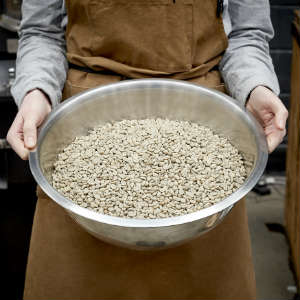
Firstly, the beans are loaded into a drum inside the roaster, which rotates over gas burners and agitates the coffee.
This particular roast is going to be an espresso coffee, from one single plant in Peru and will take around 12-15 minutes using 3 ½ kilos of raw green beans. It is a washed process which means that when the coffee fruit is picked, all the fruit pulp and skin is removed before the drying process. This makes the coffees really clean and balanced with lots of sweetness.
In the early stages, the roast can smell quite straw-like. Naturally, your senses need to be tuned in to the roast, with all the other scents wafting throughout the roastery. This is how you really learn to roast coffee, without the aid of software and sensors.
An espresso roast takes a little longer to extract more sweetness and body, which stands up better to the intensity of espresso brewing. So the beans are roasted a little more than they would be for filter coffee, for example. This pushes the sugar development further which is how you can achieve that extra sweetness in the flavour.
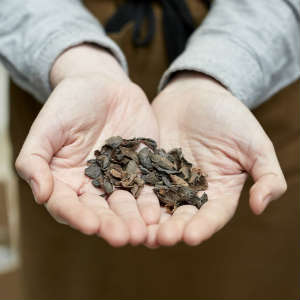
One of the biproducts produced from roasting is called ‘chaff’. This is the final layer that surrounds the seed of the coffee cherry, as the beans get hot they shed this jacket like the husk of a nut. These are collected and recycled in composts, as they contains a lot of nitrogen and can also deter pests due to their caffeine content. The skin of the coffee cherry is also starting to be used more frequently to make tea, which is known as 'cascara' (pictured right).
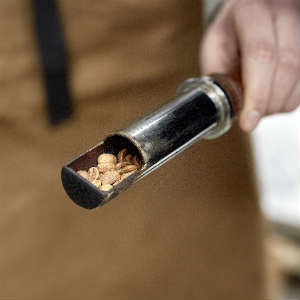
The coffee beans start to expand as they get hot, reaching a mottled, yellowing effect. The beans are taking on more energy as heat as they roast, when they reach a point when they can no longer take on any more energy the reaction becomes exothermic. This is a key time as the coffee starts to develop all the sugars and oils it needs to take on the full-bodied espresso flavour. It's also a crucial time in terms of adjusting with the heat that is brought into the roast. The coffee is browning because the natural sugars are caramelising, which starts to produce a pleasant, malty smell. Even though this roast is smelling great, the beans are quite a long way from the finished product.
As the coffee beans expand further with the heat and pressure they start to produce their own heat and make an audible 'cracking' sound. This stage is known as 'first crack'. None of the coffees at Extract are ever taken to the second crack. This is usually time to turn the gas down, to compensate for the heat exuded by the beans. As this is an espresso roast however, the heat goes back up.
The beans are monitored very closely, and when roasted to the optimum colour and level of development, they need to be stopped from roasting any further via a cooling process.
Cooling The Beans
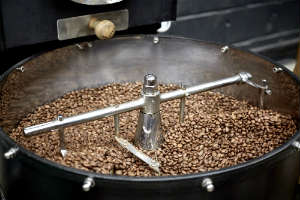
The beans are then released into a cooling tray beneath the front door of the roaster, which rotates to keep them evenly distributed. Air is drawn through small holes to cool the beans evenly.
Espresso roasts like this tend to last a bit longer than filter coffee roasts, but they can also be too fresh. When the coffee is very fresh, there is still a lot of gas within the beans which can be quite volatile during the extraction process, making it quite lively and acidic in the taste.
In this case, leaving the coffee for 7-10 days after the roast date as always advised before brewing. The coffee can be good for a month, or even two depending if it has been stored well.
Tip: Store ground coffee in an airtight container (ideally opaque) and keep it somewhere cool and dry. It's never a good idea to store your grounds in the fridge as they will take on smells and other contaminents.
Spotting Defects
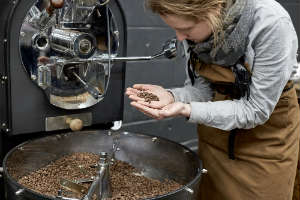
Whilst the coffee is cooling, any defects can be picked out from the batch. Some are know as quakers, which only show after the coffee has been roasted. These are beans that have low sugar content, so it could be that they did not mature fully and therefore don't change their colour to dark brown because they simply didn't have enough sugars to caramelise. They look under-roasted but actually taste burnt. They are not a sign of inferior coffee, and are fairly common.
Pea berries can also be found in any batch of roasted coffee. With an average coffee cherry there are two seeds facing each other. Around those seeds is a mutilidge, the fruit pulp and the skin. With peaberries, also known as pearls, they would be alone as a single seed inside the cherry creating an almost perfectly round shape ot the fruit. These are considered natural defects and will exist in every batch of coffee. Peaberry lots are sold on their own and tend to be really sweet, therefore ideal for espresso coffee.
Elephant ears are named as such due to their shape. These can occur during the formation of the seed, when part of the seed slips out and makes it less dense. These are simply discarded from the batch. Small or broken beans can be a sign of bad grading.
Coffee Beans At Each Stage Of The Roasting Process
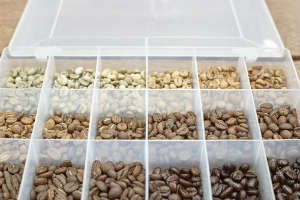
The raw, green unroasted beans can be seen at the top left of the picture. This is how they look fresh out of the sack. The top row of beans show the phase between the initial drop, to the point after about four minutes of roasting time. There is not much sugar development during this period, as the beans only start to do this after about six minutes.
The final three examples shown bottom right are over-roasted, for a demonstration of how far the roast can go. At this stage, the sugars stop developing and the beans start to burn. They will turn a shiny colour as the oils are forced out, and the beans become dehydrated. These beans are what you might expect to see in most commercial coffee shops to cater for western palettes, tasting ashy and charred. In the western world, most coffee is roasted to this level which creates a bitter taste, which is why milk and sugar is often added.
Experimental Roasts
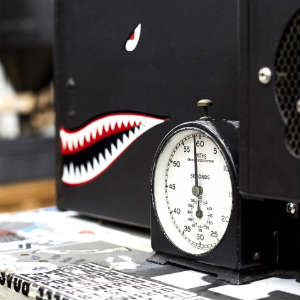
Extract have a small roaster called 'The Professor', which is designed for small batch roasting. These smaller batches work as a test for new coffee, which is then scaled up for the bigger roasters.
As coffee samples are sent from various importers, it makes sense to try out a small batch roast of 100 grams on the test roaster. This roaster has no software, so this is how you learn to roast and choose coffees. The Professor is made from a recycled popcorn machine, along with some parts from an old grinder. Beside the machine notes are recorded about the roast, such as it didn't roast evenly or a crack was not heard. Maybe the beans have tipped, which means they have blown out slightly from the heat. This gives an indication of what will happen on a bigger scale.
White Label Roasting
It might sound a bit like cutting a vinyl dubplate, but Extract are actually roasting what is know as 'white label' coffee as a way to test new and exciting blends..
"We do this for places like Boston Tea Party and River Cottage. We roast for them, then they pay us a visit afterwards and feed back about the blend and it's characteristics". Mac - Extract Coffee.
How Do The Bigger Roasters Work?
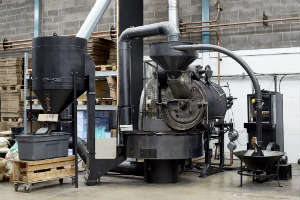
Firstly, beans are dropped into loaders, then into a backing line which brings them into the drum. Burners underneath heat the drum, until it reaches the right temperature.
Next, the beans are released into the roaster, a typical roast takes about 15 minutes. The beans are dropped in at around 240 degrees, but this varies from coffee to coffee.
An espresso roast needs a longer roast to extract more sugars from the beans, the filter coffee requires a little less heat and a shorter, lighter roast to pick out more fruity notes from the coffee.
When the beans are finished on the big roasters, they go into what’s called a ‘de-stoner', which is basically a vacuum line. It takes the coffee up into the hopper and if it’s heavier than the coffee it drops down and gets taken out.
"We found Betty, our 60kg Probat roaster from 1955, covered in soot in an old shop in Wales and practically the size of the shop itself!" Mac - Extract Coffee.
The Business Of Coffee Roasting
Using Vintage Machinery
One of the first things to notice at Extract Coffee is the visually-arresting machines that almost resemble parts of an old steam engine. Each machine has been lovingly restored, often based on technology from many decades ago which begs the question: 'what benefits does using vintage machinery have over the modern commercial roaster?'
"They have an aesthetic which the newer machines don’t have. They are also simpler to use. We also buy them when they are in need of a little 'TLC', then spend a lot of time restoring them. That costs less, and also we get to know how they work by taking them apart. Once we do this we can modernise them, put new burners and control systems on, and digitise the probe so we can see what’s going on inside of them. In the case of this machine (Bertha) we’ve added an afterburner to the back of it. All of the smoke coming out of the machine goes into the afterburner, which gets rid of all the smoke so we only put clean air out. This ensures that we don't not annoy our neighbours!" David - Extract Coffee.
Sourcing The Right Coffee
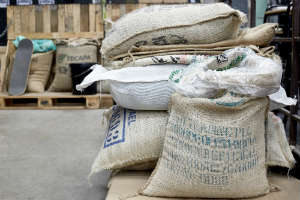
It's clear to see that the whole food sector has changed in this country, with regard to buying locally and seasonal produce, and the same applies to coffee.
There is still some ambiguity over terms such as 'fair trade' and 'ethics', which seems to vary according to who you ask in the coffee industry, whether it is baristas, coffee shop owners or buyers.
David confirms that great cups of coffee come from farms with good husbandary, techniques and which are paid correctly.
"It’s about relationships, which we spend a long time working on. We have farms that we’ve used for six years, where we started buying two bags of coffee, now we buy three containers. That’s as good as it gets when it comes to sustainability, and fair trade." David - Extract Coffee.
'Secret' blends
Consumerism is at a point now where knowledge is part of the value. This has become so important, where customers would desire coffee from certain countries, they are now far more specific about their demands, desiring a Kenyan variety and a washed process for example. The days of secret blends therefore seem a thing of the past, with knowledge and back story such an integral part of the product.
"You sell great chefs' knives and the quality speaks for itself. In the same way on coffee farms, with instagram, twitter and other social media platforms, thre is no smokescreening of information because the farmers have exactly those things to hand, even in Peru over 2000 metres above sea level! So there’s no 'dark ages' any more. The roaster isn’t a magic machine either, you can’t add anything to the coffee but make it more palatable. So as roasters, sourcing the coffee is the first hurdle, and the most important." David - Extract Coffee.
Article: For more information on the history of coffee read our article on Coffee Waves.
Bean To Cup: The Job Of A Barista
In Italy, the role of a barista has always been one that is revered as a fine skill. In the UK, this job still seems massively undervalued both by cafe owners and customers, but times are changing..
"One of the things we underestimated when we first started in the coffee roasting business was training and education. We thought originally it was going to be about buying and selling coffee, and that anyone can make it..but we had to learn this for ourselves, and now we’re teaching the skill. We teach people to get accreditations, so we have an in-house trainer Dan who does a fantastic job of it." David - Extract Coffee.
Article: How is the quality of your brewing water? See alternative water treatments in our article: What is Third Wave Water?
See The Roastery for Yourself
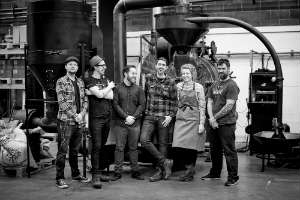
Extract encourage all consumers, restaurant, hotel and cafe owners to get to know their local roastery to find out more about the coffees on offer. They provide free training to all their accounts, as they want to ensure their coffee always tastes as it should. Simply walk in to Extract Coffee where they roast to order.
Inside the roastery you'll find a selection of freshly ground coffee and beans, along with a friendly, passionate and enthusiastic team. It's well worth a visit whether you're a coffee-lover, barista or café owner as getting to know your local roastery can only benefit the coffee chain.
The guys at Extract also pointed out that speciality coffee capsules look set to make a big impact in the coffee market soon...