How to Make Your Catering Business Green
Putting the environment at the heart of your day-to-day operation is a great way to reduce your impact on the planet, save huge amounts of money and create a business customers want to support and staff are proud to work for.
There are many ways you can adapt your service to be more eco-friendly. Even the smallest tweaks can make big changes to your business and the future of our planet.
So, what are some of the best changes you can make for a greener service?
Explore All Eco-Friendly ProductsWhy Should Businesses Go Green?
- To help the future of our planet: From the amount of food you waste to the energy you consume, every action you make can impact the environment. Whether it’s reducing the amount of harmful greenhouse gases let off into the atmosphere or the amount of pollution in oceans and other ecosystems, making small, sustainable tweaks to your service can have some truly positive effects on our planet.
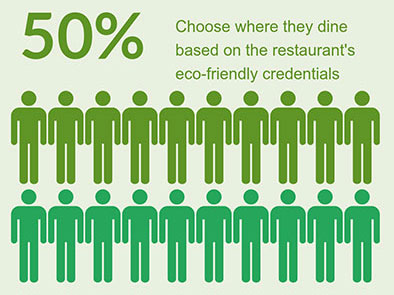
- Because your customers care: Showing you are committed to environmental issues will help customers see you aren’t just interested in profits. With the state of our planet on the minds of the public more than ever, you can’t afford to be seen taking a back seat when it comes to the environment. In fact, in a survey of 260 Nisbets domestic customers, 50% said they choose where they eat based on the green credentials of the venue – so now’s the time to start taking a real interest in the environment.
- To build an engaged, motivated and happy workforce: Millennials are set to make up half of the labour market by 2020. No longer motivated purely by money, this generation has a genuine passion and concern for important global issues. Having company values that reflect your young workforce’s own principles is a great way to keep staff happy. A happy team is an effective team, and by adopting a more considered approach to the environment, you may soon see both performance and staff retention rates soar.
- Because there’s real cost savings to be had: You may be surprised at just how much you can save by bringing some environmentally friendly practices into your business. For example, switching to energy-saving appliances isn’t only a great way to lower your carbon footprint, it can also drastically reduce your running costs in the long run. While the initial investment can sometimes be costly, you’ll soon reap the financial rewards for acting in a more Earth-friendly way.
Article: For more financial tips, check out our guide on how to reduce costs in a restaurant.
How to Be Environmentally Friendly?
Adapt Your Menu
Your menu is often the biggest factor that draws customers in and keeps them coming back for more. It’s also one of the easiest ways you can make small, sustainable changes to your service.
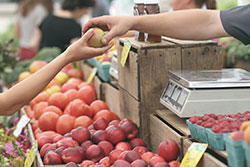
The origin of your food can have a big impact on the planet. Ingredients grown and picked in the UK or neighbouring European countries often have a much smaller carbon footprint than those shipped halfway across the globe. Switching to produce grown closer to home is therefore a simple yet incredibly effective way to reduce the food miles of your menu and start doing that little bit more for the environment
Article: Not sure what carbon footprint means? Take a look at our eco-friendly glossary for your ultimate guide to green terminology.
While locally sourced food has a reputation for being more expensive, you may find this is not always the case. With the cost of imported goods continuing to rise, it can be far more friendly to your finances to source from local suppliers. In fact, in a survey of 850 Nisbets customers, 56% said they would be aiming to buy more locally sourced produce after Brexit.
However, this is not to say that all locally sourced ingredients are kinder to the planet than those shipped from further afield.
Out-of-season produce grown domestically in heated greenhouses and stored for months in energy-intensive fridges can often have a far greater carbon footprint than ingredients grown abroad in their natural climates and flown to the UK.
As such, the best way to ensure that your ingredients are as Earth-friendly as can be is to buy locally grown, in-season produce wherever possible.
TIP: Creating a communal kitchen garden is a great way to bring your food miles right down and get staff involved with a fun, teambuilding project. If you haven’t got the space for a whole garden, our dedicated plant growing systems are great for growing everything from herbs and microgreens to lettuce and broccoli in smaller spaces.
While your entire menu doesn’t have to be scrapped, and it is not always possible to locally source in-season produce all year round, switching out ingredients with the seasons gives your chefs a great opportunity to experiment with new dishes and flavours.
Reduce and Manage Your Waste
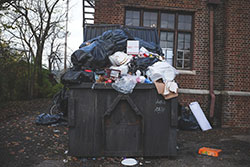
A shocking total of 3,415,000 tonnes of waste is disposed of in the food sector every year. Whether it’s food scraps or packaging, all forms of waste have the potential to be incredibly damaging to the environment. Waste sent to landfill can let off greenhouse gases as it decomposes and also pollute groundwater and soil sources. A huge amount of carbon emissions, energy and resources are involved in the creation, collection, transportation and processing of your waste too – all of which can be costly to the planet.
While it may be unrealistic to aim for a ‘zero waste’ operation straight away, there are lots of different ways you can significantly reduce your waste or manage it more sustainably.
How to Reduce Your Waste
- Use a FIFO food storage system: When it comes to storing and merchandising your food, using a ‘First In, First Out’ system will position your newer perishables behind older stock. This will ensure food is used up before it has the chance to go out of date.
- Bring food waste into your menus: Whether it’s using vegetable peels to make stocks or converting leftovers into tasty soups and broths, encourage your kitchen staff to turn your seemingly useless food waste into incredibly useful ingredients.
- Monitor your portion sizes:
 There’s no doubt your customers love value for their money. But over-plating can lead to half-eaten meals and a huge amount of food waste. If customers are frequently leaving behind leftovers, combine standardised recipes with portioners, graduated measuring jugs and digital scales to make sure your staff are always serving the same amount of food. You could also offer guests different plate sizes on your menus so those with a smaller appetite can select the serving that suits them best.
 - Encourage suppliers to change their ways: Contact your suppliers to see if there are any changes that can be made in the way your products are delivered. Asking suppliers to swap single-use plastic packaging for reusable crates and boxes can reduce the amount of waste you generate.
- Audit your stock: While buying in bulk can be a great cost-saving strategy, excessive purchasing can often leave you with more stock than you need. This can result in huge amounts of waste and needless added costs to your finances. Performing an audit on the amount of food, equipment and disposables you actually use and have left over will help to make sure you’re not generating excess waste.
- Donate any edible food waste: Donating leftovers to foodbanks, charities and homeless shelters is a great way to manage wastage and do more for your local community.
- Offer staff meals: Giving staff any leftover ingredients to take away or even cook during breaks is another brilliant way to divert waste from landfill. This gesture will also help to raise staff morale and make your employees feel appreciated for their hard efforts.
How to Manage Your Waste
- Encourage more effective recycling: For situations where waste is unavoidable, you should try to recycle and compost as much as possible. Recycling and composting means less waste is sent to landfill, minimising these sites’ harmful effects on the planet. Recycling bins can be designated to every possible waste stream and combined to create easy-to-use sortation stations in your front and back-of-house areas.
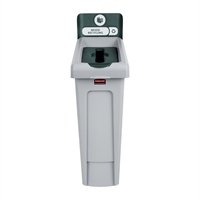

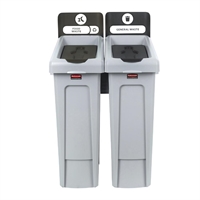
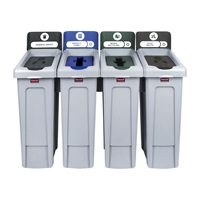
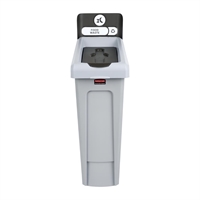
- Use electric waste compactors: Electric waste compactors are designed to compress and reduce the volume of your rubbish, making it far easier to manage recyclables and food waste. Waste compactors can therefore improve your recycling and composting rates significantly.
- Manage your FOG: Fats, oils and grease (FOG) can often end up in drains and pipes when not disposed of properly. This leads to blocked drains and can potentially pollute the environment. One of the most Earth-friendly ways to manage your wasted oil is to store it away and organise regular oil collections with dedicated waste disposal businesses. Many of these businesses offer services that will collect your used cooking oil and transport it to specialised facilities where it can be converted into a renewable fuel source.
In many instances, it’s simply impossible to prevent FOG getting into drains. In these cases, GreasePak modules can be used to keep drains clear in a way that's kinder to the planet. GreasePak modules use a 100% natural bio-fluid to break down fats, oils and grease and maintain free-running drains. This will minimise odours, avoid blockages, prevent the potential pollution of the environment and ensure you can meet legal requirements for environmentally responsible grease removal.
Article: For more information on GreasePak modules, read our guide on how to meet FOG regulations in commercial kitchens.
Minimise Your Energy Consumption

According to The Carbon Trust, the hospitality sector produces in excess of 8 million tonnes of carbon emissions a year. These emissions can be extremely damaging to the environment and are largely to blame for the ongoing global warming crisis. Energy consumption also accounts for 4-6% of a catering business’s operating profits, meaning reducing your electricity usage can help to both improve profitability and lower your carbon footprint.
By bringing simple efficiency measures into your service, The Carbon Trust estimates you can see a reduction of more than 10% in your total energy consumption.
While switching out appliances and equipment for energy-efficient alternatives will massively reduce your electricity consumption and carbon footprint, there are smaller changes you can make with little-to-no investment needed:
- Switching off lights, appliances and POS systems in between services is a simple change, but one that many businesses forget to do. Bringing in a checklist for staff to follow will help to ensure all necessary appliances are turned off in your down time.
- Appliances and equipment that aren’t regularly maintained will often have to work much harder to operate. Whether it’s ensuring the filters in your kitchen canopies are free from grease and oils, or that the seals on your refrigeration units are kept tight to prevent warm air seeping in, maintaining your equipment is essential in keeping your service running efficiently. While it can be tempting to put off for a later date, the amount of energy, money and carbon emissions involved in operating poorly maintained equipment can prove extremely costly to your finances and the future of our planet.
- The design of your kitchen is also important when it comes to energy consumption. Placing cooking equipment near your refrigeration units can raise ambient temperatures and cause your fridges and freezers to work harder and consume far more energy. As such, try to keep your heating and cooling appliances separate wherever possible. Squeezing your refrigeration units into poorly ventilated spaces is also a recipe for poor performance and a high energy bill. You should also aim to place your cooking equipment under the same ventilation hoods to maximise efficiency.
Article: Need more tips on your kitchen layout? Take a look at our guide on designing a commercial kitchen.
Energy-efficient alternatives to standard catering appliances and equipment are another superb way to minimise electricity usage and lower your carbon footprint. While the initial investment can sometimes be more expensive, the long-term environmental and financial benefits that come with making the switch are truly worth it.
If you can't afford to swap out all of your appliances right away, consider installing a smart meter in your premises. Smart meters allow you to accurately track how much energy you’re using – and how much this is costing you – in near real time. As well as ensuring you'll be billed only for the energy you actually use, smart meters also allow you to monitor which of your appliances are the most energy intensive and highlight what needs to be replaced first.
Here are four of the best energy-efficient alternatives to your standard catering equipment:
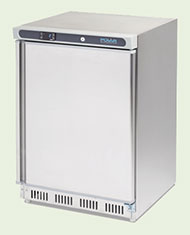
Energy-Efficient Fridges and Freezers
The most efficient fridges and freezers use a range of design features and technologies to keep your food at the perfect temperature using as little energy as possible.
Commercial refrigeration units that meet the highest criteria for efficiency are given an ‘A’ energy rating. As fridges and freezers need to run all day, every day, an A-rated unit is one of the best investments you can make.
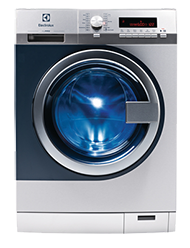
Energy-Efficient Washing Machines and Tumble Dryers
Many commercial washing machines and tumble dryers use a variety of different technologies – such as automatic sensors - to clean and dry quickly and efficiently.
These washing machines and tumble dryers have energy ratings ranging from A to A+++, meaning they deliver superb performance while using far less electricity than standard models.
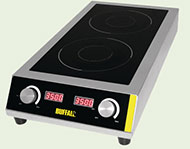
Induction Cookers
The magnetic technology of induction cookers allows them to quickly generate heat and ensure more energy is transferred into the cooking process. This means they offer a far more efficient performance compared to standard gas and electric machines.
The magnetic technology also means less heat escapes into the air when cooking. This will keep your kitchen cooler and reduce the amount of work required – and therefore energy consumption – of your refrigeration and ventilation units.
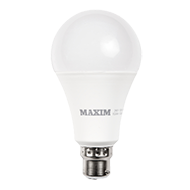
Energy-Saving Light Bulbs
Replacing your incandescent bulbs with LED bulbs and compact fluorescent lamps (CFL) is a cheap way to drastically reduce your energy consumption.
Offering similar levels of brightness and colour as traditional lamps while consuming far less electricity, low energy light bulbs are a great investment for any eco-conscious business.
TIP: For further energy savings, consider putting the lights in your toilets, washrooms and stockrooms on a timer switch or automatic sensor to ensure they are only on when absolutely necessary.
Recording and monitoring your energy consumption before and after you make these changes is a great way to track your progress and see what real environmental and financial differences have been made. Setting targets for reduction will also help to outline achievable and measurable goals for you and your staff.
Control Your Water Usage
A 2018 report by the Environment Agency warned that England is set to face water supply shortages by 2050 unless immediate action to tackle water usage is taken. Water shortages can be incredibly damaging to the quality of human life, agricultural growth, wildlife and the environment’s many ecosystems.
The hospitality and food service industry in particular is a key offender for water use, with WRAP estimating the sector’s total usage as being between 154 million m³ and 159 million m³ in 2010.
There are many ways you can limit your water usage – from the smallest of changes in your day-to-day operation to much larger investments.
How to Reduce Your Water Usage:
- Fix any leaks:
 It’s estimated that a dripping tap can waste up to 95 litres of water a day. Ensure all taps in your premises are fully tightened and any worn washers replaced. Inexpensive and simple to install, replacement washers are a convenient and easy way to cut your water wastage without breaking the bank.
 - Switch to water-saving taps and sinks: Staff and customers are often prone to washing their hands and forgetting to turn the tap off. Installing knee-operated sinks in your back-of-house will ensure the water always switches off after use. Non-concussive taps will automatically shut off after a set time, making them perfect for customer-facing areas such as washrooms and public toilets. Flow regulators can also be installed in your taps to restrict the volume of water coming through.
- Clean your ingredients in a bowl: Washing your fruits and vegetables under a running tap can waste surprisingly large amounts of water. Instead, ask staff to prep their ingredients in a bowl of water.
- Make the most of rainwater:
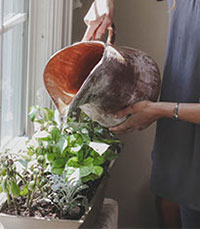 Britain’s reputation for rainy days can certainly be used to your advantage when it comes to saving water. Collecting rainwater in water butts and barrels gives you an environmentally friendly and cost-saving way to water your public garden areas, hanging baskets and planters.
 - Bring in water-saving dishwashers: Dishwashers can be notorious for consuming large volumes of water. Switching to a more efficient model is a superb investment that can pay huge environmental and financial rewards in the long run. Winterhalter dishwashers feature ultra-efficient rinse and filter systems specially designed to use minimal amounts of water while still producing a sparkling clean every time.
- Use your appliances only when needed: While many washing machines, dishwashers and glasswashers have innovative technologies designed to limit water usage, using them only when they are fully loaded is the best way to ensure they’re performing as efficiently as possible. Running these appliances half-empty will still waste water, no matter how efficient they are.
Switch to Eco-Friendly Disposables
While reducing your wastage is key to becoming environmentally friendly, single-use disposables are simply indispensable for many catering businesses. Whether it’s a coffee shop using paper cups or a street food vendor serving their dishes in takeaway packaging, there’s often no suitable substitute for disposable products.
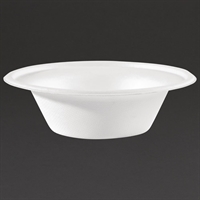
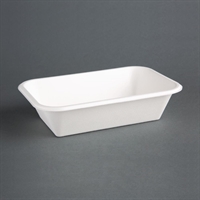
Eco-friendly disposables are designed to offer a more environmentally responsible alternative to standard catering disposables. These greener substitutes are made from sustainable, renewable materials and are either biodegradable or compostable. This means they often have a smaller carbon footprint than standard disposables, aren’t stripping the Earth of its finite resources and can be disposed of in a way that’s kinder to the planet than landfill.
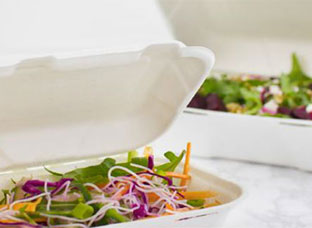
Switching out your standard disposables for paper straws, compostable cups and eco-friendly food packaging is a cheap and effective way to make sustainable changes to your service. Using green disposables will also show staff and customers that you are committed to important global issues.
Article: If you’d like to know more about eco-friendly disposables, take a look at our guide on the benefits of compostable packaging.

Multibuy savings


Reduced Price

Multibuy savings

Multibuy savings
Multibuy savings
Reduced Price
Engage with Staff
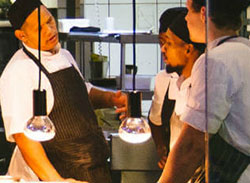
As you well know, staff are vital in implementing any plans you have for your business – and that’s certainly no different here. Your time and financial investments will be squandered if your workforce is untrained, or unwilling to learn new processes and take on fresh ideas. Staff can often be set in their ways - so it’s incredibly important to get them on board if you are to have any success.
Creating a clearly defined sustainability policy for your kitchen and front-of-house staff gives them a framework to follow and will set out your commitment to the environment in an easy-to-understand way.
Holding regular training sessions and team briefings can help to communicate this policy and encourage better participation with your sustainability goals. Inductions for all new starters will also ensure your entire workforce is fully behind your vision.
Offering rewards when energy-efficiency goals are met or taking staff on trips to your local suppliers’ farms, markets and vineyards are just some of the other ways you can get your team invested in your sustainability goals.
As front-of-house staff are usually the first and last point of contact for your customers, giving them a better understanding of your environmental processes and goals will also make it easier for them to communicate your green story.
Whether served a dish made entirely from locally sourced ingredients or basking in the ambient glow of energy-saving lighting, customers can really buy into your green philosophy and sustainable practices if communicated in the right way. In doing so, your entire service can become a unique selling point that attracts customers in and keeps them coming back for more.
Article: From listing the food miles of each dish on the menu to using social media to hammer home your green commitment, there are many more ways to make sure the community knows about your social responsibility. For in-depth tips on promoting your business, take a look at our guide on how to market your restaurant.
Before You Start
While taking a more considered approach to the environment is vital for the future of the planet, your long-term finances and your reputation, it’s important to remember you also need to be able to sustain yourself as a business.
Starting off with small, realistic changes to your operation will ensure you can do your bit for the environment without taking huge financial hits.
Consider setting some short-term goals which can be realistically met in relation to your current finances, size and workforce – with longer-term objectives set aside for the future as you scale up your operation. If you can’t afford to invest in large eco-friendly equipment right away, think about some of the changes you can make which require little cost or effort to implement.
It could potentially take years before all your sustainability goals are met, so start slowly and steadily and you’ll soon see the rewards follow suit.