
Can your knife be salvaged?
Before you wrap your knives and throw them out, check if the knife be restored to its former glory? Take a good look at the condition of your knife - is the edge rolled or just slightly blunted? You may be surprised at how effectively a dull edge can be restored, depending on the severity of the damage.

Sharpening steel
Not just for honing a knife's existing sharpness, a diamond or ceramic sharpening steel can help restore blunt blades.
- Diamond sharpening steel provide a tough abrasive surface to remove dull material & restore the blade's edge. Cermaic sharpening steels are not as abrasive & ideal for finer edge knives
- Cermaic sharpening steels are not as abrasive & ideal for finer edge knives
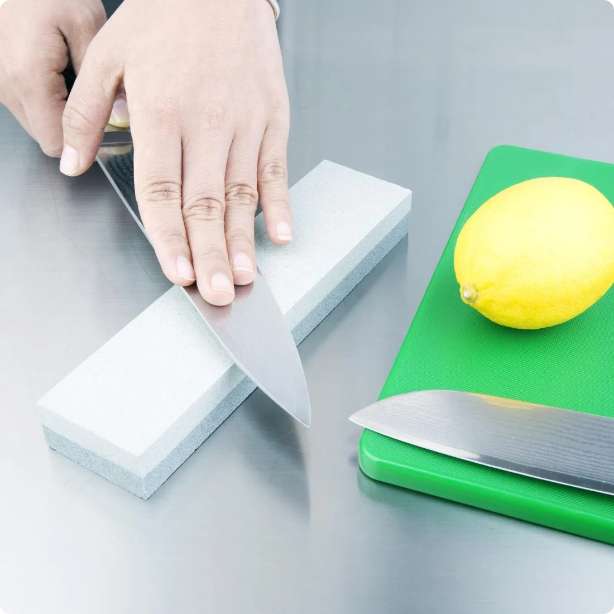
Whetstones
Whetstones or sharpening stones come in a variety of different grits to help sharpen and hone knives.
- For blunt knives, use a 100-250 grit whestone . The enhanced abrasivness will remove a lot of material from the blade
- For dull knives, a 300-500 grit whetsone is ideal.
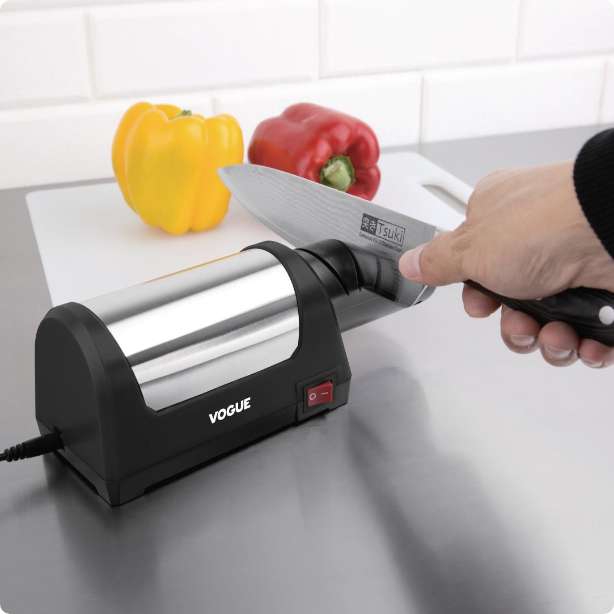
Manuel & electric knife sharpeners
Save time and effort with a hand-held manual or electirc sharpener. Many of these have 2 slots; one specifically for sharpening dull knives. Making the an efficient choice for bringing your dull knives back to life.
- Diamond sharpening steel provide a tough abrasive surface to remove dull material & restore the blade's edge. Cermaic sharpening steels are not as abrasive & ideal for finer edge knives

Want to know more?
We’ve packed our guide with helpful tips and videos for sharpening and honing your chef’s knives.
Take me there >
Disposing of chef knives
If the time has come and knives need to be retired then it must be done safely. Disposing of knives or any sharp objects comes with the potential risk of injury for anyone who may come into contact with them. You may not need to bin as there are a few alternative ways to re-purpose your knives.

How to dispose of chef knives

- Wrap the knife heavily with paper, bubble wrap, cardboard or styrofoam
- Use tape to secure the wrapping
- If possible, use a cork on the tip of the blade for extra safety
- Place the wrapped knives in a puncture-proof plastic or metal container. The lid should also be secured with tape.
- Label the container clearly with ‘Caution: Sharp’. This warning is essential to protect people during refuse collection.
- Place the container into your refuse. It's best to place the container at the top of your black wheelie bin, to make the caution label easily visible.
Can my knife be recycled?
Check with your local recycling centre or civic amenity site first that they can recycle the desired items. Most waste disposal sites include a skip for scrap metal, where you can take blunt knives and other sharp kitchen implements. Wrap your knives as described abovee, and deliver them to your local recycling centre.
Can I donate my knife?
Check with your local police station if they have a knife amnesty bin, which have been trialled in certain parts of the UK. This may the easiest option for you to part with your knives responsibly.
Some charity shops refuse to take knives so check first. If they do, clean the knives in warm, soapy water and dry thoroughly. Wrap the knives securely as shown above, and take them to the shop in person.
Can I sell my knife?
With a long established market for steel scrap, you may be able to command a good price for your old knives if you choose to sell them on. Check with your local shops beforehand if they will buy them, and be careful when carrying them around.
Replacing your knife
Of course, when the time comes to part with your knives then there's no better time to invest in a fresh set. Whether you need a Santoku, cleaver or all round chefs knife, you'll be hard pressed to find a larger selection of knives than Nisbets offer. Browse knife sets, speciality knives, by brand or type to find the best knife for your needs.
Looking for expert advice & support?
From pairing to fillet knives and more, discover our guide to kitchen knives.
Read the buying guide >