Case Study: David Scarpato on Competitions for Chefs
"I inherited my passion for cooking from my father and began learning my trade at the 5* Celtic Manor in South Wales. I love how fast-paced the industry is and that there’s always something new to learn – no matter how experienced you are!
"I’ve reached the final stages of the prestigious Roux Scholarship 2017 and the San Pellegrino Young Chef competition and have my sights set high for the future.
"I hope sharing my experiences can help other chefs progress and develop their skills. "
Chef David Scarpato | San Pellegrino UK Finalist 2018
How To Enter Cooking Competitions for Chefs
Entering chef and cooking competitions in the UK gives you the opportunity to test yourself against many of the top chefs in your field.
As well as gaining valuable feedback on your dishes, they provide you with the opportunity to network and meet top industry names. And of course, you get to unleash your creativity!
But how do you enter a chef competition? How do you decide which competition will be most appropriate for your level of experience?
Chef David Scarpato offers his insight into what you can expect
View our Chef Works clothing page nowEntering Cooking Competitions
First you must find the right competitions for you and your skill level. Are you looking to test yourself locally or are you looking to compete regionally? Do you want to step up to national level? Searching online for chef or cooking competitions, whether in your area or across the country, will give you a good idea of what’s available to you.
Each competition is different, but there are a few things you can expect to do across the board when it comes to entering: sign up online and submit your recipe (and any other requirements) by the closing date!
For larger competitions, you will most likely have to consider and outline your costings per cover to work out the profit margin if you were serving to a paying customer. You may be given a list of ingredients to create a dish of your choosing, or detail how you would create a given main course.
By the time you arrive at the competition, you should be fully prepared. It takes a few practices of a dish to get it right, tweaking and practicing in the lead up. You should be so familiar with your dish that you don’t have to think twice on the day. You can be penalised points if you deviate from your pre-submitted recipe, so ensure you can replicate everything you’ve mapped out in your submission.
Article: Are you a catering student? Our Student Supplies Catering Minishop has a wide variety of quality products that you’ll need for culinary school.
Equipment for Chef Competitions
This is by no means an exhaustive list, but here are the key pieces of equipment that David has found useful when competing:
- Water Baths and Vac Pack Machines combine to enable you to produce more succulent and flavoursome dishes with precise temperature control, whilst also being easily transportable. Vac packs extend the lifespan of food by removing air from the packaging, which is perfect for travel.
- Ice Cream Makers will come in handy for dessert. A built-in freezer removes the need to pre-freeze a bowl, offering speed and efficiency. Impress the judges with delicious ice cream, sorbet, gelato or frozen yoghurt!
- Pots and Pans are essential for cooking and preparing dishes. Planning every intricate detail regarding your recipe will ensure you know the equipment you need. From pressure cookers and fish kettles to paella pans and saute pans, knowing what pans work with your dishes is vitally important.
- Cookware to consider also includes baking trays, egg poachers, cast iron pans and woks (if your dish is Asian-inspired).
“You might be surprised to find you have to take all your own equipment. Each competition is different and it'll depend on the recipe and dish you create - but you'll want to fit as much in the car as possible!" – Chef David Scarpato
Chef Competition Rules
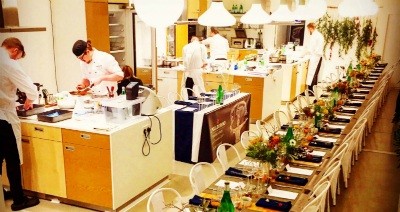
Be prepared for a long day, usually lasting from around 8am until 6pm. Cooking times are staggered, with people being called into the main room every 30 minutes. There will be a lot of waiting around until it’s your turn!
Following the main, your improvisation skills will need to be sharp when it comes to dessert. You’ll be given a random list of ingredients (you have to use every ingredient provided) and have just 20 minutes to plan your dessert, with a further 30 minutes to cook. This is to test your knowledge in a high pressured environment, so ensure you are well versed on potential desserts you can create from ingredient combinations.
Tasting and critique is done in private, so you’ll be unable to see the judges’ immediate reactions to tasting – which is a shame if they love your food! The winners are then called out in front of all contestants.
The judges are looking for flair, skill, ability and an understanding of how to prepare food and be sustainable in business.
After the results you are free to leave if you haven’t advanced, although you’re invited to stay to receive feedback. Feedback is optional but certainly worthwhile, why go through that effort to cook for such esteemed chefs and not hear what they have to say?
To advance to the finals you’ll need to write an essay featuring a well-designed recipe: ingredients, method and accurate costing per portion for 4 covers. This is information any chef worth their salt will need to demonstrate in the real world.
What Are The Judges Looking For?
- Flair and creativity: Channel your inner Heston Blumenthal by adding pizzazz and style to your dish. How does your food look on the plate? Can you excite where others flatter to deceive? Flambeing food, for example, will help you stand out and convey confidence to the judges.
- Ability: Does your food taste good? Is it cooked to perfection? Is the seasoning just right? The ability to make food look appetising on the plate is key.
- Understanding of business sustainability: Would you turn a profit serving this on your menu? You can't ignore the commercial aspect, judges want you to demonstrate cost and a business-savvy approach.
TIP: Be mindful of portion control, it’s not about who has the most on their plate!
Top Chef Competitions to Enter
You have to be selective. It’s just not feasible to enter every competition and nor do you want to overload yourself by entering too many. You have to plan your recipe carefully, taking the time to submit it accurately and timely.
Then of course, you have to take the time to attend the events. That’s a lot of days off to take if you try to attend all the competitions! Not to mention, advancing to further rounds will take up more time and require more creative invention.
There are many competitions with stellar reputations that can enhance your career. David Scarpato runs through some of the options:
- "The Roux scholarship is prestigious, offering winners a placement at any 3-starred Michelin restaurant anywhere in the world! Past winners have later said how their placements took them to the next level by allowing them to observe and learn from the best, and some have even returned as judges.
- "San Pellegrino is another great choice for chefs aged between 22 and 30, offering the chance to cook for world renowned judges.
- "MasterChef and other TV competitions can deliver great exposure to industry professionals as well as the wider public. Your name will carry a certain cache if you do well and you will likely see busier services due to name recognition. You might even sign an autograph or two!
- "National Chef of the Year, previously won by Gordon Ramsay, Alyn Williams and Mark Sargeant, is open to all chefs over the age of 24. With such a glamorous list of former winners, it’s certainly a competition worth entering if you feel up to the task! It also has a youth chef competition, widening the scope for potential entries.
- "South West Chef of the Year and other regional competitions are also a great choice. They are particularly useful if you’re looking to gain experience before stepping up into the national fold."
TIP: You'll also need to take your own ingredients. And be sure to remember your chef knives!
Young Chef Competitions
Junior and young chef competitions across the UK are perfect for young people to hone their skills and develop a love of cooking and competing. Some great youth competitions to consider include:
- Junior MasterChef (ages 9-12)
- Rotary youth competitions (Junior, intermediate, advanced)
- FutureChef (ages 12-16)
- Young Seafood Chef of the Year (under 25)
Are You Ready to Enter?
As long as you have solid knowledge and good experience in the kitchen, competitions are almost certainly a worthwhile enterprise. While you may not win, you’ll gain experience, contacts and no doubt pick up a few tricks.
Perhaps most importantly, you can get tailored feedback from masters in the field. Rather than generic tips, they’ll have tasted your food and give measured comments on their findings. This alone has got to be worth its weight in gold in helping you develop as a chef. The more competitions you enter, the better chef you’ll inevitably become!
For youngsters, competitions will help breed their love of the business. Keeping young chefs engaged and learning can only benefit an industry which often struggles with retention, and competing will surely light that spark in the head chefs of tomorrow.
“I learned so much in reaching the semi-finals of the San Pellegrino competition in 2017. The positive and constructive feedback I received will take me to the next level and I recommend this competition for anyone looking to advance their skills.” – Chef David Scarpato