
The Best Lighting For Your Business
When deciding how best to light your restaurant, bar or café it’s important to think about your choice of lighting for restaurant tables, not just which light bulb uses the most energy. Also, consider what temperature is needed for kitchen lighting as this can often be overlooked. Ultimately, different areas of your establishment have unique requirements from your dining space to your kitchen, lobby and storage areas.
Shop All Lighting NowWhy Is Lighting So Important In The Hospitality Industry?
All establishments within the hospitality sector are naturally power-sapping. For instance, receptions, communal lobbies and hallways require a constant light source for safety reasons. However, with the advent of newer, more efficient light bulb technology and by optimising your lighting in specific areas you can reap many rewards.
Effective lighting allows you to:
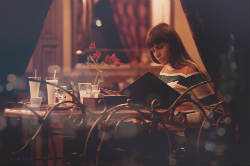
- Control the mood and atmosphere of a room or section
- Affect the appetite and feeling of your diners
- Improve the presentation of your food
- Highlight areas and draw attention to specific features
- Reflect the natural light outside
Did You Know..Which lightbulb uses the most energy? Incandescent light bulbs use the most energy by far, of all light bulbs. Conversely, LED light bulbs use the least energy and have the longest lifespan.
Which Lighting Works Best In Each Area?
Different styles of lighting naturally lend themselves to more specific areas of an establishment. Often the function of a room or area will give an indication of the lighting that will work best there.
Dining Area
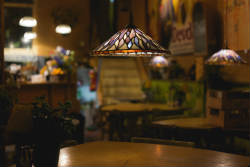
As well as affecting mood and appetite. well-designed lighting in a dining space can also draw the eye to decorations and menu boards.
Ambient lighting can be used overhead to give central tables a subtle glow, whilst accent lighting can still be used for private alcoves. In this way your diners won't feel self-concious under the lights in the centre of the room, whilst private tables will still have a secluded feel.
Lights are also great for adding that all important ambience to your front of house spaces. Industville’s collection of vintage-inspired industrial pendant lighting and matching industrial wall lights are hand made to add that special something to your guests’ favourite spaces.
They’re stylish enough to serve as decoration themselves, plus they’ll add a soft and sophisticated glow wherever they’re placed.
Food Display
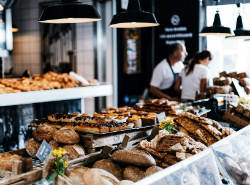
In bakeries, delicatessens and retail stores, presentation counts for everything. Especially when it comes to food, upselling at the counter weighs heavily on great lighting, so if there was ever an area that deserves high quality lighting, it is over these counters.
Pendant lighting tends to work very well for this purpose, as this form of lighting hangs down from the ceiling to give your food displays extra presence whilst highlighting the quality and colour of your produce.
Kitchen and Preparation Areas
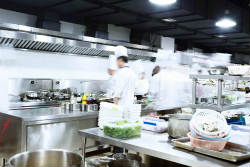
Task lighting is essential where sharp tools like knives or heavy duty machinery are used. Using a fixed beam angle from LED lights, for example, creates a reliable, strong white light that will keep concentration levels high and maintain the safety of your kitchen staff. This will also ensure every detail goes into plating dishes for service, and that no detail is missed when cleaning.
Lobbies, Hallways and Reception Areas
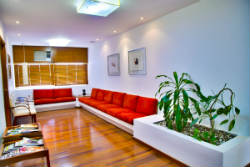
These communal areas may also have features that you want to highlight such as paintings or standout elements in the design of the room. Even the shape of a room can be affected by lighting, looking smaller or bigger depending on the luminosity of the lights and the beam angle. Reception areas are often where key information is presented, so clear and brilliant white light is less likely to create shadows that will make this information harder to read by your guests. Stairwells equally need clear lighting for safety, but these areas tend to have recessed lighting, with 2D style bulbs being the most common cap type for these fixtures.
Entrances and Exit Points
On any commercial premises, security lighting is vital not only for the safety of the building and its contents, but for illuminating entrances to save your staff from trips or falls. Look for a PIR sensor on security lights which detects movement, even the sight of these lights alone can be enough to deter thieves.
Colour Temperature
Whilst cooler white light is ideal for use over sinks and food prep stations, at the other end of the Kelvin scale warmer amber and yellow lighting emits a softer light that is better for use in communal and dining areas. We always recommend daylight (5000 Kelvin and above) for task lighting and warm white light (below 3000 Kelvin) for any dining space.
The simplest way to look at colour temperature is to classify it into three categories:
Warm white (2000K - 3000K)
The appearance of this light is warm, and can be described as calm and inviting. It is ideal for use in dining and lounge areas as well as decorative outdoor lighting.
Cool white (3100K - 4500K)
This light appears vibrant with a blueish hue. It is perfect for warehouses, garages and commercial washrooms.
Daylight (4600K - 6500K)
This light is often described as crisp and invigorating, therefore is ideally suited to task lighting for food preparation, and displays where detail counts for everything.
Buying Guide: Need advice on finding the correct light bulbs? View our guide to Choosing The Right Bulb.
Colour Rendering Index
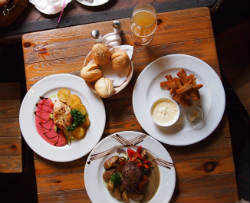
Not to be confused with colour temperature, a colour rendering index refers to a light bulb's ability to render colours accurately. This is measured from 0-100%, where a higher value indicates better rendering capability. A more accurate rendering of colours increases appetite and has been proven to make food taste better.
How Can You Make Your Light Bulbs Last Longer?
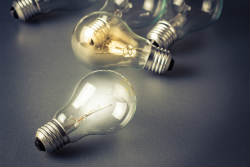
Unfortunately every bulb has a limited lifespan, however there are several ways to extract the maximum life from your bulbs and help keep replacements down to a bare minimum.
In a hotel or restaurant with many rooms and large spaces, saving a large number of replacements can translate into big savings for your business.
So, here's three ways to increase the lifespan of your light bulbs:
- Ensure the correct bulb is chosen for the right fixture. Even though an incorrect bulb may work within a fixture it is not designed for, both the performance and lifespan will deteriorate rapidly, forcing an early retirement for the bulb and therefore, added costs.
- Treat each lightbulb technology accordingly. Different types of lightbulb behave differently, so find out how best to treat them to maximise their lifespan. For example, flourescent and CFL bulbs are more affected by being switched on and off more than any other bulbs. If they are left on for less than 5 minutes at a time then this can cut their lifespan considerably. The same can happen if they are turned on and off regularly, so the best plan for these bulbs is to install them in areas where they are likely to be left on for longer periods.
- Check the voltage. The UK standard is around 230V, so operating bulbs that are built to handle lower voltages will suffer from poor performance. Therefore, in this case it is best to invest in bulbs rated at least 230V to ensure the best lifespan and performance from your light bulbs.
How Can LED Bulbs Save You Money?
One thing you'll notice about old incandescent bulbs is that they give off a fair amount of heat. Though not enough to warm your premises, it's still a considerable amount of wasted energy.
Thankfully this is not the case with LEDs, as they are designed for efficiency, giving you up to 90 percent more energy than standard bulbs.