How To Open a Sandwich Shop
Your best possible chance of opening and running a successful sandwich shop will come by making sure you cover the following requirements:
- Complete thorough market research
- Secure private funding or crowdfunding
- Find a great location
- Identify your USP
- Respond promptly to online reviews
- Make smart use of social media for promotions
- Regularly update your menu and specials
- Consider a delivery service or deliver on foot where possible
- Get the right catering equipment first time
- Create a friendly atmosphere
Starting a catering business from scratch can seem a daunting task, but with drive and passion the end rewards can take you well beyond running a successful business, establishing a franchise and snapping up trade from heavyweight corporations. As most chefs will tell you, this business is a labour of love but gaining valuable insight into this journey will help you steer clear of obstacles and administrative pitfalls, stay true to your brand values and devise a successful, long term plan.
Why Sandwiches?
Simple yet versatile, the sandwich is over 250 years old and has spawned an industry worth an estimated £2.8 billion, though a fiercely competitive one. A great sandwich menu will make commuters pay a special visit, and tempt coffee drinkers to spend more. While sandwiches are relatively quick and easy to make, they can also provide a high mark-up. For a sandwich shop, there is also a good opportunity for up-selling drinks (especially the rare, imported kind), snacks and other treats.
What Can You Offer?
When it comes to a sandwich shop, customers will expect a broad selection of hot and cold food. This can include rolls, baguettes, wraps and paninis with soups, salads and smoothies on offer. Providing tea and coffee is not just important for the customer but is also an opportunity for healthy profits.
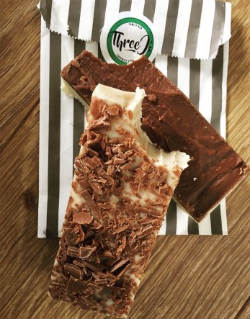
With huge popularity of home baking and confectionary, it's also important to monitor food trends. One such trend of modern times is food fusion or mash-ups that can result in an unexpected, delicious marriage of flavour, such as Three J's incredible fudge flavour combinations.
Article: Looking for some fresh menu ideas to get you started? This article will show you how to capitalise on the breakfast revolution.
Registering Your Business
As soon as you have your business plan together, you’ll need to register as soon as possible. You may be asked what type of business it is, but if not you should specify that it is a food or catering business. This means there are different constraints and laws that affect the business and this can be unclear in the initial registration process. Any food business must be registered with the appropriate local authority at least 28 days before trading or any food operations start. Registration is free and requires basic details of your food business including the address and activities involved.
Local authorities are responsible for enforcing food hygiene laws. Authorised officers will visit your premises to check if your business is complying with food law and producing food that is safe to eat, they will be looking at:

- Your premises
- How you work
- Your food safety management system
- The types of food you prepare and make
Why Might You Receive An Unexpected Visit From The Hygiene Inspector?
Don't be discouraged by the chance of an impromptu hygiene inspection. The inspector can provide valuable feedback and there could be many reasons why authorised officers may periodically visit your premises, including:
- Food hygiene and food standards inspections
- Sampling
- Complaint follow-up
- Advisory visits
Case Study: Our hotel case study explains why food hygiene inspectors are our friends.
What to expect
For many, a first business venture often comes with added financial pressure. Aside from the initial costs of starting a food business, the physical demands can be underestimated. With no prior experience, running a sandwich shop can be exhausting. In order to take advantage of the early morning breakfast rush and maintain cleaning and food preparation standards, hours can be very long. This means that a certain level of physical fitness is required, as well as mental aptitude.
Another key aspect of your start-up is staff and more specifically: personality. When dealing with members of the public people skills are essential, and are the best way to develop a loyal customer base. Many returning customers will do so because they liked the staff and service, especially in such a competitive industry.
Therefore, the ability to smile, be courteous and personable, as well as making good eye contact are all very strong attributes in your favour. These qualities are also something to bear in mind during your recruitment process.
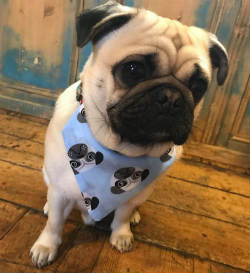
A friendly dog can also help to leave a lasting impression on your guests!
Three Js Interview
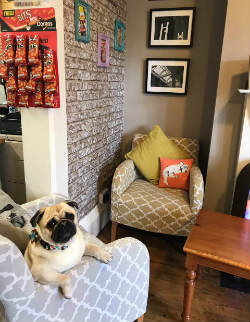
We met with the owners of a young, dynamic, thriving business in Plymouth who have found their niche in the market. Jessie, Joe and Jackson, the friendly resident pug, head up the team at Three J’s sandwich shop where they produce fresh, hand-made sandwiches and snacks every day. They even have a fresh special on the menu every day of the week. We asked them what it takes to bring an idea to fruition, how found their feet so quickly in such a competitive industry and what it takes to grow a small businesses.
Upon entering Three Js sandwich shop you’ll be greeted by a friendly atmosphere, which is further reinforced by the considerate music volume, large communal table and warm decor. It quickly becomes clear that this is a place to relax, socialise and enjoy some great food. With the majority of the food preparation space in open view, this leaves a positive impression and reassurance to see everything prepared fresh and in front of your eyes.
An incredible choice of sandwiches, salads, brownies and their speciality fudge means Three J’s can provide the right food at any time of the day.
While Jackson was pre-occupied, Joe and Jess answered the big questions about their roots, business journey, and what it takes to set up a successful sandwich shop in the heart of a busy City such as Plymouth.
When did you open?
17th March 2017
Were there any unforeseen hurdles when opening?
Not really, we just prepared well and went through everything from start to finish. When you register, there is nothing to suggest that ‘these are the next steps’ for example. There were certain things we couldn’t do until we opened, like obtain a hygiene rating. Everyone thinks it’s about hygiene but also it’s the building structure. If there’s parking for example. Once you open there is plenty of support and people to talk to, but at the start there really is no one.
Some of the things you don’t expect are contracts for pest control and bins, you have to have them to have a five score hygiene rating. Even the structure of the building plays a huge part. It has to be to a certain standard, an older building like ours needs more attention such as improved ventilation. We also have students above us so we only have a license to grill, not fry. There are different classes such A1, A2, A3 to be aware of but there really isn’t a guide available about this when you open a business. So that’s all your own research.
The lack of help or support from the government is becoming a common theme in the catering industry. See the results of our pulse survey for more insights.
What made you choose a sandwich shop?
We were torn between a burger van and cafe etc. With a sandwich shop we can stay on trend and be so much more versatile. The possibilities are endless! We also wanted to target the lunchtime market, and capitalise on the rush. You can have a sandwich anytime. We also don’t get any drunk people, which is great!
How important is the choice of location?
Very important. This is North Hill and we wanted to be student-central, but still slap bang in the middle of offices, students and commuters as we’re not far from the train station. Being closer to the city centre also means higher rates and less parking available so we think we’re perfect where we are now. Also if you are completely central, people are constantly rushing whereas up here people are casually shopping, popping into charity shops and are prepared to sit and enjoy their lunch for a while. It’s nice to see that people plan Three Js into their day.
Was it easy to decide on a name?
Pretty easy! It’s a community at three Js so people know us and always remember the dog.
How important is the theme and ambience of a food service venue?
Very. It’s so much better to spend time in a place that reflects personal feelings rather than the effects of a corporation. That’s why we have one table, we want people to budge up and socialise.
How did you decide on your menu?
We take flavours and inspiration from everywhere, and then experiment with them at home. It can even be a character from a TV show! We have a large ever-growing book of recipes and we’ll refine them until we’re happy with each.
How does seasonality play a part in your menu changes?
We try and change the menu every 6 months, plus include a different special every day – that way we know we have a chance to attract new customers every day of the week. We usually test our new additions, and if successful we make them a permanent fixture.
Do you follow food trends and adapt your menu accordingly?
Yes, for example our Yorkshire pudding in a wrap is our twist on a recent trend.
What has been the most challenging part of opening and running your own business?
Because we enjoy what we do so much, we still don’t see it as a challenge. But if anything, the actual running of the business is a challenge, our first tax return for example.
What was the most expensive part?
Initial setup costs – not just the knives, boards and hygiene supplies but the appliances, grill, fridge, coffee machine etc. bain marie, toaster, hob, gastronorm pans. Because it’s all in one go of course!
What do you enjoy most about running your own business? What is it like to run a business with your partner?
I can’t say everything, but I love it when people walk out with a bag full of our food, and seeing positive reviews online. Seeing people walk away happy and joking makes us very happy. We’ve done everything ourselves from the start, apart from the graffiti on the walls! I love that we’re doing this for ourselves, not for anyone else. Not just paying someone else’s mortgage.
How do you market your business? Has social media helped?
There is a big community here in Plymouth, and we tend to complement each other. We use it to get our name out there, and love it as a free way to advertise.
We do respond quickly to online reviews which is very important – because we’re not robots! You would reply to your mate that quickly so we see our customers as the same thing. We wouldn’t be there without them.
We’ve pretty much neglected our own personal social media accounts though. If people want to get in touch with us they usually tag with ‘Three Js’. Sometimes it’s a bit like, ‘what about us?!’
As we do a daily special - it's also a good way to encourage new customers to come and try something new.
How much time do you spend reading customer reviews, and how important do you think it is to respond to them?
Normally we just like the comment on Facebook, because people are constantly leaving reviews and it would be hard to respond personally to everyone. Whereas on TripAdvisor and Google reviews we always like to leave a comment/response, because that kind of interaction is needed. It’s more important to do that, because that’s what people are looking for.
Also, on Tripadvisor people are specifically searching for restaurants and food venues, going out of their way to find them rather than just finding them by accident among cat videos.
What’s your opinion on food delivery services? Do you have plans to expand into delivery?
Well, we do deliver to businesses on foot, where we can. We have been approached by Uber Eats, Deliveroo but for us, I’ve ordered a takeaway before and had a different service than I had in the restaurant. The delivery driver doesn’t necessarily represent the brand that well, so for us we wouldn’t be able to vet the drivers of services like Deliveroo. I wouldn’t want someone to deliver my food if it’s not how I would do it. I was shocked by a delivery driver once, it’s bad for the business, because they don’t represent the brand how you’d expect them to. So it’s about finding the right person. If we did do it, it would be one of us doing it.
Tip: The take-away food market is destined to reach over £11bn in value by 2022, exposing huge potential gains for any food business. With 72% of customers ordering take-away at least occasionally, providing a take-out service is a lucrative venture you should not ignore.
Do you supply food for festivals and food events or plan to in the future?
We’ve been approached by a few festivals, the organisers will come here to see us. We’ve said that we want one more year getting to know the ropes and exactly what we want to do first. We want to get some inspiration and see how people do it. There is already so much choice, but some of these stalls only offer three or four things, so we need to make sure that if we do Glastonbury, that these are going to sell.
Do you regularly do competitor analysis?
Yes, we do but it’s not like you can apply their ideas, they’re going to know that you’re copying them. So we can do this to see what time competitors open, see if that’s working well for them, if they are packaging food the right way for example.
Where do you get your coffee beans?
We get ours from Jura. As we get bigger, we want to buy locally. It’s a progression for us, you can’t do everything at once and you need to be sensible. Otherwise we’re not going to be successful if we do everything at once.
How important is networking, attending food markets or ‘breakfast clubs’ to meet new local suppliers?
We get approached by suppliers often now, but in the early stages, we did do market research that way.
Do you offer a customer loyalty scheme?
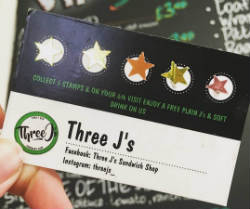
Yes, we do a loyalty card and lots of competitions on Facebook. Often the loyalty card is lost along the way which only helps us get our name out there.
What kick-started your passion for food and flavours?
Back in Bristol, I was working in advertising and Joe was a chef, we were unhappy with our jobs and wanted something new. It’s always been about finding what people like, and putting our own spin on it. We definitely get creative at home and try all sorts. I’ve always grown up around cooking and food. We are always trying to find what we want for new specials. It's about experimenting, and you've got a good chance of creating something new.
How do you record information such as fridge temperatures and stock levels? Analogue or digital?
For us in the shop, we record everything in a book. I’d rather use labelled pads, a pen and paper because it’s always better than recording it digitally. You can’t always rely on electronics. The inspections can catch you off guard, which is good. But you can pay for a folder to help you prepare, we have our own guide as well. Every day we do our daily allergens, a log of temperatures. There is a satisfaction to completing the folders and building up this information. You can’t be penalised for how you do it, it’s up to you. Around 11 o’clock when the breakfast rush is finished, then we tend to go through it. It becomes second nature. We also come in and do a deep clean on Sunday, we’re very passionate about this and want everything to be perfect. It’s hard but it’s good.
Do you have any recycling or green process in place?
We use biodegradable boxes for our salads. You need to have a bin contract to achieve a good hygiene rating. We try not to waste anything but there is always packaging. We used to have two bins but it was very expensive. So now we have one big Biffa bin, all our carrier boxes I take back to our supplier for recycling. It doesn’t really work in favour of small businesses to recycle.
Is there one product that you couldn't live without?
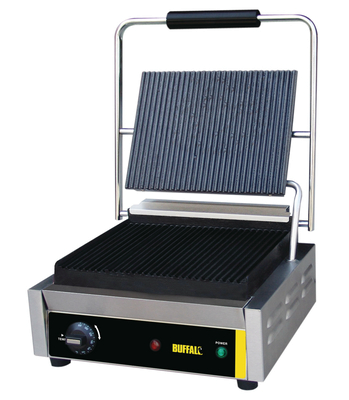
For us it's our Buffalo Contact Grill, our menu would not be the same without it, that's for sure. We use it every single day, and its non-stick. When it comes to cleaning it, it was a bit of a learning curve. If you look after it properly it will certainly last you longer. Now I know to do a clean-down of the grill every day, but when we first started we didn’t realise that was necessary.
Also the Nisbets probe thermometers, the thing about those is being able to remove and wash the probe. It makes life so much easier!
What are your aspirations for the future? Or are you worried about the future re brexit?
We’d like to take Three Js on the road and maybe get a van, do all the festivals. At the moment though, the sandwich shop is the future until we outgrow it one day.
Do you have any tips for others wanting to open their own business?
It’s hard for us to give tips because we don’t feel like we’ve succeeded yet. I think just go for it, if you are thinking about it – get on with it. There’s simply no time to waste.
Summary
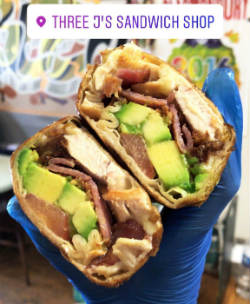
Three Js clever use of social media and community has helped them carve out a share in the extremely competitive sandwich market, and they continue to grow each day. A genuine passion for flavours and ingredients means their menu is always changing, and attracting fresh customers.
Dedicated to their customers, it's clear that responding to reviews and comments promptly has also helped to increase their online visibility and reputation.
Every business needs a USP, and Three Js have managed to provide this in the form of their their exclusive flavours of homemade fudge.
Emptying their bean-to-cup machine requires minimal maintenance and leaves room for a high mark-up.
A new special on the menu every day means they are constantly extending the chance of targeting new clients.
Keeping It Fresh
What can you offer to stay ahead of your competitors?
As revealed in the interview, staying one step ahead of your local competition is crucial. You can do this by using unique promotions and rewarding loyalty, but if you hadn't considered selling coffee already, there are many good reasons why you should. You don't have to commit to buying the highest specification machine either.
Coffee
Cafe culture in the UK continues to boom, with 80% of coffee shop visitors doing so at least once a week and 16% of customers building this into their daily commute. This fact should give you confidence that even without the use of premium group 1 coffee machine, there is a more casual approach to coffee that you shouldn’t ignore. A short message to your followers to announce that you are sourcing great quality local beans could be the edge you need over your competitors.
A typical coffee business can either function as a quick service establishment or a hangout where customers will happily spend hours. If you are already established as a sandwich shop, you don’t necessarily need to target the artisanal coffee market to make a profit.
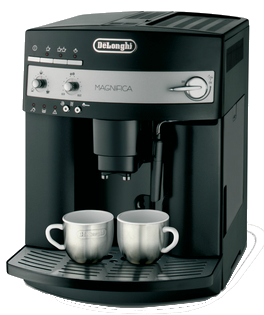
A good quality bean-to-cup machine can cost you as little as £320 to buy. With the average price of a latte around £2.45, by selling just five coffees per day you could recover the £320 in less than a month. These machines also need little maintenance, they will need de-scaling roughly once a month which is an automated process and costs only the price of the descaling solution, which costs little more than £1 per use. The internal parts of even the most frequently used coffee machines need only be cleaned once a week, and takes just 20 minutes.
As these machines use fresh beans and grind before each coffee is made, there is also a wide variety of choice when it comes to the coffee beans. Some suppliers of machines may also offer beans, so it is worth asking to ensure an initial, regular delivery of fresh coffee beans to your venue. In time, investigate your local roastery to see what prices they can offer, and if there are any exclusives that you can advertise to your patrons.
Take Me To Coffee MachinesKey Equipment
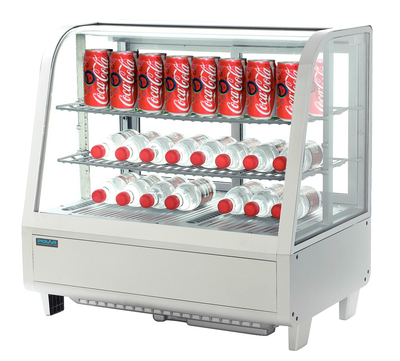
Now you know what you can expect in the early stages of opening a sandwich shop. Maybe you’re feeling inspired to get going, build a menu and start investing in catering equipment. Where can you go from here? Firstly, it’s worth knowing the pitfalls of purchasing budget equipment and some of the unexpected problems that come with it. Although this approach is tempting for any new business, cheaply made equipment can actually cost you more in the long run. There are also subtle differences between operating a small cafe or sandwich shop compared to working in a large scale restaurant kitchen. For example, having a cold food merchandiser with an integrated fridge means your main fridge won’t be opened too regularly, helping you to maintain temperatures which increases efficiency and reduces costs. Similarly, pot washing can be done on a smaller scale, allowing a smaller sink to be installed.
Your menu choices will be the biggest factor in your choice of equipment, but this will also affect the amount of preparation space you need. So as well as a fryer and grill, you may need a blender and ice machine to satisfy the demand for juices and smoothies. Food display and merchandising is another priority area. At the front, a large glass counter can showcase both your prepared food and fresh ingredients. Naturally, a glass fronted drinks fridge is essential to give customers a clear and fast view of the choices on offer.
Some of the key pieces of equipment you'll need are:
- Chilled food display unit or merchandiser with integrated fridge
- Hand washing sink
- Pot washing sink
- Microwave
- Contact grill
- Consumables: disposable food packaging, cups and glasses, straws, and disposable cutlery
- Tables and chairs
- Separate bins for your cold and hot bar
- Pots and pans
- Utensils
- Cleaning equipment
- Cleaning supplies
- Colour coded chopping boards
- Tableware and cutlery
- Chefs knives
Tip: Cleaning is not just important for obtaining a good hygiene score but is also huge factor in returning business. Our ultimate kitchen cleaning guide can help you tackle all areas from the doors to floors, and avoid costly online reviews.