
How to Redesign a Restaurant Front of House
Eating out is about more than what arrives on your plate and how efficiently and courteously it gets to the table. Moving with the times to create an inviting, interesting and comfortable space is increasingly becoming a major consideration for the consumer on their decisions about where to eat out.
This is particularly prevalent when competing eateries offer food and service of equal quality, leading many restaurateurs to think about a front of house refurbishment to gain a competitive edge. Here we have compiled a list of eight things that are helpful to consider when contemplating a dining room makeover with advice from Chris Lee, design manager at Gloucester-based catering facility design solutions firm Space Group.
1. Why should I consider a restaurant refurbishment?
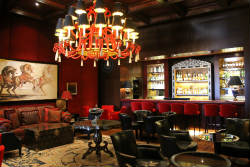
According to Chris, the decision to engage in a refurbishment can be influenced by a number of factors, but, whatever the reasons the desired outcome is always to boost revenue.
“It is a decision that is usually driven by finances,” he says.
“There may well be other reasons such as re-branding or to target a completely different market but these are factors that the business will make in order to boost revenue. That’s generally the bottom line.”
Recent evidence supports that theory with findings that report a restaurant renovation leads to an increase in sales and turnover of between seven and 20%.
In 2016, meanwhile, Pizza Hut attributed a 6.2% rise in year-on-year UK sales to a refurbishment designed to emphasise the company’s heritage in 130 of its 262 restaurants.
Article: Read our in-depth guide on Designing a Commercial Kitchen.
2. When should I consider a refurbishment?
Hospitality establishments with high and frequent footfall are prone to the sorts of wear and tear that will quickly lead to disrepair. Eventually almost every bar or restaurant will begin to look a little dated. Industry experts recommend that a front of house refurbishment should be carried out every five to seven years.
“It really is dependent on the type of service and the amount of use the interior is subjected to,” Chris explains. “A lot of the design and fitting work we do takes place in the business and industry sector. “Staff restaurants and canteens are subjected to a large amount of heavy use. The turnaround occurs over a slightly shorter time frame in those cases, probably somewhere in the region of two to three years.”
3. How much will refurbishing my restaurant cost?

How long is a piece of string? The cost of the project could range from as little as a few thousand pounds right through to an outlay of millions depending on a whole host of variables. But whether you are planning the most minimalist of makeovers or thinking about ripping the whole interior out and starting again, as with a lot of construction projects, there is always the potential to go over initial price estimates.
Industry experts suggest factoring in a budget contingency of between 10 and 20% to cover all eventualities, and Chris says: “That is always advisable. Some clients will be reluctant to share the budget with the designer because they think that they will use up every bit of it.
“That is understandable but it can be counter-productive. Knowing how much a client wants to spend is very helpful in drawing up a design tailored specifically to the budget. “The client/designer relationship is crucial to the process. The client needs to be able to trust the designer to help them spend their money in the right places to save it.”
Article: Read our in-depth guide on Budgeting for Catering Equipment.
4. How long does a refurbishment take?
The cost of the labour and materials may be the biggest outgoing you will need to cover during any refurbishment project, but you also have to consider the impact on your revenues during a period of closure.
The relationship with your designer and other contractors is crucial at this stage in order to complete the project in the most time-efficient manner to limit the impact on your business.
“The length of time the restaurant will have to be closed is dependent on the size of the job and how much is involved,” says Chris. “When we are working with a brewery for example we are usually presented with a very detailed and fixed brief.
“A lot of the preparation has already been done. This means we can usually limit the impact of closure by completing the work within one to two weeks.”
Smaller independent bars or restaurants looking for something a little more unique may require a different period of closure. The key to shortening the timeframe lies in an effective period of preparation that starts around three to four months prior to your place of business becoming a temporary building site.
You may need several months to review and assess a selection of designers and contractors and to ensure that any changes you are hoping to make comply with local authority planning regulations.
“The preparation period is crucial,” Chris agrees. “Sourcing some types of equipment and furniture could take up to two or three weeks and you need to get that ordered well in advance of closure.
“A client would also usually have to factor in a bit more time if they prefer to work with a number of contractors as opposed to employing one to oversee the whole project.”
5. When should I close for refurbishment?
You will aim to close your premises for the least amount of time possible during a time of the year you are likely to be the least busy, meaning you will have to start thinking about your renovation months in advance.
You may already know what times of the year that will be if your business relies on seasonality, but, if not, try and review past revenues to see if you can identify a pattern of months during which turnover has historically been lower than at other times.
“We’ve done a lot of work on catering facilities in garden centres,” Chris says. “What we have generally found is that they will always close down for any refurbishment after the Christmas period when people tend to take a break from shopping and eating lots of food.”
6. Think ‘revenue generation’ when considering design

Refurbishments may well be proven to boost revenues, but, to maximise the concept, you need to have given some serious thought as to which areas of your business yield the highest returns. They then need to be relayed clearly to your designer during the planning phase.
You need to call on the intimate knowledge of your existing customers and also research any new market you are potentially targeting. How and what your customers spend their money on must be front and centre in your design choices.
The margins on alcohol may be higher than those on food, but what percentage of your revenues are derived from dry sales and how much comes from wet sales? Could you maximise your business from increasing the size of your bar?
Or are you situated in a location amongst a demographic that might embrace a ‘bring your own bottle’ concept? Examine the breakdown of your revenues and then ask yourself this: “What do my customers want?”
Chris says: “The decision over whether to incorporate or extend the size of a bar in the front of house space is a great example. Would the financial returns justify reducing table numbers for the amount of space it would command?”
Try to consider customer behaviour and identify what you have that is in highest demand and strive to create a design that serves to supply it.
7. Trends
If you are considering a refit in line with current ‘trends’, make sure you do your research to avoid investing in a look that is nothing more than a ‘fad’.
Refurbishment is a costly business and returns on investment over the long term are reliant on the finished project being able to stand the test of time.
“Trends are in and out of fashion quickly because that is the nature of what they are,” says Chris. “I think with front of house, the trends tend to last a bit longer; over a period of years rather than months.
“I think restaurants that had a refit in line with an industrial sort of style three or four years ago would still look pretty on trend now. People are generally attracted to a particular place for a number of reasons, but I don’t think they specifically follow trends.”
Whatever you decide, it is imperative that you listen to your customers, particularly if your business is reliant on returning visitors. Will they be resistant to change? Or are you trying to target a new market? What do they want?
Also try and focus where possible on upgrading items that will have the biggest impact on a customer’s eye. Fundamentals such as lighting, flooring and furniture are simple changes that can have a massive impact on how customers perceive your new renovation and how it might relate to them.
Article: Are you including enough meat and dairy-free options for your menu? Read our in-depth guide on How to Cater for Vegetarians and Vegans to ensure you're maximising profits.
8. What about my landlord?
If you are leasing a commercial property, refurbishment poses further complications that need to be addressed prior to the start of any renovation work.
You will need to have a discussion with your landlord and employ a legal professional to look over your lease agreement to make sure that what you are planning to do is financially viable in terms of the length of time remaining on your contract.
You also need to be clear on ownership of the fixtures and fittings and have in writing an agreement that clarifies what can be removed by the leaseholder when the rental period comes to an end.
“Deciding to refurbish a rented property is a decision that needs a lot of consideration,” says Chris. “The project might cost somewhere in the region of £80,000 to £100,000 and that is money that you can’t take with you.
“You need to have done your sums beforehand and also have a fair amount of time left on your lease in order to get a return on that investment. Landlords are generally open to refurbishment as long as you are not affecting any structural integrity.
“As long as they are still getting their rent and they are happy with what you are planning to do, it is generally beneficial to them. Once the lease is up, the landlord is usually left with something that is a lot more rentable.”