
WHAT IS THE BEST WAY TO HIRE STAFF IN THE CATERING INDUSTRY?
In the catering industry, word of mouth is believed to be the most effective method for recruiting staff. Whether you’re looking for kitchen staff, front of house or bar staff, it would seem that getting the word out is your best bet for hiring staff.
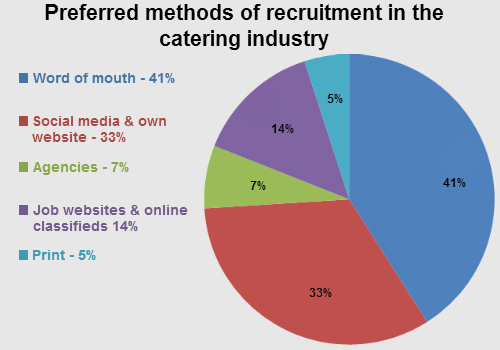
This is reflected in the results of our Catering Industry Pulse Survey in which 41% of industry professionals surveyed indicated that word of mouth is a very effective way to recruit staff. And that increased to a whopping 72% when combined with those who also responded that word of mouth is quite effective.
So it goes without saying that if you’re looking to hire staff in the catering industry, word of mouth is considered the most effective.
Of the other responses, social media and website advertising followed word of mouth with agencies, online advertisements and print material now considered least effective for hiring staff.
THE RESULTS: PUB & BAR SECTOR VS RESTAURANT SECTOR
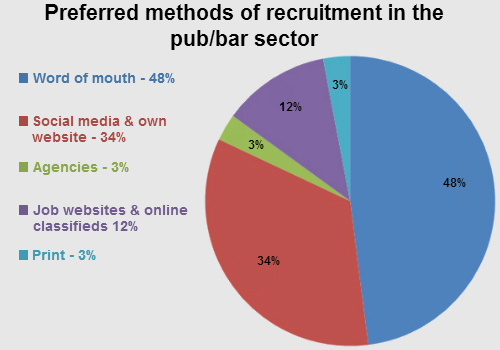
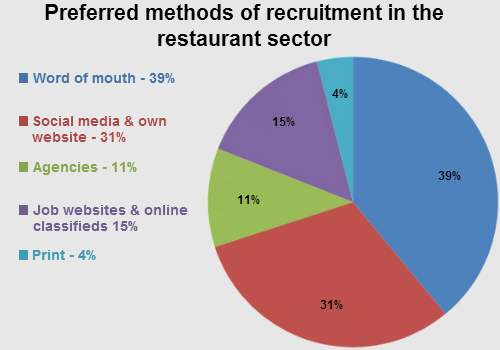
When we isolate the survey to those who work in the pub and bar sector, almost 50% said that word of mouth was a very effective way of hiring staff and agencies decreased to just 3%. On the other hand, when we look at the responses from those who work in the restaurant sector, agencies and online advertising takes a greater share.
This is confirmed by Scott McCrindle, House Manager, Prenton Golf Club in Wirral, Merseyside, who says “So far our recruitment process has been based around friends of people who work here and club members. So I haven’t used social media to employ anyone, not to say I that I won’t in the future."
Social media can also help you market your business, so making use of it to regularly advertise jobs and offers to your local customers is a great way to connect.
Scott thinks a mix of permanent and temporary bar staff is the best idea, as it helps with functions, in staffing events and staff sickness “as I can always call on someone at short notice.”
The qualities he looks for in bar staff is that the person has to be smart, polite and slightly outgoing “so they aren’t afraid of speaking to customers. Previous experience isn’t always necessary as we always train staff and continue training throughout the time they work for us.”
The restaurant sector may choose to use agencies more regularly than the pub & bar sector for this very reason.
Restaurants are more likely to make use of contracted staff over busy periods such as Christmas. By using experienced contracted staff from agencies, there is no need to invest time and money into training short term staff.
TIP: As well as all the options above, you could even use a pavement board to advertise job opportunities to people passing by your premises.
THE RECRUITMENT PROCESS
Ultimately, how you decide to advertise for bar staff will depend on the available time and budget and the type of candidate you are trying to recruit.
Above all, you need to be clear about what you’re looking for. Maxine Farrow from Berkeley Scott hospitality recruitment specialist helps companies find the right staff from independents to national chains. She says “You need to know what type of person you’re looking for. What duties will they have – will they just work behind the bar or do stock control as well? We’ll find a match for them within their timescales.”
Berkeley Scott uses a variety of recruitment methods including their database, web sites and social media such as Facebook. “We recently did a targeted e-shot campaign for bar staff to people in our database. We tailor-make the process to suit the client and what they want. We meet all candidates we put forward – many bar jobs needs a certain personality. You can’t train a personality, so we have to make sure we’re putting forward the right people.”
At Scott’s Prenton Golf Club, the recruitment process is based around an interview and a trial shift on the bar, as well as references which are followed up by the club office. The golf club has four regular staff who have worked there between three to 12 years, as well as six casual staff who are used when there are functions. They have worked at the club between one to ten years.
“I would always say be loyal to your staff, treat them how you would want to be treated and they will be loyal to you,” he says. “I’ve never had a problem in getting bar staff. I believe everyone deserves a chance. I have two staff members who had never worked behind a bar before. I took a chance on employing them and it turns out they are two of my best employees and have been with me several years.”
STAFFING COSTS
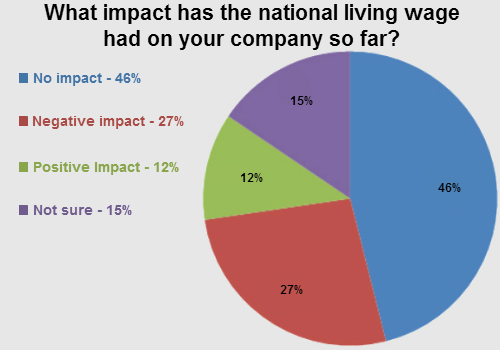
The Pulse Survey also questioned industry professionals and business owners on how the new National Living Wage (as of April 1st 2016) has impacted their business.
46% of those surveyed stated that it has had no impact, 12% stated that the increase has had a positive effect, however over double that amount indicated the increase in costs has had a negative effect (27%).
The National Living Wage legally entitles all staff over the age of 25 to earn at least £7.20 per hour. For staff under the age of 25, the National Minimum Wage still applies. This can vary depending on the age and employment status of the employee, so check the details on the government's website if you're unsure.
OFFSETTING THE INCREASED COSTS OF THE LIVING WAGE
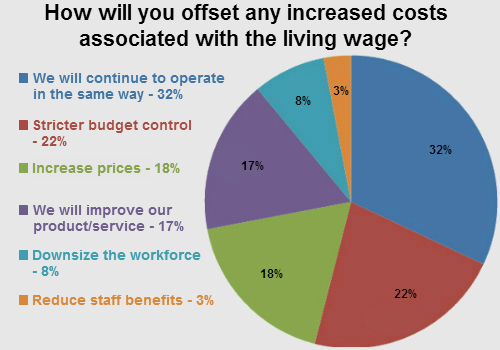
When asked how they will offset any increase in costs in regards to the National Living Wage, almost half of respondents indicated they would operate in the same way or look to improve their product or service offering.
However, 11% of the results indicated a downsize of workforce or a reduction of staff benefits may need to be implemented to balance out the increased costs.
Stricter budget control came in at 22% and an increase in prices took 18% of the vote.
By Jackie Mitchell