
Induction Cooking Explained
It’s no surprise that induction cooking is becoming increasingly popular in the professional kitchen. Demand has driven prices down and choice up. Today, there are so many options, it’s not always easy to decide which cooker might be suitable. This guide should give you all the information you need to buy the right machine for your kitchen.
SHOP INDUCTION HOBS & OVENS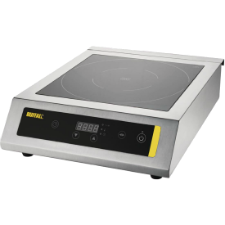
The Advantages of Induction Cooking
- Rapid heat up: commercial hobs transfer energy to cookware much faster than gas or electric versions. Perfect if you’re cooking to order.
- Responsive: when you change the temperature, the adjustment is reflected almost immediately. This means fewer boil-overs and also reduces the risk of burning food.
- Efficient: as induction hobs use magnets instead of elements, much more energy is channelled into cooking. Pan detection also turns off power when required, providing further energy savings.
- Cooler operation: induction hobs make less heat than traditional gas or electric hobs, meaning they are far less likely to add to the overall temperature of your kitchen. Ideal for smaller kitchens or sites with limited ventilation.
- Easy clean: no exposed burners or elements mean most induction hobs simply wipe clean at the end of service. Plus, as induction hob surfaces don’t get hot, its unlikely spillages will need intensive scrubbing to clean.
- Precise: some of the more advanced hobs feature digital or touch-screen controls. If you need exact temperatures, induction hobs are much more accurate than electric or gas hobs. Perfect if you’re tempering chocolate or using the hob to Sous Vide.
Countertop Induction Hobs
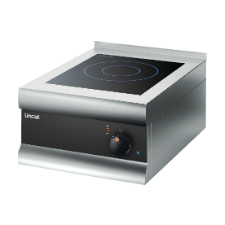
Perhaps the most common type, commercial countertop induction hobs are generally bigger and more powerful than their domestic counterparts. Size and power is important, as professional kitchens are more likely to boil big stockpots or large pans to high temperatures for extended periods.
Commercial induction hobs are specifically designed for professional use, so the internal components are built to withstand the conditions you’d expect in a busy kitchen.
- Plug-in power: can be used on demo days or mobile catering. More powerful hardwired versions are also available.
- Compact: can be stored away when not in use. Doesn’t take up much kitchen space.
- Backup cooker: if you have a large gas or electric primary hob, a countertop induction version can be used as a short-term alternative if your main cooker is waiting for repairs.
- Wok versions available.
Freestanding Induction Hobs & Ranges
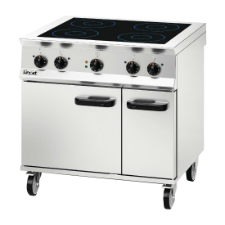
Freestanding induction hobs are generally used as a primary cooking surface. Large and powerful, these are positioned on a stainless steel stand or cabinet to provide stability and vital additional kitchen storage space. Some premium versions have an integrated oven to further expand its flexibility, although these are often referred to as Induction Oven Ranges.
It's worth noting that induction oven ranges only use induction cooking across the top of the hob. The oven itself is usually either a traditional static oven or a convection oven. The Picking a Commercial Oven guide has much more information about professional oven ranges.
- Primary appliance: designed for constant everyday use.
- Legs or castors: models are available with sturdy feet or heavy duty castors to suit. Castors make cleaning and positioning much easier.
- Warranty: as freestanding hobs are so large, they usually have on-site warranties. This means if a repair is required, an engineer would be sent to your kitchen.
Induction Fryers
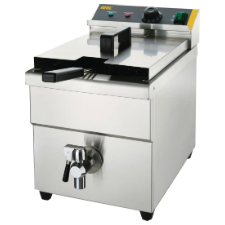
Induction fryers are a relatively new addition to the induction family. Whereas traditional fryers immerse exposed elements into oil, induction fryers use the technology to heat the tank itself. This means there’s a wider surface area heating the oil, which in turn leads to faster heat-up and response times. Induction fryers are generally restricted to countertop models.
- No exposed elements: much easier to clean.
- Efficient: large capacity oil tanks are brought to temperature quickly whilst only needing power from a 3-pin plug.
Choosing the Right Induction Compatible Cookware
One of the most common questions relating to induction hobs is “which pans are induction compatible?”. It’s true that not all pans are suitable. Due to the unique method of heating, only ferromagnetic cookware should be used. See the What Pan Should I Use guide for more information or browse our induction compatible frying pans and induction compatible saucepans when you're ready.
TIP: if you can attach a magnet to the base of the pan, it is usually induction compatible.
Frequently Asked Questions

What's the difference between single phase, three phase and plug-in power?
This refers to how the appliance connects to an electricity supply. Further details about power sources can be found in the Single Phase vs 3 Phase Guide.
How do induction hobs work?
Induction hobs work by transferring electrical current from a coil of wire into a metal vessel – usually a ferromagnetic pot or pan. These types of hobs have a robust ceramic glass surface which is designed to withstand day-to-day commercial use. The glass isn’t affected by the magnetic energy, so the power goes straight into the pan.
Is induction cooking safe?
Many professionals consider induction cooking to be amongst the safest methods available. As there are no open flames or red-hot plates to worry about, there’s little to no chance of burns. There is some debate as to whether induction hobs interfere with sensitive equipment such as pacemakers or Wi-Fi routers, however in most circumstances induction hobs are perfectly safe if used and positioned sensibly.
Why do induction hobs have fans?
Although the heat generated by induction hobs is low, the internal electrical components still require cooling. Be sure to allow plenty of space around the fan outlet during operation.
Can induction hobs be repaired?
As with most electrical cooking machines, commercial induction hobs can usually be professionally repaired under warranty. It’s always worth checking the troubleshooting section of the user manual to try to diagnose any fault – it may just need a new fuse or resetting.
Is induction really efficient?
Yes. Almost 90% of the energy used in an induction hob goes straight into the cooking. Electric hobs tend to be around 65% efficient and gas is sometimes only 55%. Couple this with the speed and accuracy of induction, you really can save a good amount of time, money and energy.
What is the future for induction catering equipment?
As the technology is becoming more and more popular, manufacturers are researching how to further introduce induction cooking into other professional catering appliances. New innovations include induction griddles, hot cupboards, buffet warmers and bains marie. Expect to see even more over the coming years.