
How To Keep Wooden Boards Food Safe
Most wooden boards are not dishwasher safe, so it's vital that good hygiene practices are in place to avoid breeding grounds for dangerous bacteria. They are still the most popular choice of cutting surface by far. Why? Firstly they don’t blunt knives like glass and ceramic boards do, which is great news for your chefs knives. Wood is also heat-resistant and allows hot pots and pans to rest on its surface. Last but not least, wooden serving boards are aesthetically pleasing, and as so are commonplace in restaurants.
Caring for your wooden boards properly doesn’t just ensure best hygienic practice, but increases their lifespan which means fewer replacements. They are perfectly safe to use for serving food if cleaned hygienically. Read more to find out how to keep them that way.
Shop Wooden Chopping Boards NowRecommended Use
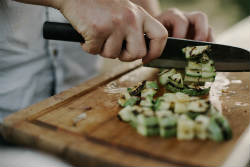
When using a wooden chopping board, it is best to avoid excess water or oil that can be absorbed into the wood. This is especially important when it comes to blood from raw or cooked meat, which should never be allowed to pool for long periods.
Hygiene risks occur only when wooden boards are incapable of being cleaned, which can lead to expensive fines. This can happen when staining and cracking renders the board beyond repair. The grooves become impossible to clean when they are too deep and numerous. The way to avoid this is with proper cleaning and maintenance.
After using the board, scrape away any remaining food with the blunt side of a knife. A bench scraper or pallete knife are useful tools for this.
Are Wooden Boards Hygienic?
Contrary to popular belief, wooden boards are inherently antibacterial. As an organic material, the natural cellulose contained in wood actively destroys bacteria both on its surface and deeply embedded within its fibres. Hardwoods in particular such as ash, beech, birch and elm can not only resist micro-organisms but effectively have the ability to clean themselves.
This does not guarantee that your wooden boards are always safe for serving food, until they are thoroughly cleaned. Read below for in-depth advice on the best cleaning procedures for your wooden boards.
"Wooden boards are not only hygienic but are easy to clean for hygienic further use." Patrick Gardner - MD, T&G Woodware.
How Often Should Wooden Boards Be Replaced?
Wooden boards which have become cracked, scratched or show excessive signs of wear should be quickly replaced. How often depends on usage, they may need to be replaced every few months if they are used regularly. It is a good idea to inspect your boards on a weekly basis, and especially during peak periods. Wooden chopping boards used in the kitchen will likely need to be replaced more often.
Important: Under no circumstances should a wooden board be used both for chopping and serving food to customers.
How To Clean Wooden Chopping Boards
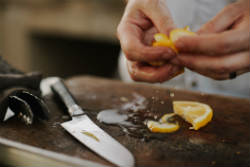
When it comes to wooden chopping boards, they should never be used in a dishwasher or submerged in water. As wood is a porous material, prolonged exposure to water will cause its fibres to expand and crack. This can also cause the board to warp, making it unevenly shaped and unstable when placed on a flat surface. Therefore its important not to let water soak in to the board, running it under hot water for a few minutes will not cause any damage to a wooden board if it is well seasoned.
Cleaning
Pre-rinse the board with hot water straight from the tap, taking care not to splash plates, utensils and other items in the process. You can then clean the board by hand using hot soapy water. Take care not to use brushes or scourers that are too abrasive as not to damage the wood. A soft sponge, cleaning cloth or scrubbing brush with plastic bristles should be used instead to remove any remaining food stains from the board. Pay particular attention to any light scars or scored marks.
Sanitising
Your wooden board will also need to be sanitised every time you clean it to ensure it is completely food safe.
Use a professional kitchen sanitiser which can be sprayed onto the surface of the board and wiped away after 30 seconds with a clean, dry cloth. There is no need to rinse the sanitiser away, this is a quick and simple way to make your board food safe.
Tip: If using chopping boards for preparing a variety of foods, than it's best to invest in a colour coded chopping board set.
Disinfecting
If using your wooden boards to prepare or chop raw meat, they should also be disinfected after cleaning. It is highly recommended to use a particular board for raw meat. Use chlorine-based bleach to disinfect the board once it has been diluted. Use a teaspoon to every two pints of water for a suitable dilution. Spread the solution over the board and allow it to rest on the surface for a few minutes. Afterwards, clean thoroughly again with soapy water and rinse well. When using bleach, it is vital to remove any trace from the board.
Drying
As soon as the board has been cleaned and sanitised, pat the underside of the board using catering roll or disposable towels. Then allow the surface to air dry. Drying in direct sunlight is never recommended, as this can cause the wood to splinter and reveal cracks which are hard to clean.
Once completely dry, wooden boards (or in fact boards made of any material) should be stored in an upright position to prevent moisture being trapped underneath. This also stops dust and any airborne particles settling on the cutting surface. A chopping board rack will provide the most hygienic method of storage.
For particularly strong odours left after cleaning, rub the board with half a lemon which will leave it smelling fresh and also help to sanitise the surface.
Tip: Even boiling water can be used to clean your boards, as higher temperatures are more effective at killing bacteria so long as the board is not submerged or in contact with the water for more than a few minutes. Just ensure you keep your hands dry and protected from the heat with the right gloves.
Care and Maintenance
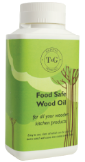
One of the most important aspects of maintaining a wooden chopping board is to season it. Not all boards come seasoned, so some will need to be seasoned before first use. Season your board whenever it feels it is losing its seal, which could be weekly or monthly depending on its usage.
Never season with vegetable oil or olive oil as these substances will rot and make your board unsanitary. Instead, use food grade oil to treat your board, applying with a soft cloth or brush. This prevents it from drying out too much which causes the wood to crack and expose areas to attract bacteria. Wipe the oil over the surface of the board and allow a few hours for it to soak in. Wipe off any excess with a dry cloth. This method can also be used to revive an old board, but it is still better to replace it if well-used.
Service
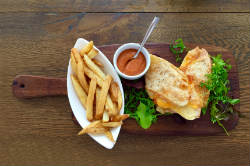
Wooden platters and serving boards look great under the lights, and perfectly safe for serving food if cleaned thoroughly. They are ideal for serving bread, charcuterie or cheese.
Generally food that needs no further preparation or heavy cutting is best for wooden boards and platters. Sharp knives will score and damage the board over time, creating grooves that harbour harmful bacteria that is difficult to clean.
Tip: For a complete guide to colour coded chopping boards and the most common materials used, read our handy buying guide to colour coded chopping boards.