Mental Health in the Hospitality Industry
Careers in the catering and hospitality industry are notoriously gruelling.
Long hours, stressful conditions and rising temperatures are considered normal for chefs and servers working in the catering industry. Despite the pressure they face, many kitchen workers have developed a macho code of silence towards the impact the hospitality industry has on them.
Following the death of celebrity chef Anthony Bourdain, mental health in the hospitality and catering industry has finally been brought into the spotlight.
Rather than getting out of the kitchen, is it time we did something about the heat?
What can employers do to improve mental health in the workplace
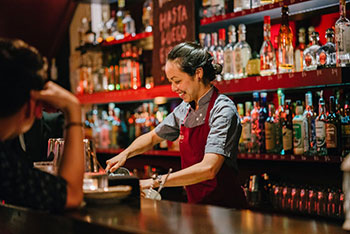
To improve mental health in the workplace, employers first must acknowledge the problem and create an environment that encourages openness, honesty and tolerance of mental health issues.
- Encourage discussions
- Show a willingness to adapt
- Assign mentoring and buddy initiatives
- Reduce opening hours
- Keep staff creatively challenged
- Offer paid holiday
- Allow lunch breaks and access to kitchen food
Everyone makes mistakes. It's the way a mistake is handled that can determine whether someone becomes despondent or is motivated to rectify it. Does a trainee get a pan thrown at their head with orders to do it again, or does a senior chef take the time to explain what went wrong and how to put right?
Shining a light on initiatives such as World Mental Health Day, or Mental Health Awareness Week, will show your team that you care, which could be the difference between someone suffering in silence and asking for help.
Reduce Opening Hours
Work-life balance is a key factor in employees' wellbeing. Reducing your opening hours will give people time off to rest, spend time with their family and see friends.
The days of 18-hour shifts, 6-days-a-week are becoming extremely dated as more restaurants seek to improve conditions for staff.
Respect and Decency
Ensuring staff treat each other with respect will help create a harmonious environment. While large chains will likely have HR departments, smaller businesses need those in senior positions to lead by example in their treatment of colleagues.
Those in authority should treat everyone the way they want to be treated themselves, so you have to drive this culture through the spine of the team.
Article: How to retain employees in the catering industry
Communication and Ideas
Keep your workers in the loop and be open to ideas.
Share pertinent business information that makes colleagues feel like their role makes a difference, such as weekly sales figures and growth plans. Encourage ideas on front-of-house design, the menu or smarter ways of working. Any way to engage your workforce will keep them stimulated, motivated and happy.
Tip Policy
Allowing workers to keep 100% of their tips is a simple way to ensure fairness.
Service charges can make things a little more complicated, but giving staff a set percentage will make things clearer. On a busy night, a server will be able to get through a shift a little happier if they know there is a reward at the end.
You also save yourself from a potential public backlash, as has happened with high-profile chains.
Rota
Consult your staff before creating rotas.
Some people want to work late and have a lie in, while others like to be up early and get the day started. Someone may be happy with a split shift because they get to pick their children up from school without missing out on work.
For special occasions like Christmas you can ask who wants to work. Incentivising these less-attractive shifts will encourage people to sign up and be motivated to work hard, meaning a better service and satisfied customers. You’ll also have a happy team because everyone on shift has chosen to be there.
Uniform
Uniforms should be smart, suitable for the job and comfortable.
Provide uniforms that your staff can be proud of wearing. To be happy and productive, workers need to be comfortable – although appearance is certainly important.
High-end London establishments have made the news for demanding that female staff wear full make-up and high heels, piling on the pressure for women to look ‘glamorous’ and even criticising their appearances. Not only did this make for terrible PR, but clearly there is a toll on the mental health of those in question.
What we wear can play a big part in how we look and feel. So uniform is an important element to a happy, productive workforce.
Tip: Whether it’s with tipping, rota, uniform or anything else – communication and consistency is essential. Clearly defined rules and structures will let everyone know where they stand, ensuring fairness for all.
What is the cost of mental health in hospitality?
Mental health is important in the workplace because a business runs smoother if the workforce is happy. And hospitality businesses like restaurants,cafes, pubs and bars are no different.
An estimated 70 million working days are lost every year to mental health problems, believed to cost employers around £2.4 billion a year. If that isn’t staggering enough, 12.7% of all sick days in the UK are attributed to mental health conditions.
If you aren’t yet convinced, UK businesses can save up to £8 billion a year by taking mental health seriously and putting measures in place to ensure wellbeing.
As well as the financial implications, we must also think of the human cost.
Lives can be destroyed and lost due to poor mental health. It’s your duty as a business to look after your employees and make sure people are fit to work – whether physically or mentally.
The time to act is now.
Tip: In our pulse survey of 850 Nisbets customers (which we'll reveal more about later), 25% of respondents said they suffered from poor mental health due to work. Over 62% said they had worked with someone who had mental health issues.
What causes mental health problems at work?
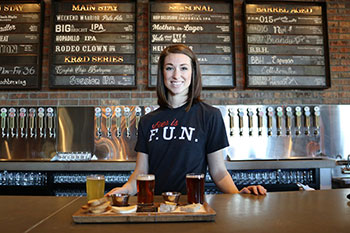
Our working environments can play a major role in our overall wellbeing.
Mental health problems at work can be caused by a poor work-life balance, stress, relationships with colleagues and superiors, feeling undervalued, low pay and overall job satisfaction. It can be one simple reason or it can be a combination of factors that debilitates someone, rendering them mentally unfit to work.
Due to the nature of the industry, catering can become a breeding ground for mental health problems.
Most people's mental health issues build up over a period of time, often undetected by themselves or their peers. For others, however, there may be a single episode that triggers a breakdown. It could be an argument, a particularly busy shift or something in their personal life playing on their mind.
Reported cases of people suffering mental health issues are on the rise. Whilst this could partly be attributed to decreased social stigma allowing people to come forward, there are many factors that are leading to the increase in mental health cases.
Wages
A good wage allows people not just to live, but to enjoy their life outside of work. Whether it's relaxing at home, going to the pub, buying a new car or going on a nice holiday – employers need to appreciate that hardworking staff deserve the time and the means to reward themselves.
The Office for National Statistics has revealed over 6.2 million jobs in the UK pay lower than the “real” Living Wage - the wage needed to accommodate the “real cost of living”. Figures also revealed that 441,000 employees were paid below the National Minimum Wage or National Living Wage.
With 6 million people struggling to make ends meet despite working full time, inevitably they’re going to be affected during working hours.
Social media
Is there anything you can do to limit your team's social media useage?
Social media can have a negative impact on users in a number of ways. It's addicting, leaves people feeling inadequate and causes users to live life through their phones.
The Duchess of Sussex, Meghan Markle, has publicly spoken of her belief that social media puts pressure on young people and “skews your sense of self-worth”.
From perfect Instagram photos to self-gratifying Facebook statuses, social media has become a place where people glorify their lives and project an image that doesn’t always reflect reality.
Workers who use social media at work can potentially become despondent if they are exposed to posts they make them feel like they haven't achieved the level of success their friends have. This results in loss of productivity and an unhappy team.
Why we need to do more
Suicide is the most common cause of death for men aged 20-49 in England and Wales. Men account for 75% of suicides compared to 25% of women, therefore it’s imperative that macho culture needs to change - especially as commercial kitchens are predominantly male.
One person in fifteen makes a suicide attempt at some point during their life.
As employers, colleagues, friends and family members – we all need to wake up and take mental health seriously.
Tip: In a study of 1,000 job-seeking Millennials by YouGov, it was revealed that work-life balance is more important than job security. If your business is struggling to recruit or retain staff, reviewing your opening hours could be the place to start.
Pulse Survey Results
In a survey of 850 Nisbets customers, we asked them what they like and dislike about their working environment. We also asked about their experiences of mental health in the hospitality industry.
Worryingly, only 465 out of 850 respondents (54%) said they hadn’t suffered with mental health problems due to work. One in four (26%) ticked either ‘yes’ or ‘prefer not to say’.
These are alarming statistics for an industry desperate to shake its image as an undesirable career move.
The following results can give hospitality business owners, managers or head chefs the insight they need to implement the necessary changes to keep staff happy.
Have You Suffered With Mental Health Problems Due To Work?
No: 54%
Yes / Prefer Not To Say: 26%
Survey Question: What Do You Enjoy The Most About Your Job?
Cooking: 25%
Fun: 24%
Fast Pace: 18%
Survey Question: What Do You Dislike Most About Your Job?
Unsociable Hours: 49%
Salary: 19%
The Good
As expected, cooking came out as the top answer (25%). With fun and camaraderie (24%) not far behind, it’s clear that cooking attracts people to the industry, but it's working with others that retains them. Team spirit is everything when you’re up against it in a busy environment, so encouraging that bond is important to both morale and performance.
Team meals and post-shift drinks are a way to bring people closer. Another key element to this team spirit is to instigate a policy of respect and decency.
Of course, kitchens will never be ideal for timid people. But shouting and intensity is entirely different to aggression, bullying and abuse. Ensuring staff are cordial and reasonable will promote respect and a healthier working environment.
The Bad
Work-life balance is the overwhelming factor in people disliking their job (49%).
The unforgiving pursuit of perfection can cause people to run themselves into the ground, working every hour under the sun to get that Michelin star or for approval from their boss.
Whether they’re BOH or FOH, hospitality workers will understand that evening and weekend work is essential. But that shouldn’t mean your work becomes your life. With increased scrutiny over mental health, many restaurants have taken steps to improving their staff’s work-life balance – including Michelin-starred restaurants.
Salaries and pay (19%) are also crucial to wellbeing. It’s not necessarily a case of wanting a huge pay rise, but people want to be paid for the hours they work; a matter which the industry is notorious for overlooking.
Tip: When asked if their employer does enough to support workers’ mental health, 30% of respondents to our last survey said either “no” or “unsure” – with just 49% saying “yes”.
Benefits of Open Plan Kitchens
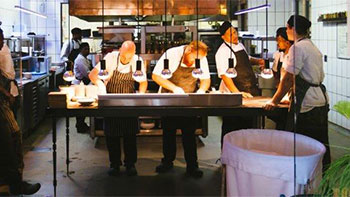
The benefits of open kitchens include gaining the trust of the customer, ensuring a harmonious atmosphere between workers as well as giving a touch of theatre for on-looking diners.
Pleasant Working Environment
Open kitchens will also create a pleasant environment to work in. With the industry’s reputation for boisterousness, closed kitchens can become like an underworld with its own laws – hidden away from society. This creates the potential for toxic environments that damage mental health and team morale.
The barriers to the outside world can make it feel like whatever happens in the kitchen stays in the kitchen, so an open-plan design can be a great idea.
Showcasing Your Art
Additionally, an open kitchen provides a touch of theatre to onlooking diners. It gives chefs the chance to show off their skills. Rather than being locked away, chefs can let loose and enjoy themselves – letting their artistic creativity come to the fore as chefs feel like they’re at centre stage.
Why not let chefs show off their passion to those who have come to enjoy their work?
Case Study
Stockport restaurant, Where The Light Gets In, made headlines with their bid to tackle staff retention. They completely overhauled their kitchen to an open-plan style, had a workspace built into the dining room, reduced its opening hours and introduced simpler menu options.
They wanted to support an outward looking business with a pleasant working environment, rather than staff being locked away in the kitchen, chefs barking orders and the operation being too insular. They also encouraged artistic merit, introduced 6 weeks’ paid holiday and offered free yoga sessions.
Thinking about how you can look after your team, rather than what they can do for you, is your first step towards a happy workforce and better mental health.
Tip: Seeing food being cooked will also work up diners’ appetites, potentially increasing customer spending. You’ll also inspire trust and confidence in the customer by allowing patrons visual access to the hub of your operation.
High Profile Solutions

Mental health and staff retention have been newsworthy items for a few years now.
Businesses have made headlines for taking unusual methods to creating a happy, motivated team that stays with the company long term.
Let’s have a look at what they’ve done.
Michel Roux Jr – Le Gavroche
After some negative press surrounding working hours and salaries, Roux Jr responded by cutting opening hours to give chefs a better work-life balance and ensure no-one’s real working hours amounted to working for under the minimum wage.
They announced closures for Saturday lunchtime, Sunday and Monday to boost employee welfare. Maximum working hours were capped at 50 per week and last orders for dinner were taken at 9.30pm.
Magnus Nilsson – Faviken
In his remote Swedish two-Michellin-starred restaurant, Nilsson has taken a unique approach to improving conditions for his team.
Prices doubled while working hours halved and the size of his team tripled. The price increase was met with suprisingly little resistance from customers, but crucially enabled him to offer 5 weeks' paid holiday (including 3 successive weeks in the summer) as well as reducing working hours.
The result? A loyal, happy team.
Stuart Ralston – Aizle
Recommended in the 2018 Michelin Guide Great Britain and Ireland, Ralston's Aizle became another celebrated operation to reduce opening times. Ralston wanted to take on the long-hours culture of hospitality, encouraging staff to enjoy their lives outside of work instead of being physically depleted from the working week.
To achieve this, he switched from a five to four-day week – without forcing staff to take a pay cut.
Get Help Today
For anyone struggling with mental health problems, please don't hestitate in getting confidential support.
Here are a few of the many resources available to you:
- Hospitality Action
- Men's Health Forum
- Mind
- Mental Health Foundation
- Depression Alliance
- Alcoholics and Narcotics Anonymous
- Sane
- Rethink Mental Illness
- Young Minds
Help is available 24/7 for anyone who needs it.