
Buying a Commercial Freezer
A Commmercial Freezer is the primary appliance used in professional kitchens for keeping food frozen. These machines can often have hundreds, if not thousands of pounds worth of stock inside, so it's important that the freezer is reliable and secure. There are so many different types of commercial freezer, each one with specific benefits, so this guide should help you make the right decision when buying a commercial freezer.
Upright Freezers

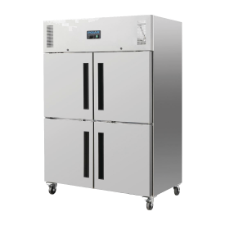
Upright Freezers, sometimes referred to as cabinet freezers, are the perfect choice for storing items on shelves for quick, convenient access. As upright models come in different sizes, it’s possible to choose one which is configured to fit perfectly into most catering areas. In addition, upright cabinet freezers generally make the most of higher areas which are sometimes seen as wasted space in professional kitchens.
Uprights are available in single, double or stable door versions.
- Compact footprint: great for reducing the amount of space used by the refrigeration in your kitchen.
- Large capacity: upright freezers generally have larger capacities in comparison to almost every other type except Walk In Freezers .
- GN Compatible: the convenience of gastronorm compatibility means food can be loaded or accessed very quickly and trays can be transferred directly between appliances.
- Rapid access: due to their size and manoeuvrability, uprights can be positioned much closer to your food preparation areas than cold rooms.
- Adjustable shelves: although not all commercial freezers have adjustable shelves, the ones that do allow you to store bulky boxes or containers of food.
Counter Freezers
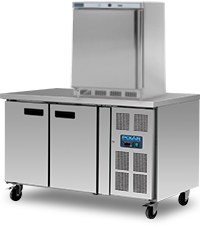
Designed to provide both frozen under counter storage and valuable worktop food prep space, Counter Freezers are a versatile addition to the modern professional kitchen. The solid countertop is usually made from a strong and durable stainless steel, which is perfect for either food prep or positioning small kitchen appliances.
- Under counter frozen storage: a flexible way of optimising the available space in your kitchen.
- Flexible: available in single, double or triple door versions to suit.
- GN Compatible: the convenience of gastronorm compatibility means food can be loaded or accessed very quickly and trays can be transferred directly between appliances.
- Adjustable shelves: although not all commercial freezers have adjustable shelves, the ones that do allow you to store bulky boxes or containers of food.
- Sturdy base: Can accommodate other small appliances on the counter, such as microwaves, mincers, ice cream machines and more.
Low Freezers
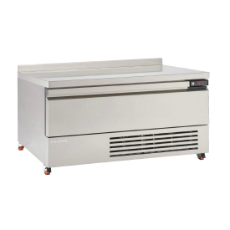
Much like counter freezers, a Low Freezer provides vital frozen storage with one major difference. Low freezers are typically just above knee height and are designed to provide a base for other commercial kitchen equipment, raising it up to a much more comfortable working height. Whereas a stand simply lifts a machine up and provides some ambient storage, a Low Freezer also brings reliable frozen storage using the same amount of space.
- Strong and sturdy: low freezers can have larger kitchen appliances such as convection ovens and griddles positioned on them.
- Freeze or refrigerate: can be set to fridge or freezer mode, making these a great backup option if required.
- Individually controlled drawers: the flexiblility of setting each drawer to a different temperature reduces the need for separate units.
- GN Compatible: the convenience of gastronorm compatibility means food can be loaded or accessed very quickly and trays can be transferred directly between appliances.
Chest Freezers

Commercial Chest Freezers are generally larger than those found at home, but they operate in much the same way - albeit with much more powerful and hard wearing commercial components. They are perfect for relatively small kitchens or in back-of-house storage rooms or cellars. A commercial freezer of this type is ideal when stacking and storing large quantities of foods, such as tubs of ice cream or boxes of pies.
Chest freezers can also double as valuable extra counter space when not open, although a Counter Freezer may be preferable if you're expecting regular access during service.
- Efficient: as commercial chest freezers open from the top, it's harder for cold air to escape from the freezer.
- Large capacity: Chest freezers can have huge capacities, perfect for holding especially bulky containers. However, this comes at the cost of reduced access if the food is stored underneath other ingredients. Access may also be limited for smaller users, or those in wheelchairs.
- Worktop lids: unlike domestic chest freezers, many commercial versions have solid stainless steel lids. This means you can carry out food prep or simply use it for ambient storage, although the lid will have to be cleared if access is required.
Other Types of Commercial Freezer
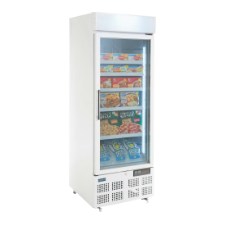
There are other, more specialist commercial freezers available:
- Display Freezers: display freezers are specifically designed to help you maximise sales of frozen foods. Available as display chest freezers, ice cream counters and upright display freezers, there's plenty of choice. For more information about this type of freezer, see the Display Refrigeration Explained guide. Shop Display Freezers Now
- Under Counter Freezers: great for areas with limited space, compact under counter freezers provide fast, front-of-house access to ingredients. These are small, discreet and ideal for neatly tucking away out of sight of customers. Shop Undercounter Freezers Now
Commercial Freezer Features
Here are a few features to look out for when buying a commercial freezer.
- Capacity: Try to look out for the freezer which has enough space to cope with your busiest service. Too small and you risk food going to waste. Too big and the freezer will take up too much of your kitchen and increase your running costs. Note that each freezer has a Capacity and a Net capacity. The Net Capacity is the freezer's total usable space.
- Size: Being such an integral part of the kitchen, it’s vital to ensure it’s going to fit before purchase. Can you imagine the inconvenience of not being able to store your delivery of produce because the freezer doesn’t fit through the door? Even if you haven't got a delivery waiting, it's much easier to do some simple checks first. This video gives you some helpful tips.
- Climate Class: This represents the highest ambient temperature that the freezer can operate at effectively. Generally, Climate Class 4 is considered “medium duty”, whereas Climate Class 5 freezers are “heavy duty”. A good rule of thumb is that if your kitchen is routinely over 32°C, it’s likely you’ll need a Climate Class 5 freezer. Climate class also represents the effectiveness of your freezer in humid conditions. Again, if your kitchen is especially humid, a Climate Class 5 freezer may be required.
- Efficiency: On the whole, the more efficient a freezer is, the less it will cost to run. Most solid-door commercial freezers will have an energy efficiency rating to help you decide. Commercial display freezers and chest freezers do not currently require energy efficiency ratings.
- Defrost: Over time, it’s possible that the inside of a freezer can accumulate ice. This can reduce the performance and lifespan of the freezer, so many professional units have a built in automatic defrost system which can be programmed to kick in when required. You’ll need to manually defrost the unit if there’s no automatic defrost.
- Security: The contents of a freezer can be highly valuable, especially if it contains cuts of meat or fish. If there’s any doubt, it’s worthwhile to invest in a lockable freezer to secure your stock.
- Doors: There’s a few features to look for in the doors. Self-closing doors help to save energy and are especially useful if you’ve got your hands full. Some freezers have Pedal Opening, meaning you don’t even need to touch the door at all - much more hygienic. Stable Door freezers are great for saving energy too, as you only open the door you need, retaining the temperature much more efficiently than full door versions.
- Power Rating: Most commercial freezers can simply be plugged in. However, some of the most powerful versions may require hardwiring. Check out the Power Ratings Explained guide for more information.
Frequently Asked Questions
What is R404a Refrigerant?
Refrigerant is the fluid or gas used within a fridge as part of the refrigeration cycle. In a professional kitchen, it doesn’t really make much difference if your unit contains R404a, R134a or R600a refrigerant.
The overall performance and capacity of the product is usually a far more important buying decision. However, some types of refrigerant are considered more environmentally friendly than others. R290 is widely considered to be the eco-friendly version, whereas other types of refrigerant often contain greenhouse gases.
How can I find Spares for my freezer?
There is a huge selection of spare parts available such as shelves, compressors, door seals and more, all within our Spares and Accessories category.
What's the difference between domestic and commercial freezers?
Aside from size and capacity, commercial freezers are designed for much more frequent use. A domestic freezer might only be opened half a dozen times a day, whereas a commercial version could be constantly being opened over the course of a few hours. Commercial freezers feature powerful compressors, much more sturdy construction and are often fan assisted - making them noisier too.
Why is my freezer running so hot?
It's not necessarily a fault. Our guide on How to Keep a Fridge Cold is a useful reference for commercial freezers too.
Do you have more information on other types of refrigeration?
There are many guides and articles available through the Nisbets Cater Hub. Popular guides include the Commercial Fridge Buying Guide, the Ice Machine Buying Guide, the Blast Chiller Buying Guide or the Display Refrigeration Explained article.