Commercial Pizza Ovens Explained
Pizza is simply one of the most popular dishes in the UK. It’s delicious, easy to make and high margin. Although you can easily make pizzas in a convection or combi oven, the most popular appliance to use is a commercial pizza oven.
If you’re thinking of adding pizza to your menu, this guide should help you choose the right oven for your needs.
Types Of Pizza Oven
Deck Oven
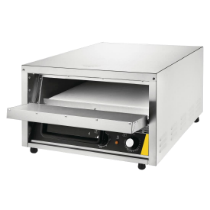
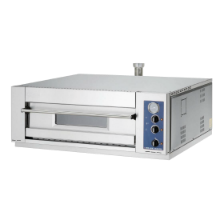
A deck oven typically features either a stone or brick base which, when heated up, gives pizza bases that distinctive crispiness. In electric versions, toppings are usually cooked via convection, meaning heat is distributed throughout the oven by fans to ensure the whole pizza is evenly cooked. Gas versions usually feature burners mounted at the top or back of the oven to cook toppings.
Good for: pizzerias, restaurants, pubs.
- Wide variety of sizes, from single countertop pizza ovens to free standing multiple deck ovens which can cook dozens of pizzas at a time.
- Cooks a more traditional authentic pizza with a crispy base.
- Often stackable, meaning improved output without taking up more kitchen space. If demand goes up, simply add another oven.
- Gas or electric.
- GOOD TO KNOW: Pizzas may need to be rotated to prevent burning. This can take practice to get right, so training is usually required.
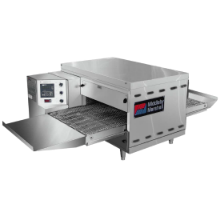
Conveyor Oven
Conveyor ovens pull pizzas through a heated chamber, meaning multiple pizzas can be cooked one after another with consistent results every time. These are widely considered to be the highest production pizza ovens.
Good for: food courts, fast food restaurants and other high demand sites.
- Very easy to use – save training costs.
- No recovery time– as there’s no door to open, the oven keeps the same temperature throughout the service.
- Gas or electric.
- GOOD TO KNOW: Large size means they may not be suitable for sites with limited space. Inefficient if not constantly in use.
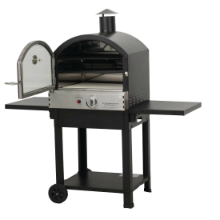
BBQ Pizza Ovens
Generally designed for outdoor use, BBQ pizza ovens use either propane gas or solid fuels such as wood or charcoal to achieve unique flavours. Usually free standing, smaller versions are often sold for domestic purposes.
Good for: pub beer gardens, outdoor catering, domestic gardens.
- Highly stylish designs make BBQ pizza ovens great for showcasing your pizza offering and maximising takings during good weather.
- Versatile - able to cook other BBQ favourites such as burgers, chicken portions and veggies.
- Usually have castors, making them easy to position and store away.
- GOOD TO KNOW: Gas or solid fuels only. Usually only suitable for outdoor use.
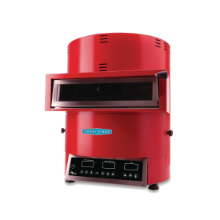
Accelerated Cooking Ovens
Commonly called rapid cook ovens, these are the newest and possibly the fastest way to cook a deliciously crispy, piping hot pizza. If you’re cooking food to go, these can substantially reduce your queue times and improve your takings. Just don’t forget the pizza boxes!
Good for: Bakeries, cafés, service stations.
- Incredibly fast – by using a combination of microwave, convection and impingement (forced air) cooking, these can cook up to a full 14” pizza in around 90 seconds (depending on ingredients/model).
- In comparison to larger deck or conveyor ovens, accelerated cooking ovens are relatively compact – perfect for smaller cafés or kiosks.
- Most models can cook much more than just pizza. Rapid cook ovens are also commonly used for other to-go snacks such as pies, toasted sandwiches and pastries.
- Can cook pizza from frozen.
- GOOD TO KNOW: although these cook exceptionally fast, the limited capacity usually means that you can’t do batch cooking for large groups. Electric only.
Essentials to check before purchase
Type of Pizza: If you’re looking for a specific finish on your pizzas, it’s important to double check if your oven can achieve it. For example, deck ovens can create delicious deep-pan Chicago-style pizzas with heavy toppings, whereas conveyor ovens would be better suited to thin base pizzas with light toppings.
Power Type: Whether you’re using gas or electric powered versions, make sure your oven matches your kitchen set-up. Electric pizza ovens are usually available in single or three phase versions, whereas gas can either be natural “mains” gas or liquid propane “bottled” gas.
TIP: If you opt for an electric oven, the single phase vs 3 phase electricity guide may help be useful.
Size: Pizza ovens can be both surprisingly large and surprisingly small. As such, there’s huge variety available and it’s essential that you check the dimensions before purchase to ensure it’s going to fit in the kitchen. Don’t forget to check the height too – if you’re planning to stack multiple machines, your staff will need to be able to reach the top deck comfortably.
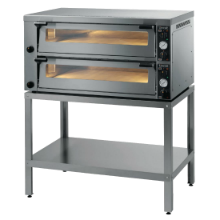 Stands: Pizza ovens are generally designed to be either positioned on a counter or free standing. If you choose a free standing version, check whether the stand is included. If it’s not, stands are usually available as an optional extra, found under the “accessories” tab on product web pages.
Output/Capacity A dedicated pizzeria on a busy weekend will usually need a much higher capacity and output than a rural café. All pizza ovens have a listed pizza capacity – be sure to match the oven to your expected demand. Capacity also refers to the maximum size of pizza which can be cooked.
Efficiency: Generally, the higher power pizza ovens reach hotter temperatures and cook faster. However, you may wish to balance this with the cost of running the unit over the course of the year. Ovens which use less energy could well save you considerable running costs over time.
Warranty: All our commercial pizza ovens include at least a one year warranty which covers business use. Still, it’s worth checking the duration of the warranty as some ovens may have longer guarantees than others.
Weight: If you are involved in mobile or event catering, you may need to occasionally move the oven. Commercial ovens can be heavy and bulky, so the weight can be a critical buying decision in terms of transportation costs and positioning.
Pizza Oven Features
Timer: Although you can buy separate kitchen timers, advanced pizza ovens with built-in timers can automatically shut off when the cooking cycle is complete. Standard pizza oven timers simply notify you when time’s up – still very handy if you’ve got multiple dishes on the go.
Temperature Display: It’s useful to know that the oven is up to temperature before cooking as temperature can quickly be lost when the door is opened. Any pizza oven with a temperature display helps to ensure consistently cooked dishes every time.
Stone Base: Sometimes called a fire stone or baking stone, these are usually made from a porous stone or ceramic material which absorbs water and moisture. This crisps up the base and helps to prevent burning. To replicate the effect, you can purchase separate pizza stones which can be put into almost any suitably sized oven.
Glass doors: If your ovens are customer facing, having glass doors means your customers can see the pizzas cooking whilst they wait – great for adding a bit of anticipation! The glass door also lets you monitor the cooking process, helping to prevent wastage.
Looks: often forgotten, the appearance of a pizza oven can be very important, especially if it’s in customer facing areas.
Frequently Asked Questions
Can a pizza oven get too hot?
Yes, although it depends on the recipe of your pizza. High heat is necessary to cook pizza quickly and some commercial pizza ovens can reach over 600°C during cooking. With a bit of practice and trial and error, you’ll get the perfect combination of heat and timings for your pizzas.
Can you cook anything else in a pizza oven?
Yes. In fact, as deck ovens are very similar to convection ovens, you can pretty much cook anything that will fit in it. Roasts, fish, steaks, pies and even pastries can be cooked perfectly in a pizza oven. They are incredibly versatile.
Does a pizza oven need overhead extraction?
It depends on the model, so it’s best to check the specifications of the unit before purchase. Most gas appliances, including gas powered pizza ovens, will need overhead extraction as well as a gas interlock to comply with UK regulations.
Tech Tip: A gas interlock is a safety system which restricts the flow of gas until the ventilation system is operational.
Which commercial pizza oven is best?
Professional pizza ovens are all designed to make great quality pizza, fast. As such, the “best” oven is the one which combines the power, capacity and functionality you need for a successful service regardless of customer demand.
Is there any difference between gas and electric pizza ovens?
The general consensus is that gas pizza ovens deliver a more traditional “rustic” finish, whilst electric versions require less training to use and are more energy efficient.
What equipment do I need to make pizza on a commercial scale?
Aside from the ingredients, everything you need to make great quality pizza is available our website.
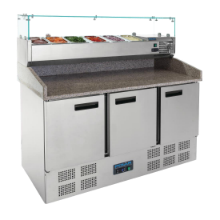
Before cooking, a pizza prep counter helps you to have all the ingredients in one place, alongside a stay-cool marble worktop which makes manually kneading pizza dough much easier.
During cooking, a pizza screen is commonly used to ensure a good airflow around the base of the pizza to prevent "soggy bottoms". Long-handled pizza peels are ideal for rotating or removing pizza from hot ovens. In fact, all the tools for prepping and serving are available in the pizza utensils section.
What’s the return on investment for Pizza Ovens?
Despite the other usual costs such as business rates and labour, pizza ovens can pay for themselves fast. The Buffalo CP868 pizza oven is a good example. If you sold five pizzas every day, not only would the oven have paid for itself within the week, you'd have taken over £15,000 over the course of the year.*
Bigger units might cost more, but the output and capacity can quickly justify the investment.
*Based on 14” pizza selling price of £10 and average ingredient cost.