
PULSE SURVEY SPRING 2018
Nisbets' Pulse Survey presents survey data from over 600 catering industry professionals. The answers provided offer a vital insight into the industry’s concerns on topics that affect day-to-day business and future planning for the industry. The spring 2018 survey has focused on the effects of Brexit and the importance of being eco-friendly.
You can find all previous Pulse Survey results at the bottom of this page.
Your Business
How successful was your business in 2017?
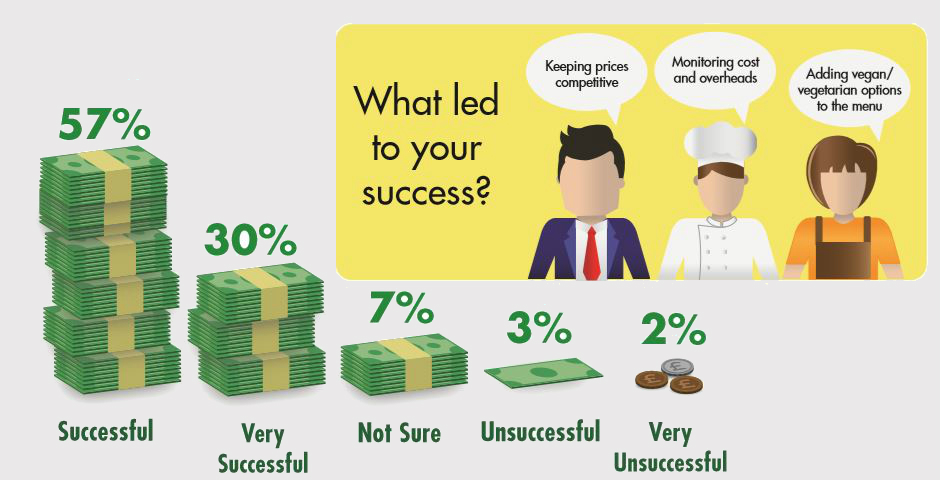
2017 proved to be a successful year for most businesses, with 87% of you reporting positive results. Some of the reasons for your success include monitoring costs and overheads, keeping prices competitive, working longer hours and adding vegan/vegetarian options to the menu.
We also asked what changes you've seen in your industry over the last 12 months. The main things pointed out by you include: reduced footfall and customer spend, increased businesses rates, competition and costs, rise in demand for vegan and vegetarian options and difficulties in finding skilled staff.
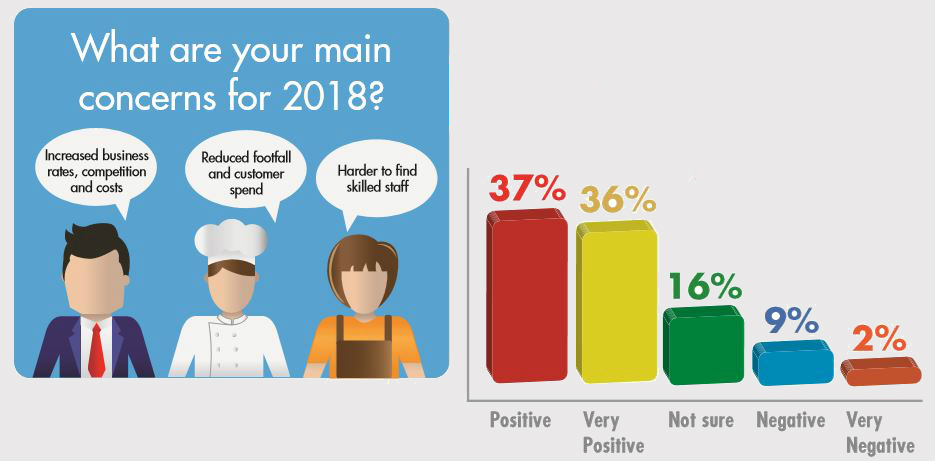
Based on the performance of 2018 so far, how do you feel about business growth for 2018?
Despite a positive 2017, there is a less positive outlook for 2018. With 73% of you feeling positive about growth, compared to 87% reporting a strong 2017. The general outlook for 2018 is still very positive, despite 27% being unsure or not positive about your growth in 2018.
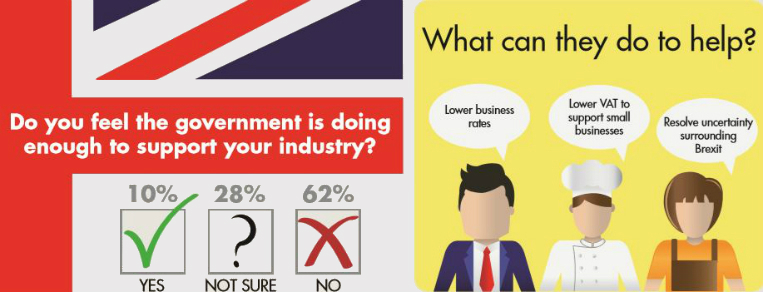
Do you feel the government is doing enough to support your industry?
62% don’t believe the government is doing enough to help your industry, with just 10% thinking they do. We also asked what you think the government can do to help you. We've listed some of your responses below:
- Reduced business rates for small-medium businesses
- More support for independent businesses, such as lower VAT
- Resolve uncertainty around Brexit and what is means for businesses
- Make it easier to hire and train staff (less red tape)
Brexit
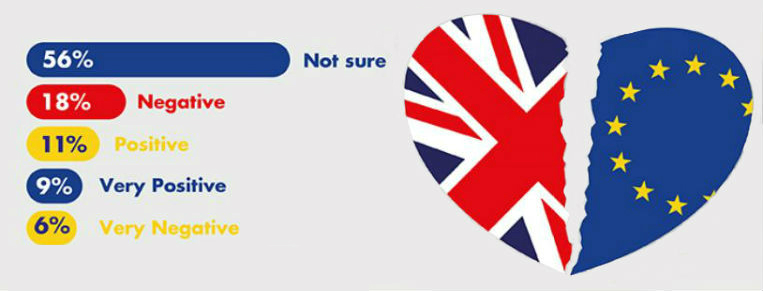
What effect, if any, has the decision to leave the EU had on your business?
There is still a lot of uncertainty surrounding Brexit and what effect it has and will have on business in the UK. This was one of your main concerns, with 56% feeling unsure of its effect. 24% say Brexit has had a negative effect on your business, with 20% feeling a positive impact.
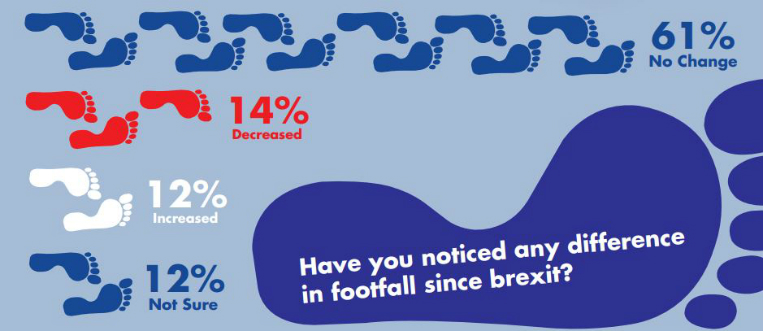
Have you noticed any difference in customer numbers since Brexit?
14% have noticed a decrease in footfall since Brexit, with 12% seeing a slight increase. The majority of businesses haven’t noticed a change. The impact of Brexit may not have been fully realised yet, and your calls for clarity indicates changes may still be yet to come.
Where have you noticed cost increases, if any?
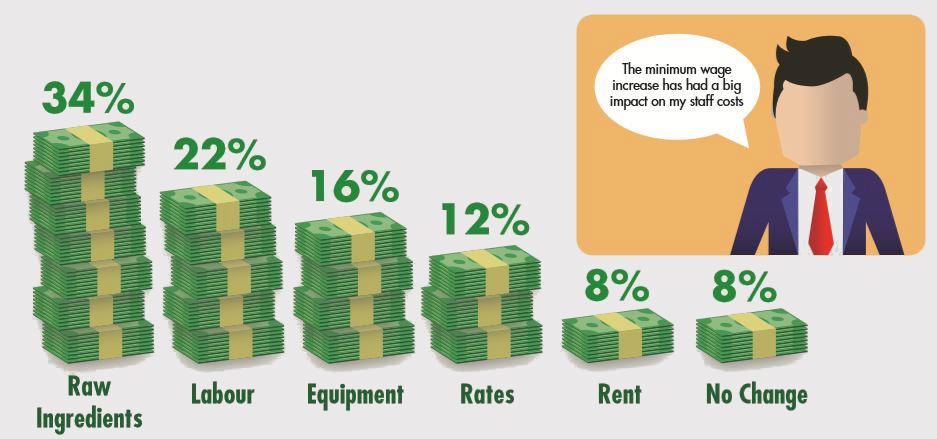
Raw ingredients is the main area you've seen cost increases, with 34% of the vote. Staff costs are second, with 22% of the vote. The minimum wage rise was noted by many of you as having a big impact on the success of your business. Equipment had 16% of the vote with business rates and rent making up 20%. Many local and independent businesses think a tax break for small businesses would help them be more competitive, which would stimulate the market and encourage consumer spending.
News: In July 2018, it was announced that almost 200,000 UK businesses had been summoned to court over non-payment of business rates. The rate of inflation saw the 41.4p tax rate in 2010/11 rise to 49.7p in 2016/17 - a staggering 20% increase, even before the revaluation of tax rates in April 2017. Many of these businesses are small/medium sized, struggling to pay high rates in areas where the local economy is under-performing. You can find out more on the revaluation of business rates on the Gov website.
How will you absorb any additional costs?
With 46% of the vote, most businesses will pass on the added costs to customers by increasing prices and reducing the amount of offers and deals. 27% plan to reduce food waste and 25% will monitor portion sizes more closely. This correlates with the cost increase of raw ingredients and will help you to still offer the same prices to stay competitive.
Despite worries over finding skilled staff, 18% have chosen to cut back on staffing. Many business owners are working longer hours to make up the difference and save money. 13% will buy cheaper ingredients, which could mean changing supplier, whilst 5% will grow your own foods. Many of the ‘other’ responses are businesses that will absorb the cost for now, and see what the future brings.
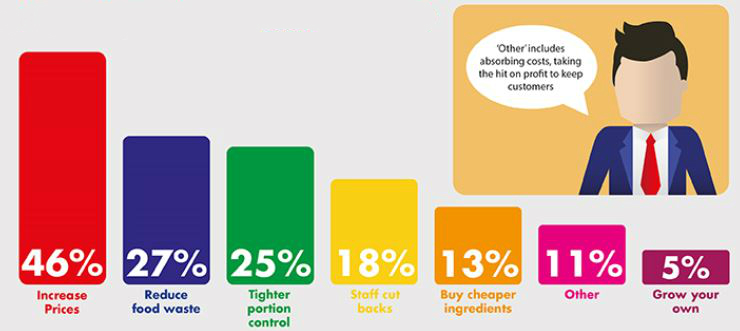
How do these percentages compare with your responses from 2017? 35% of respondents in 2017 said they would increase prices, compared to 46% this year. Staff cut backs were the choice of just 3% last year, but that has risen to 18% this year. Reducing food waste has climbed to 27% in 2018, from 14% last year.
Reservations & Bookings
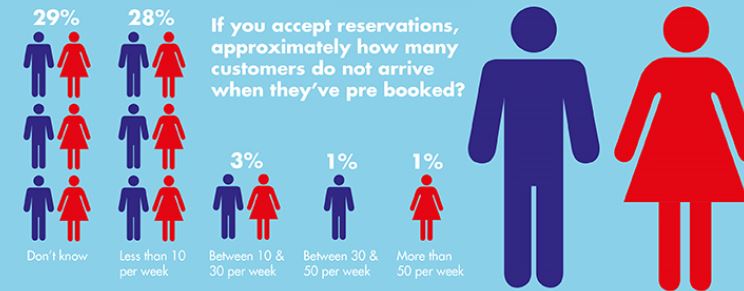
If you accept reservations, approximately how many customers do not arrive when they've already booked?
29% of you are unsure on how many no-shows you receive a week, whilst 28% notice 10 or less per week. Just 3% have between 10 and 30 no-shows, with just 2% having 30 or more.
Article: Cancellations and no-shows are estimated to cost UK restaurants and pubs over £16bn a year. Find out how to reduce the number of cancellations and no-shows to ensure a positive bottom line with our guide to dealing with no-shows.
Do you use an online reservation system?
Only 20% of respondents use an online booking system, despite 32% experiencing some level of no-shows. 40% of you think a deposit should be taken when booking a table, with just 23% disagreeing.
Online reservation systems make it easy to take deposits or payment details, so in the event of a no-show, you are covered for any lost earnings. It also makes it easy for you to plan how many staff members you'll need in for a particular day, helping you to manage staff costs more accurately.

Article: Still unsure about online booking systems? Find out how and why you should set up an online reservation system with this guide.
Recruitment
Do you have any plans to increase your team during 2018?
With increased pressure on margins and reduced customer footfall, 48% have no plans to increase staff numbers in 2018. However, 20% say you'll increase front of house staff and 9% back of house. 16% want to increase the number of chefs in kitchens. ‘Other’ includes professions such as cleaners, volunteers and apprentices.
We also asked if there had been difficulties recruiting these positions. 42% have not noticed any difficulties in recruiting. However, 25% find it difficult to hire chefs, 19% front of house staff and 9% back of house staff. ‘Other’ included ‘skilled’ staff.
To combat the recruitment difficulties, 27% have hired untrained staff, 12% opting for apprenticeship programs and 14% are working with recruitment agencies. However, 24% of you have increased your existing staff hours to cover the shortfall. ‘Other’ includes things such as: owners increasing the hours they work, paying staff more and introducing flexible working shifts.
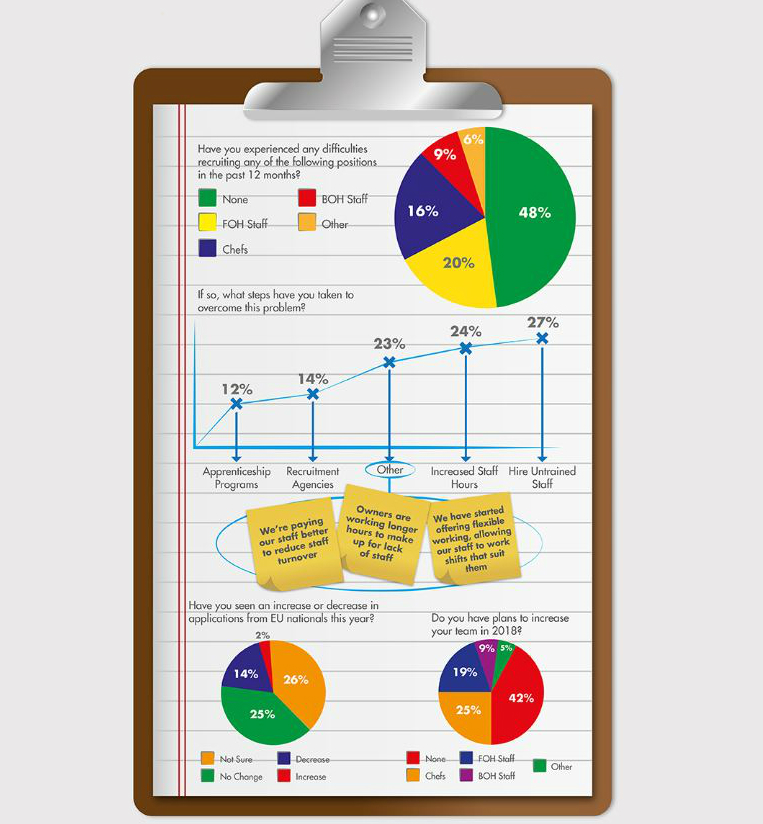
Have you seen an increase or decrease in applications from EU nationals this year?
Since the Brexit vote in June 2016, many national chains have voiced concerns over the reduction of EU nationals applying for jobs in the UK catering industry. We wanted to know what impact Brexit is really having. 25% of you have not noticed a change, whilst 26% are unsure. Only 2% have seen an increase, with 14% noting a decrease. Perhaps the full impact of Brexit hasn’t yet been realised, and maybe this is an area that will see more turbulence over the coming years.
Your Career
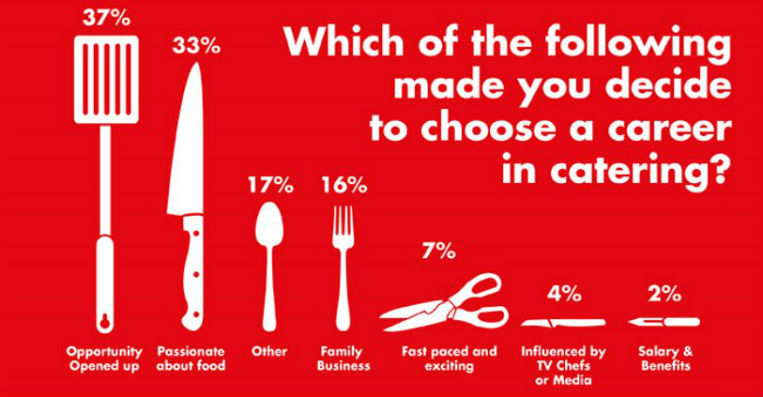
Which of the following made you decide to choose a career in catering?
It’s no secret that working in catering and hospitality can be challenging. But the rewards are often worth it, whether it’s basking in the limelight or simply cooking brilliant food. We wanted to know what made you want to start a career in catering.
33% of you have a passion for food, choosing to become a chef to satisfy your food fantasies. 37% took an opportunity and haven’t looked back, whilst 16% joined a family business, following in your family’s footsteps. 7% enjoy the fast paced and ever-changing nature of kitchen life, whilst 4% have been inspired by TV and celebrity chefs. Just 2% do it for the money, proving that being a chef, at any level, is a lifestyle, not just a job!
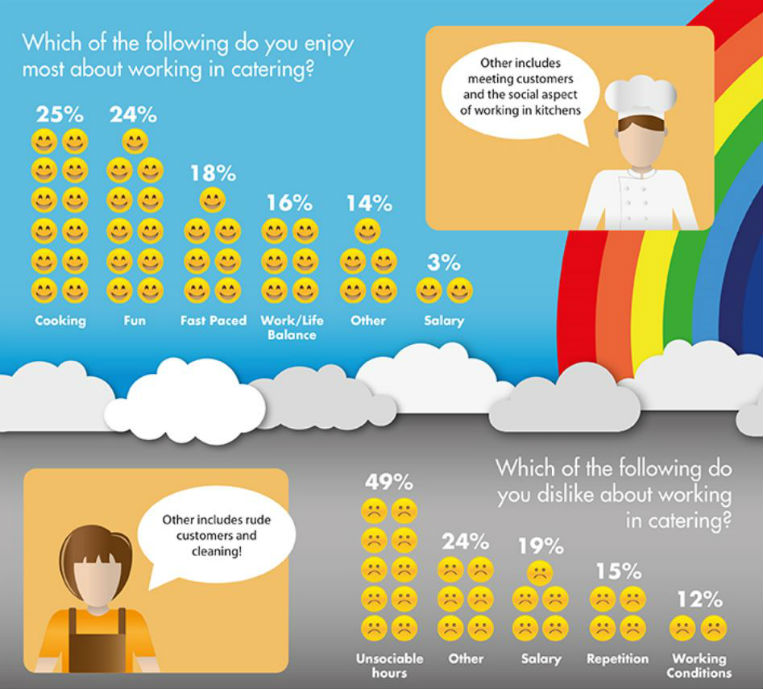
Which of the following do you enjoy most about working in catering?
Not surprisingly, cooking is the most enjoyable aspect of working in catering, with 25% of the vote! Fun is the second most important aspect, with 24%. The fast-paced nature of catering got 18%, work/life balance 16% and salary trailing behind again with just 3%. ‘Other’ responses included; working for myself, meeting customers and the social aspect.
We also asked the opposite; Which of the following do you dislike about working in catering?
Not surprisingly, 49% dislike the unsociable hours, often working late into the night. Salary comes up second with 19%, closely followed by repetition at 15% and working conditions at 12%.
Trends
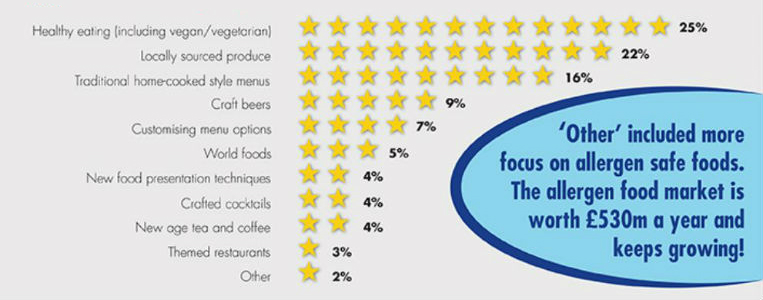
Which of the following do you believe will be most popular in 2018?
Knowing what is going to be on-trend can help you prepare your menu and venue to match customer demand. According to you, the catering professionals, healthy eating, including vegetarian and vegan foods, is set to be the one to watch out for in 2018. Locally sourced produce is second on the list, with 22% of the vote. Going back to basics with traditional, home-cooked style menus is set to be popular too, with 16% of you putting this one in 3rd.
Article: Craft beer has been on the rise for a couple of years now, and 9% of you think it will continue to grow. Find out what craft beer is and why you should sell it with this article.
How likely are you to purchase eco-friendly or compostable products this year?
More than 70% of you are likely to buy eco-friendly or compostable products, showing a strong trend towards environmentally minded business. Only 7% are unlikely. Of these 7%, 45% said they cost too much, whilst 24% don’t see a consumer demand. The last 30% is split between quality concerns and lack of suppliers.
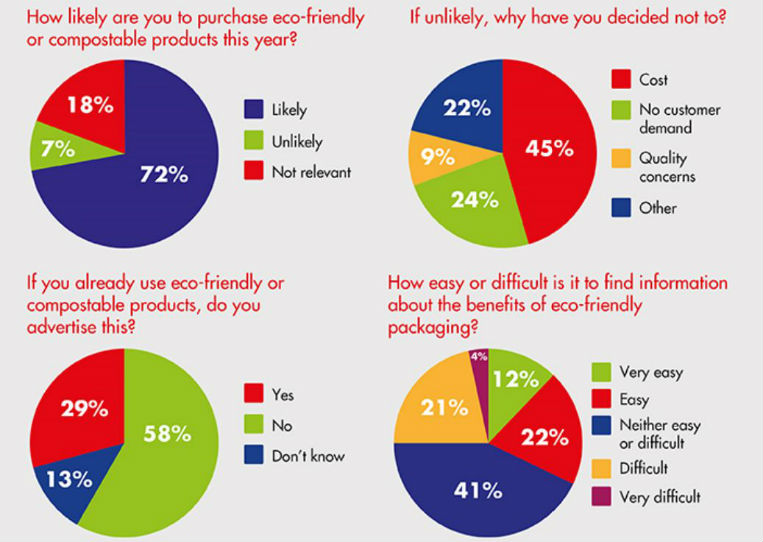
If you already use eco-friendly or compostable products, do you advertise this?
Of those who already use eco-friendly and/or compostable products, 58% don’t advertise you do, with just 29% advertising. Customers are more aware of their impact on the environment, and the demand for environmentally friendly products is at an all-time high, so letting them know you stock eco-friendly products is key to drawing them in.
Article: Find more ways to reach your customers with our guide to marketing your business.
Click here to view the full Spring 2018 Pulse Survey infographicPrevious Pulse Surveys
View all of previous Pulse Surveys below.
Pulse Survey Autumn 2017Pulse Survey Spring 2017