
What is Food Waste?
Food waste is a big problem, especially in professional kitchens. At its most basic level, it’s defined as:
“Food that was at some point fit for consumption, but due to overproduction or spoilage has to be thrown away”.
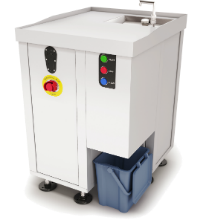
Even with the best menu planning and careful portion control, there’s always going to be food remains which don’t go anywhere except the bin - that’s bad for the environment and your pocket. Big problems call for big solutions. That solution is the IMC WasteStation and WasteStation Compact.
How Much Does Food Waste Cost?
Let’s face it. Food waste is expensive. A 2015 study by WRAP estimated the total cost of food waste across the Hospitality and Food Service sector exceeds £2.9 billion in the UK alone - that’s around a million tonnes of food every year, or one in every six meals being wasted.
Every part of the food life cycle, from field to fork, uses resources and adds expense. Every cost is passed down the chain, meaning when food is wasted, money and valuable resources are being thrown away. By having more efficient processes throughout the whole food life cycle, money, energy and water can all be saved to help homes and businesses become more sustainable. After all, according to the UN, if global food waste was a country, it’d be the 3rd biggest greenhouse gas emitter after the USA and China.
It’s not just waste management contracts and the impact on the environment either. Processing, storing and transporting waste on-site can be very expensive and time-consuming - not to mention the time spent training staff how to deal with food waste correctly.
Put it all together and the costs can very quickly add up. However, where there is a cost, there’s opportunity. WRAP research in August 2019 suggested the average business could save up to £14 for every £1 invested into reducing food loss and waste.
Article: For advice on how to make your business more green, check out our guide on how to be an eco-friendly catering business.
How Can Food Service Businesses Reduce Food Waste?
Planning
Planning is a vital part of reducing food waste both before and after it has been produced. The five planning concepts are…
- Measurement: identify the quantity and type of food waste going into your bins. Find out exactly where food is being wasted, as well as its value. Keeping costs in mind can have a big impact on how much food is going to waste. Some advanced kitchens have systems which automatically calculate the value of waste going into the bin.
- Staff Engagement: no chef wants to see their carefully crafted dishes binned. In the same way, it’s hardly inspiring for waiting staff to have to transport uneaten food back to the kitchen. Informing and engaging staff can make all the difference in how much food is wasted, whilst also being a valuable tool in getting your eco-friendly food waste reduction message out to customers.
- Reduce Overproduction: once you know where food is being wasted, scale back production accordingly. For example, if buffet-style breakfasts produce a lot of waste, could cooking to order be an option? How about reducing portion sizes on dishes which are often left unfinished? Or perhaps customers could take leftovers home in an eco-friendly takeaway food container?
- Inventory Management: if food is perishing before it has been prepped, are there better storage options available? Perhaps you could negotiate with your food suppliers to change the delivery schedule to reflect when your demands are at their highest? A review of the stock rotation in your fridges could also encourage staff to use the oldest ingredients first.
- Repurposing Excess Ingredients: even the best forecasting is never 100% accurate. Changes in the weather, or a last-minute cancellation can change everything. If you find yourself with excess food, it could be still used in other dishes or sold through apps such as Too Good to Go.
TIP: Vacuum packing food is a great way to keep small quantities of ingredients fresher for longer.
Processing
It's important to understand that food waste is made up of around 77% liquid. Regardless of how you normally store your waste, the liquid component bulks it up, making it bigger and heavier. This means it’s more expensive to transport, process and dispose of. Liquid also speeds decomposition, contributing to odours and methane emissions - potentially leading to problems with vermin or issues with neighbouring homes and businesses.
It’s also worth noting that due to its composition, food waste from catering and hospitality sites isn’t normally directly suitable for making compost - it usually needs more processing before that can take place.
That’s where the IMC WasteStation comes in. The WasteStation is one of the most innovative food waste solutions to come to the market in recent years. Expertly designed and manufactured in the UK, the WasteStation uses a unique process to remove liquid from food waste, reducing its volume by up to 80%. It might not seem so obvious, but such a massive reduction in volume has a huge effect on your waste processing costs. The four main areas you save in are...
- Transport savings: most waste contracts are charged by weight, volume or number of collections. Regardless of how your waste is charged, as WasteStation reduces the food waste volume by such a large amount, your food waste collection costs will significantly reduce too.
- Labour Savings: processing food waste on-site takes a lot of work. Less waste means less time wasted processing it. That's fewer bag changes and fewer trips to the big outdoor bin.
- Storage savings: food waste isn’t fun to store. It’s smelly, messy and attracts vermin. It's also really bulky and takes up a lot of space. As the WasteStation reduces food waste volume by up 80%, you don't need as much room to store it. That means fewer bin bags, less mess and more space for more productive processes.
- Eco savings: food waste is really bad for the environment, both in terms of the resources wasted and the greenhouse gases it produces during decomposition. The WasteStation helps you to quickly repurpose it into an eco-friendly resource in three different ways: anaerobic digestion, in-vessel composting or production of compressed pellets for biofuel. Whichever way you prefer, it’s much better for the environment (and cheaper) than landfill.
How Does WasteStation Work?
The WasteStation fulfils two main tasks – macerating and de-watering, both of which help to reduce the volume and mass of waste. The video below shows how it all works.
- Food waste is poured into a hopper, which channels it down into an auger.
- The auger grinds the waste into fine particles, which are then forced directly into a de-watering system.
- Similar to a juicer, the de-waterer spins at high speeds to force the remaining excess liquid from the macerated waste to drain.
- The WasteStation then drops the remaining de-watered food flakes into a small collection bin, ready for onward processing. SHOP THE IMC COMPACT WASTESTATION
How can WasteStation Food Waste be Processed?
Once it has been processed, there are four possible end points for the resulting macerated waste.
Anaerobic Digestion
Much like any normal food waste collection, the macerated waste is sent for anaerobic digestion processing, where the waste is converted into energy, fuel or fertiliser. This is an almost entirely carbon neutral process which is considerably better for the environment than letting food decay in landfill. Many “green” energy suppliers offer customers eco-friendly power through anaerobic digestion power plants.
In-vessel composting
Everyday commercial food waste cannot directly be used as a high quality compost, as it doesn’t have the correct composition or particle size. As such, the WasteStation is an impressive solution which opens up this opportunity.
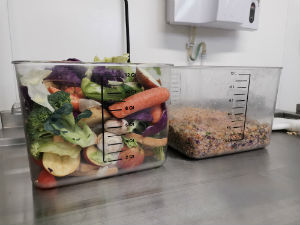
An in-vessel composter gives you the flexibility to process almost all of your food waste on-site. By mixing macerated food waste from the WasteStation with compressed sawdust or wood pellets, the biological process converts it into exceptionally high quality compost - perfect for sites which grow their own ingredients. This process also further reduces the volume of food waste by 90%, whilst also giving you an excellent nutrient-rich compost which can be used on-site or sold on.
Biomass Pellets
Part of the in-vessel composting solution, the resulting compost can, rather than be used as a fertiliser, be sent for conversion into biomass pellets - small pellets of wood or other sustainable biological materials which are used in a wide variety of processes. In the UK, biomass pellets are largely used in power generation. Drax, the UK’s largest power station, has been converted to run primarily from biomass pellets – reducing its annual carbon emissions by around 12 million tonnes every year.
Landfill/Incineration
The final and least environmentally-friendly option for the waste is to go to landfill or incineration. It’s not just bad for the environment - it’s also the most expensive way to dispose of food waste and landfill taxes increase every year. Still, even if the waste is disposed of this way, the WasteStation will dramatically reduce your food waste disposal costs.
WasteStation Options
There are two solutions available - WasteStation and WasteStation Compact, both of which perform exactly the same function of reducing food waste volumes by up to 80%. The main differences between the two are power and size requirements. Whilst the WasteStation Compact is perfect for smaller kitchens, the WasteStation delivers a much improved processing output.
WasteStation
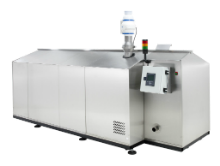
The larger of the two options, WasteStation provides exceptional processing capacity and plenty of room for you to fill the hopper with food waste. By connection through a three-phase electricity connection, the WasteStation delivers unrivalled waste food processing speed.
SHOW ME WASTESTATIONWasteStation Compact
Highly efficient, the WasteStation Compact is small enough to fit into most kitchens, whilst still offering a highly effective macerating and de-watering solution. The design reduces energy requirements significantly.
SHOW ME WASTESTATION COMPACT| WasteStation | WasteStation Compact | |
|---|---|---|
| Processing capacity | Up to 700kg/hr | Up to 100kg/hr |
| Power requirement | 3-phase. 4.1kW | Single phase. 2.45kW |
| Dimensions | 905(H) x 1000(W) x 700(D)mm | 905(H) x 600(W) x 700(D)mm |
Frequently Asked Questions
What can the WasteStation process?
Specifically engineered for catering and hospitality food waste, the WasteStation is designed to process the following:
- Fruit
- Vegetables (inc. cores and peelings)
- Meat
- Small bones (eg. chicken and fish)
- Sauces
- Pasta
- Fruit stones/cores
- Bread
- Fatty foods
- Small seafood shells
What shouldn’t go in the WasteStation?
Generally, any non-food items shouldn't go in the WasteStation. Items such as cling film, glass, plastic and cutlery should be kept clear of the hopper. For convenience, the WasteStation features a handy cutlery catcher to prevent knives and forks being accidently fed into the machine.
How much money does the WasteStation save?
It stands to reason that the more food waste you produce, the quicker you’ll get a return on investment on your WasteStation. Still, combining WasteStation with a wider food waste reduction programme would yield significant savings, both in terms of your bottom line and your environmental impact.
A typical medium-sized college produces around forty 75Ltr food waste bins a week. The below table shows you a rough guide on how long the WasteStation compact would take to pay for itself on food waste reduction alone.
| Number of Bins | Collections per Week | Cost Per Bin | Weekly Cost | Annual Cost | Cost After WasteStation 80% Reduction | Annual Saving | Time Until ROI (WasteStation Compact) |
|---|---|---|---|---|---|---|---|
| 15 | 2 | £6.00 | £180 | £9360 | £1,872 | £7,488 | Around 12 months |
| 20 | 2 | £6.00 | £240 | £12,480 | £2,496 | £9,984 | Around 9 months |
| 30 | 2 | £6.00 | £360 | £18,720 | £3,744 | £14,976 | Around 6 months |
How is food waste legislation changing?
The UK, Scottish, Welsh and Northern Irish governments have all committed to improving recycling rates and have ambitious zero food waste targets. With publications such as the government’s Clean Growth Strategy, there’s a clear direction for every part of the country to stop food waste going to landfill.
A notable example of how this is being implemented is in Landfill Tax rates. Back in 2010, the standard Landfill Tax rate was £48 per tonne. From the 1st of April 2020, the tax is £94.15 per tonne - nearly 100% higher in a ten-year period. There’s no sign of this tax being reduced any time soon, and it’s likely that further steps will be taken in the future to promote recycling and reduce waste. Whether you’re thinking about the environment or your bottom line, there’s never been a better - or easier - time to reduce your food waste.
Does the WasteStation need a lot of maintenance and cleaning?
WasteStation and WasteStation Compact are specifically designed to save you time and effort, so both are easy to use and clean. The units both have an automated cleaning cycle which can be started at any time, whilst the exterior is as easy to clean as a fridge.
What's the difference between WasteStation and commercial food waste disposal units?
Traditional commercial food waste disposal units are fast and economical solutions for getting rid of soft food waste. Where WasteStation excels is that far more foodstuffs can be processed. For example, the WasteStation can grind down fruit stones and small bones, whereas most commercial food waste disposers would struggle with these.
It’s also notable that WasteStation converts food waste into a resource which can be processed in an environmentally-friendly way, as opposed to normal disposers which simply wash the waste down the drain. Putting unsuitable food waste down the drain can also contaminate water and potentially cause expensive blockages.
How to Install WasteStation
Any purchase of WasteStation or WasteStation Compact includes full professional installation at no additional cost. To make sure you get the most from the unit, the installation package includes:
- A pre-installation site survey. IMC will highlight the proposed location and make recommendations based on which services should be in place before delivery.
- Full professional installation and testing
- Commissioning (tailoring the unit to meet your business demands).
- Training to help you get the best use from the machine.