
What is a Rice Cooker?

A commercial Rice Cooker is a compact countertop appliance designed to cook large quantities of rice with the minimum amount of supervision. Consisting of a non-stick inner bowl, thermostat control and heating element, the rice cooker is incredibly simple to use, yet a massively valuable asset for businesses which require bulk quantities of rice on a daily basis.
The first rice cooker was introduced in Japan by Toshiba in 1955. Due to its huge popularity, other companies soon joined the market, adding innovations that expanded the abilities and features available.
How to use a Rice Cooker
To use a rice cooker, first wash the rice thoroughly before cooking. This helps to stop rice grains sticking together and helps to promote good hygiene. To help separate grains, a small amount of vegetable oil can help, while brown or wild rice may require additional water. As a general guide, use one full cup of water to each full cup of rice – one cup of rice will produce approximately two cups of cooked rice. Add slightly more water for softer rice, or slightly less water for firmer rice. Slightly reduce the amount of water for firmer rice, and increase the amount for softer rice.
When using a rice cooker from a trusted brand such as Buffalo or Caterlite, the inner bowl features measurement lines inside as a guide. The cup provided is designed to measure the rice and water.
- Measure the desired amount of rice using the measuring cup supplied.
- Rinse the rice in a sieve under running water to remove excess bran and starch.
- Pour the rice into the inner bowl. To achieve evenly cooked rice, spread evenly around the bowl.
- Add the correct amount of water by using the measuring cup, or by filling the inner bowl to the appropriate level.
- Place the inner bowl into the rice cooker.
- Replace the lid (J193/CB944) or close the lid and press down until the latch snaps shut (J300).
- Connect the rice cooker to the power.
- Depress the lever to the COOK position. The Cook light turns on.
- Once cooking is finished the switch automatically moves to the WARM position. The Warm light turns on.
- Keep the lid closed for 10 - 15 minutes for best results.
- Carefully open the lid, allowing any steam and condensation to run back into the rice cooker.
- Stir the rice and serve as quickly as possible.
- Disconnect the appliance from the power supply.
Why use a Rice Cooker
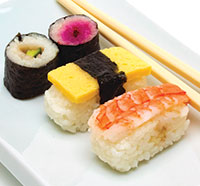
Cooking rice had traditionally been a process which required the utmost attention to ensure the rice was cooking properly. Electric rice cookers automate the process by mechanically or electronically controlling heat and timing, thus freeing up a space on the hob and the attention normally reserved for rice cooking. Although rice cookers do not necessarily speed up the cooking process, with an electric rice cooker the cook's involvement in cooking rice is reduced to simply measuring the rice, preparing the rice properly and using the correct amount of water - the rest of the process is automated.
Many modern cookers have heat insulating casing and a warming mechanism. When the rice is determined to be fully cooked, the unit will automatically switch to the "keep warm" cycle, which prevents the rice from being overcooked and keeping the rice warm until it is ready to be served.
It takes around 30 minutes to one hour for most electric rice cookers to complete cooking. The time required mainly depends on amount of rice used, as well as the power of the heating elements.
How to Clean a Rice Cooker
- Remove the inner bowl and wash in warm, soapy water. Do not use harsh abrasive cleaners or products that are not recommended for use on non-stick coatings.
- Rinse and dry thoroughly.
- Clean the exterior of the rice cooker with a damp cloth.
- Ensure the heating plate is clean and free of food or other debris that could interfere with the cooking process.
- Dry the heating plate thoroughly before use.


Reduced Price


Reduced Price