
Single Phase or Three Phase?
If there’s one thing that all catering appliances have in common, it’s power. Every machine, from blenders and blast chillers to cookers and combi ovens all require either a gas or electricity connection.
With electrical appliances, one of the most common questions we get asked here is “What’s the difference between single phase and three phase power?”. As power requirements can vary greatly between machines, it's vital to know the difference to ensure your investment is an asset to your kitchen.
Please note if you’re not absolutely sure, we highly recommend seeking advice from a professional electrician as to whether an appliance is suitable for use in your business.

Single Phase vs 3 Phase
In simple terms, single phase power has just one Live wire. 3 phase power uses three Live wires. Both will also have one neutral wire and in almost all cases an earth wire too. As such, three phase power supplies a more constant, reliable current and is common on the most powerful commercial catering machines.
- Single phase machines up to and including 13 amp 3kW rating will usually (not always) have a 3-pin plug fitted.
- Any single phase appliance over the 13 amp 3kW rating will not be supplied with a plug - and perhaps not even a power lead. These machines require hard wiring, by a professional, to a suitable power supply.
- Three phase machines are generally hardwired. In some circumstances (such as large kitchens with numerous three phase appliances), a premises may be equipped to use three phase commando plugs – industrial graded plugs and sockets designed to safely transfer large amounts of power.
TIP: It's not always obvious whether an appliance is single phase or three phase just by its appearance. Make sure to check the product information before purchase.
Reduced Price


Amps Explained

All electric catering appliances have an ampere rating (often shortened to amps or even “A”). This is the measure of electrical current that the machine uses when running at full power.
For example, the DL277 Rowlett 4 slot toaster has an ampere rating of 10A. The machine is single phase and is fitted with a 3-pin plug. For safety, the plug is fitted with a fuse to protect against electrical surges. Products like this usually have the “plug fitted” icon.
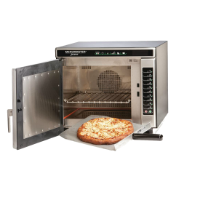
A much more powerful product is the Menumaster MXP high speed oven. As this oven combines microwave, grilling and convection cooking, it requires nearly three times as much power - 32 Amps - much more than can be supplied by a standard plug connection. Therefore, this oven is single phase and hardwired.
At the top end of the scale, an immensely powerful 10 Grid Rational combi oven requires much more juice to operate effectively. The power rating is 3x 49.3A – Three Phase. Each “phase” requires 49.3 amps. This means the total load on the circuit would be 147.9 amperes – making the unit possibly the most demanding appliance in your kitchen.
Any commercial kitchen electric circuit has a maximum load – the total amount of amps that it can run before being overloaded. It’s important to calculate whether a new appliance will exceed the maximum load before purchase.
Should I Choose Single or 3 Phase Appliances?
Both single and three phase catering appliances are suitable for the professional kitchen, so it’s not helpful to think of which one is “best”. Although 3 phase generates more power and is generally smoother, your kitchen may not be able to accommodate a full 3 phase appliance.
To decide power type, check the existing set-up you have installed. If the majority of appliances are single phase or plug-in, you can usually simply replace the appliances like-for-like with similarly rated machines. To be sure, check the electricity ratings (volts, watts and amps) of your “old” appliance before purchasing a replacement.
If the majority of your kitchen appliances are hardwired, they may well have a 3 phase connection. You can find out how much power the units draw by checking user manuals or manufacturer’s websites. Some machines may also have a rating plate which should provide this information.
Possibly the best advice is to either replace your existing machines like-for-like or try to reduce the load on your electricity circuit. If you’re starting a new kitchen for the first time, it’s highly recommended to seek professional expertise before purchasing new kitchen appliances.
TIP: Reducing the load not only reduces the strain on your building’s electricity circuits. It can reduce your energy bills too.
Frequently Asked Questions
What happens if I choose the wrong power type?
You may not be able to connect the appliance at all. 3 phase/hardwired appliances are not supplied with a plug. Likewise, if your kitchen is hardwired throughout, there may not be any sockets to plug other appliances in.
I’ve bought a 3 phase appliance. Can I just fit a plug onto it?
Definitely not. The appliance will not function correctly or safely. In addition, it's likely that the appliance's warranty will be invalidated.
What is 2 phase power?
2 phase power is very rare in professional catering equipment, although some manufacturers such as Falcon have appliances which can operate with 2 phase. Simply put, 2 phase is just a cut-down 3 phase, using two Live wires instead of three.
My new appliance keeps tripping the fuses in the circuit board. Why?
It’s sometimes easy to think that the machine might have a fault. Whilst this is possible, it might also be that the electricity circuits are overloaded. If you’ve installed a new appliance, check how the power rating differs from the previous machine. If it’s much more powerful, the circuits may not be able to cope with the new machine. Consult the user manual.
Are there any other ways I can reduce load on the electricity circuits?
Buying powerful appliances that fulfil multiple roles can often reduce the overall load. For example, a combi oven might draw lots of power, but it can still be less than multiple steam ovens and convection ovens used simultaneously.
Remember, for most products we offer a 30 day money back guarantee and free returns. As long as the item is unused and in the original packaging a full refund or exchange is available. Please note that larger items may be subject to a restocking fee. Check our Terms & Conditions for more information.