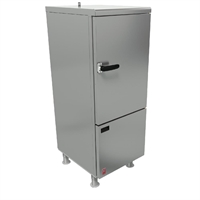
What is a Steam Oven?
A modern commercial steam oven is designed to steam cook large quantities of food over multiple shelves. This locks in the nutrients and flavours whilst retaining the food texture and preventing flavour transfer to other foodstuffs in the oven.
Catering steam ovens are hugely powerful and are usually considered a primary appliance in the professional kitchen. Whilst typical dishes cooked in a steam oven would be fish, vegetables or desserts, some chefs use the appliance to cook all these dishes simultaneously.
Commercial steam ovens are usually large and powerful enough to handle multiple gastronorm pans of food - perfect for mass catering sites or events.
shop steam ovens nowWhy use a Steam Oven?

There are four important reasons to use a steam oven. They are:
- Food retains colour: As they say, people eat with their eyes. Vegetables can quickly lose their colour when overcooked or boiled. Steaming helps to keep carrots, asparagus and other veggies closer to their natural colour in comparison to other cooking methods. Naturally coloured vibrant vegetables promise freshness and add value to any dish.
- Food retains flavour, texture and nutrients: Steam cooking foods helps to seal in flavours, vitamins and moisture, leaving the food much closer to its natural state in comparison to conventional cooking. Over-boiled vegetables can be mushy and unappealing, whilst overcooked fish can be dry and rubbery. Steaming helps reduce the chance of this happening.
- Cook multiple items together: With steam cooking, it’s difficult for flavours to transfer between the contents of the oven. As such, many different dishes can be cooked together with minimal flavour transfer. What’s more, this means that the single appliance can cook many items, allowing your other appliances to be used for other tasks.
- Versatility: Steam is suitable for cooking many different types of food. From seafood, vegetables, desserts and fruit, to meats, pasta, rice, dim sum and more, there’s usually a use for a steam oven in any business serving food, especially mass catering establishments such as schools, hospitals or canteens.
What Are The Limitations Of Steam Ovens?
Even though steam ovens are superbly useful, they have one notable disadvantage. Steam ovens cannot brown food. For the best tastes and textures, most meats should be finished in a pan or under a salamander grill, meaning food needs to be transferred between appliances. However, that does not negate the positives already listed.
Similarly, pies, breads and pastries can look pale when cooked using only steam. Despite this, steam ovens are still hugely popular, mainly for cooking large quantities of vegetables and fish. However, if you wish to have all the advantages of steam cooking combined with the ability to brown food, a combi oven may be worth consideration. For help choosing other oven types, check out our picking a commercial oven buying guide.
FAQs
What is the difference between a steamer and a combi-steamer?
A steam oven cooks only using steam. A combi-steamer (commonly known as a combi oven) cooks using steam, convection or a combination of the two. As steam ovens have a single function, they are generally available at a fraction of the cost of a full combi oven.
For more information about combi ovens, check out the combi oven buying guide.
Is there any difference between gas and electric steam ovens?
In terms of performance, there's not a huge difference. Whilst electric steam ovens may create an additional load on your kitchen's electricity circuit, gas steam ovens may require significant overhead extraction. However, gas models may be preferable where there is limited access to mains electricity.
These steam ovens look pretty big. Will it fit?
It's always best to measure up before ordering. For help, check out our large item delivery video below.
Reduced Price