Designing a Kitchen – The Golden Triangle Kitchen Layout
The Golden Triangle has been viewed as the key to kitchen design since the 1940s, but is this a rule of thumb or simply a myth? Can modern kitchens be as simple as having a one-size-fits-all rule for design?
Once you have your business plan, location and menu in order it comes time to work out the specifics needed to create your restaurant.
As you will know, opening a restaurant isn’t as simple as buying cooking equipment and throwing it all together in a kitchen. You must take the time to design your kitchen and there’s a lot you need to consider.
This is where the idea of the Golden Triangle comes into play.
View our Mini Shops nowWhat is the Golden Triangle Kitchen Design Layout?
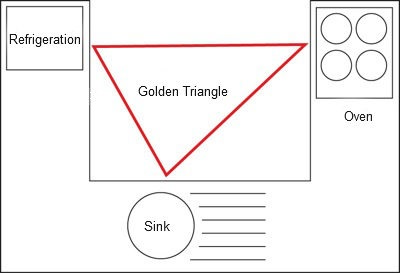
The Golden Triangle is the idea that all kitchens should be set up with the following three key areas in order to be efficient:
- Food preparation (such as mixers and slicers)
- Cooking and Serving (such as range ovens and bain maries)
- Washing up (such as dishwashers or glasswashers)
This is because ovens, fridges and sinks are the most-used objects in the food preparation chain and are therefore the main focal points of the kitchen design. To make your operation slicker, these points must be designed close together (though not side by side) so that access is quick and easy, minimising workers crossing over each other.
The key principles of the triangle are as follows:
- All sides of the triangle should be between 4 feet and 9 feet
- In total, all sides should equal between 13-26 feet
- No major kitchen traffic should flow through the centre of the triangle
- Cupboards and other appliances should not interest any side of the triangle by more than 12 inches
- A full height appliance or cupboard should not come between any two focal points of the triangle
Reducing the number of workers passing through different areas helps speed up the process and ensures staff will face fewer obstacles as they work. It helps avoid accidents and injury, along with worker fatigue.
There are plenty of things that can trip you up if you don’t plan carefully.
For example, think about the way a fridge door opens. Does it swing open right into the path of your server bringing in used dishes for washing? Do you know the width of your doorway? If not, how can you be sure your equipment will fit through it on delivery?
Do you have a lockable COSSH (Control of Substances Hazardous to Health) room to store chemicals and cleaning equipment? Do you have enough space for staff toilets and storage? Do you have a non-slip floor? What is the minimum height your ceiling needs to be?
CAD Drawings
Your kitchen must be carefully planned out and drawn up in the form of CAD drawings (computer-aided drawings). CAD drawings detail the layout such as entry and exit points, traffic flow, equipment stations and storage areas. This makes it much easier to implement your kitchen and minimise problems. Designing around your key kitchen areas of the Triangle allows you a solid starting point which you can then build upon.
Domestic or Commercial?
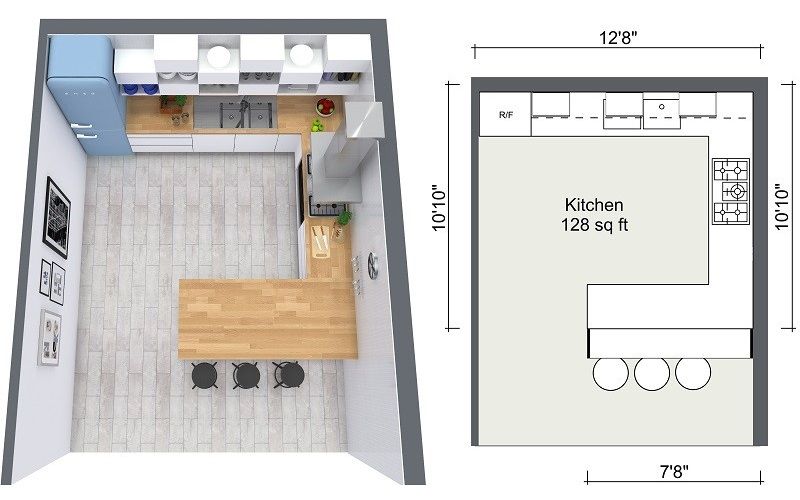
This CAD drawing shows the simple design of an average domestic kitchen. Although slightly off-kilter, you can see the triangle made up from the fridge, oven and sink stations. Clearly from these photos you will notice the design looks perfect for a family home, but a little basic for a restaurant or school canteen.
The concept of the work triangle was developed in the 1940 by the University of Illinois School of Architecture, which helped standardise the construction of kitchens and reduce costs.
Showing its diminishing relevance in today’s world, the Golden Triangle was developed back in the days of the housewife. This model was therefore put into practice to maximise efficiency the one-cook kitchens required. However, nowadays kitchens are bigger and housewives are mostly a thing of the past. Kitchen designs must account for the potential for multiple cooks at work.
The Golden Triangle is, in truth, a limited and simplistic version of what a commercial kitchen requires. Modern, larger kitchens have moved on from three key points of the 1940s.
Things have changed – technology has advanced, menus expanded and an appetite for bespoke orders throughout the day are becoming more apparent.
There is also more law and regulation. Environmental protection means kitchens must meet certain demands – such as ventilation or space between machines.
The Golden Triangle, as stated, is oversimplified. A commercial kitchen requires an incredible amount of thought, considerations and detail. From the width of your doorways, to adequate ventilation, to pest control – it goes way beyond a basic set up of sink, hob and stove.
Article: Once you've got your perfect kitchen design and established your menu, the next step will be to purchase the equipment you'll need to bring your plans to life. One tempting way to save cash on your initial outlay may be to purchase cheaper equipment made for domestic use. Don't! This will be a mistake. Find out why you shouldn't use domestic catering equipment in your commercial kitchen.
Going Commercial
Certainly, the Triangle is a viable option for those looking to design and implement a small-scale domestic kitchen. So it has its place. But any business is best advised to look at the bigger picture and recognise the need to upscale from this basic Golden Triangle principle.