
How to choose disposable crockery, glassware and cutlery
Choosing disposables is a difficult challenge. The billions of napkins and plates entering landfill each year means many businesses want to make an ecologically sound buying decision. At the same time, the number of disposable products used each day can make them a significant overhead, meaning that price is vital. You also want your disposable products to suit the look and feel of your business and be fit for the intended purpose. Balancing these needs can feel like an impossible task.
This guide will outline what options are available when choosing disposable crockery, cutlery and glassware. This information should help you to combine the best disposables to fit your business’s needs.
Disposable crockery
Whether you want simple paper party plates or slightly more refined disposable plates for weddings, there is a huge range of disposable crockery available for every birthday party, celebration, barbecue or buffet. Environmentally conscious hosts can find disposable crockery made of palm leaf or fibre moulded product, which is fully compostable and therefore the perfect disposable plate for festivals and large outdoor events.
Often, choosing the best disposable bowl or plate comes down to picking the best material, price point and style for your business and all of these things are related. As such, understanding the benefits of each type of paper, wood or plastic plates will make it easy to find the right disposable crockery.
Shop all disposable crockery nowWhat types of disposable crockery are available?
Paper
Paper plates are still the most affordable, most widely used party plates and disposable crockery available. Whether being used at a barbecue or to serve cake at a village fete, paper plates are lightweight, simple and do the job.
Laminated Foam
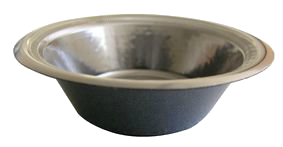
Laminated foam provides a thicker, non-absorbent and leak proof plate or bowl. As such, this thickset crockery is brilliantly well-suited to protecting diners from hot sauces and oils. The non-skid backing adds safety on uneven surfaces and prevents diners from the disappointment of losing their food! These utilitarian but effective bowls are perfect for catering vans and pop-up stalls.
FMP
FMP or Fibre Moulded Products are made from compacted renewable plant materials, making them an environmentally friendly alternative to plastic. With impressive water and oil resistance, these plates are fully compostable without compromising on performance and are brilliant for festivals, food markets and outdoor events. FMP is also microwave safe.
Bamboo
Bamboo has been used for crockery for thousands of years, with its quick growth and easy spreading making it the perfect sustainable crop for rapidly used and disposed products such as plates or chip cones. Bamboo products are compostable and bear subtle, organic patterns. Bamboo is also naturally antimicrobial and antibacterial.
What’s the most environmentally friendly disposable crockery?
Nisbets offers an extremely wide range of recycled, recyclable, biodegradable and compostable plates, bowls and platters for indoor and outdoor use. Each type as environmental benefits and drawbacks and needs to be disposed of properly in order to minimise its environmental impact.
What’s the difference between recyclable, biodegradable and compostable?

Recyclable products can be disposed of with similar products and processed into new ones. You can use www.recyclenow.com’s recycling locator to find where and how you can recycle specific items, or investigate the extensive options for recycling collection.
Biodegradable products will break down entirely over time and return to nature. Biodegradable items will eventually be consumed by micro-organisms but may leave residual oils or chemicals which aren’t suitable for plant growth.
Compostable products decompose into usable ‘humus’ compost within 12 weeks, leaving nothing behind and disappearing completely. This means compostable products are the most environmentally sustainable when being thrown away.
Are disposable plates microwavable?
Some disposable plates are designed for microwave use, whilst others may leech chemicals into food when exposed to high heat. As this varies from product to product, it’s worth checking individually.
Disposable Glassware
It’s not always practical to serve drinks in real glass, which is why we stock a wide range of consumable glassware. From plastic beer glasses to disposable shot glasses and shooters, plastic and synthetic glassware prevents costly breakages, keeps customers safe and enables you to sell drinks to-go.
There are even environmentally friendly disposable glasses! Whilst pint and half pint glasses are the most popular disposable glassware, there are also a range of disposable wine glasses, plastic smoothie glasses, tumblers and disposable shot glasses available. By understanding the various types of material available, you can pick the price, durability and environmental credentials that are right for you.
Shop all disposable glassware nowWhat types of disposable glassware are available?
Polycarbonate Glasses
Polycarbonate glasses retain their shape and colour for up to 500 washes, making them the most durable plastic glassware available for most businesses. Polycarbonate also has the weight and appearance to be suitable for dining table use in casual dining environments.
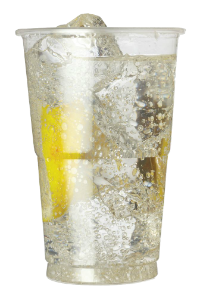
It is extremely difficult to break polycarbonate glasses, meaning that they are a much safer option than glass during extremely busy or boisterous evenings. This makes polycarbonate glassware a great option for a range of pubs and nightclubs, whilst polycarbonate pint glasses are even available with a nucleated base for the perfect pint.
Polystyrene Glasses
Polystyrene glassware is an excellent compromise between the durability of polycarbonate glassware and disposable polypropylene glasses. Guaranteed for roughly 100 wash cycles, polystyrene glassware is heat resistant to 100°C, but may crack when exposed to firm pressure.
Polypropylene Glasses
Polyproplyene is a lightweight and flexible plastic. These glasses are designed for single use and are widely used by vendors, in beer tents and at festivals and outdoor events. These glasses are designed for single use and disposal and should not be washed and reused. Polypropylene is recyclable. Whilst many users choose to serve wine in half pint glasses at outdoor events, our disposable wine glasses and flutes give a far more elegant drinking experience.
Which plastic glasses are eco friendly?
Producing plastic is bad for the environment and disposable glasses are often then thrown away after a single use. Because of this, most disposable plastic glassware is not eco friendly. Fortunately, Vegware’s disposable glasses are made from cornstarch-based PLA and this is fully compostable. As such, these glasses are much better for the environment that conventional oil based plastic cups.
Alternatively, Huhtamaki recycle drinks bottles and water bottles to produce RPET (Recycled Polyethylene Terephthalate) glasses. This is a strong plastic with a brilliantly clear, transparent and glossy finish. Whilst RPET is not biodegradable or consumable, it is recyclable and its production uses products which would otherwise go into landfill.
Do disposable glasses need to be CE marked?
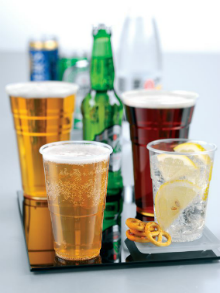
If you are serving draught beer or cider, whether indoors or outside, you have to either use a Crown stamped measuring device or CE marked glasses. This includes plastic and disposable glassware. If your drink is individually portioned (such as cans or bottles), then your glass does not need to be CE marked.
Should miniature wine bottles be poured into a CE marked glass?
No. As miniature wine bottles are designed for individual consumption, they do not need measuring or pouring into CE marked glasses, but many local authorities insist that pouring should be done in clear sight of customers. By comparison, when serving wine from boxes, regular bottles or taps, CE marking is important. You have to either measure your wine using CE marked measurers or use CE marked glasses in 125ml, 175ml and 250ml sizes.
Why do plastic glasses get cloudy?
Most plastic glasses get cloudy because they have been washed too many times and the materials have warped. By selecting the correct type of glasses and replacing them after the recommended number of washes, they should stay crystal clear. Polycarbonate and polystyrene glasses should be washed in glasswashers and not dishwashers, whilst most polypropylene glasses are not suitable for washing and are intended for single use.
Disposable Cutlery
It’s important that your disposable cutlery matches the design and purpose of your disposable crockery. After all, an affordable white plastic spoon may look strange with a palm leaf platter and superior weight cutlery could be difficult to use with simple paper plates.
It’s also important to consider the hygiene of your plastic forks and knives, whilst your business could save money by utilising wooden or plastic stirrers for takeaway hot beverages, rather than teaspoons. As with cutlery and crockery, considering the benefits of different materials will help you pick the best disposable cutlery for your business.
Shop all disposable cutlery nowWhat types of disposable cutlery are available?
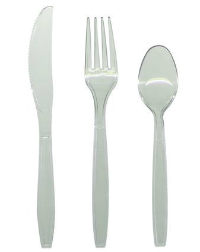
Plastic cutlery
Plastic cutlery is extremely affordable and lightweight, making it an essential tool for anyone selling food at outdoor events who wants to minimise their packaging and serving overheads. Plastic knives and forks have clearly defined and sharp prongs or edges, making them the obvious choice for simple, practical and easy to use single-use cutlery. Plastic cutlery can also be satisfyingly high quality. Heavy duty cutlery has a weightier feel in your hand and is great for more challenging foods.
What is Heavy Duty Plastic Cutlery?
There’s nothing more frustrating than queuing for a vendor’s food, sitting down and having your fork break! This is where heavy duty plastic knives and forks come in. Designed for tougher jobs such as cutting meat, tearing breads and being used to spread, heavy duty disposable cutlery is vital when dispensing challenging foods like BBQ sticky ribs! These tough disposables are great for most heavy foods and are even less likely to bend or break than regular alternatives.
Wooden cutlery
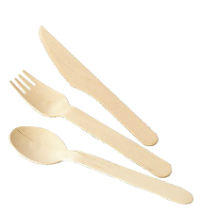
Wooden cutlery is not only an environmentally friendly option, but can help complete the theme of your casual dining space. Wooden cutlery is typically compact and stackable, making it easy to store, whilst it can also be displayed rustically on table tops. Wood is a natural fibre and therefore has minimal chemicals used during its manufacturing process.
How to clean plastic cutlery
Almost all single-use plastic and wooden cutlery is designed to be disposed of. This means that disposable cutlery should not be machine washed and may damage your dishwasher, whilst hygiene may be compromised by reusing consumable forks and knives after hand washing. Business owners should therefore budget to dispose of cutlery after single uses and choose accordingly.
How to store plastic cutlery
Plastic cutlery should be stored away from direct sunlight, as this may gradually damage the colour or shape of your cutlery. Save time by enabling customers to help themselves to your plastic knives, forks and spoons. Great options for doing so include Olympia’s round cutlery basket and the Cambro Versa dispensing rack.
What disposable cutlery is environmentally friendly?
Producing plastic is usually not very environmentally friendly, meaning that wooden cutlery is a more environmentally option. This is partially because wood is a renewable resource.
Is it safe to stir hot drinks with plastic spoons?
Although some people have voiced concerns over the chemical content of plastic spoons, polystyrene and plastic teaspoons must conform to the regulations of The Plastic Materials and Articles in Contact with Food (England) Regulations 2009, ensuring a surface migration limit of 10 milligrams per square decimetre of plastic surface area. No disposable cutlery should be directly heated. That said, for a more affordable and environmentally sustainable solution, many coffee shops and hot drink vendors choose to use wooden stirrers.