
Using ramekins
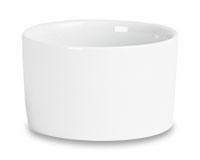
Ramekins are individual baking dishes that are three to four inches in diameter that can mainly be used for both sweet and savoury dishes. Ramekins are small, cylindrical dishes that are used for baking individually-sized dishes. Their size makes them perfect for baking small soufflés, as their straight sides make it easy for an egg white-based soufflé mixture to rise up the sides of the dish and gain height. Their other perfect use is for baking individual desserts, as they offer built-in portion control.
shop all ramekins nowMaterial for ramekins
As ramekins have many uses they come made out of different material depending on their required use. Nisbets stock ramekins made from; aluminium, porcelain, melamine, stoneware, alumina and Pyrex.
- Aluminium is a relatively soft, durable, lightweight, ductile and malleable metal with appearance ranging from silvery to dull gray, depending on the surface roughness. It is nonmagnetic and does not easily ignite. Aluminium is a popular material for cooking and baking as it is an excellent conductor of heat – it heats up quickly and cooks evenly for great baking.
- Porcelain is a ceramic material made by heating raw materials, generally including clay in the form of kaolin, in a kiln to temperatures between 1,200 °C (2,192 °F) and 1,400 °C (2,552 °F). Porcelain has good resistance to ‘thermal shock’, which is why it is often used as oven to tableware.
- Melamine is a strong, lightweight and hard thermosetting plastic. Melamine is used as an ideal hygienic and durable alternative to china as it is virtually unbreakable to meet the tough demands of everyday use. As well as being virtually unbreakable, it resists scratching and staining, and is heat resistant and dishwasher safe.
- Stoneware is chip-resistant and used for many uses within the kitchen including the refrigerator, oven and microwave. Stoneware is a strong clay that is fired to a high temperature (about 2185 °F) and becomes vitreous. Although it is more waterproof than earthenware it should also be glazed for better performance. It is known for being strong and durable, making it a perfect for daily use crockery.
- Alumina enriched is crockery that contains the material alumina. Alumina is an oxide of aluminium, which is added to the clay to give it additional strength. This is more expensive than standard porcelain, though it is generally cheaper than bone china, so it is used as an alternative.
- Pyrex glass bakeware is, and has always been, durable, reliable and safe. Pyrex glass bakeware is heat strengthened to increase its resistance to breakage caused by impact or sudden, uneven temperature changes. Its heat resistance (up to 300°C) allows you to use it safely in the oven and micro-wave. Its non porous and stain resistant features will keep your products hygienic and transparent for a long time.
Ramekins versatility

As well as being used for individual desserts, ramekins can be used for when a chef is doing prep work in the kitchen; they can be perfect for separating chopped ingredients into individual dishes to be used at a later time. Ramekins are also perfect for presenting side servings of dressings, sauces and dips on a table.
Traditional ramekins are solid white, round, with a fluted texture covering the outside, and a small lip. However, there are many decorative ramekins that come in shapes of a heart, oval, or rounded square. They come in countless colours and finishes depending what they are needed for.
The versatility of ramekins makes them the perfect addition to any style of kitchen.