What is a Vacuum Packing Machine?
A commercial vacuum packing machine is a professional appliance designed to quickly remove air from specialised vacuum pack bags. This allows food to be stored for longer periods in comparison to refrigeration alone.
Sous Vide cooking is also made possible as nothing gets in – or out - once the bag is sealed. If you’re not sure which vac pack machine is suitable for your business, this guide should help.
Show me Vac Pack Bags
What Do You Need To Vacuum Pack Food?
You’ll need both a vacuum packing machine and vac pack bags. There are two types of commercial vac pack machines – external and chamber. The name relates to the position of the bag during the sealing process.
External vac packs are sealed on the outside of the machine, whereas chamber versions have a cavity which holds the whole bag inside. The following video shows you how vacuum sealers work.
There are also two different types of vacuum pack bags – embossed and flat. Each has the same basic function, however flat bags are not compatible with external vac pack machines, as explained below.
External Vac Pack Machines
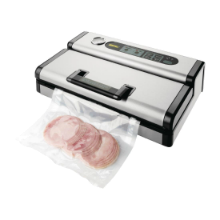
Simply position the edge of an embossed bag against the sealing strip and press down. The composition of the bag ensures all the air is drawn out through tiny channels in the food-safe plastic. Once a set vacuum level is achieved, the bag is sealed shut.
- Compact – doesn’t take up much storage or work space.
- Portable – can be used for demo cooking or events.
- Low power – most can be powered using a single 13 Amp plug.
- Secondary unit – can either be used as a starter or secondary/backup machine if necessary.
GOOD TO KNOW: External vacuum packing machines are generally used for small quantities. Cannot seal liquids and sauces. Embossed vac bags only (cost more than flat bags).
TIP: A good workaround to sealing liquids with an external vac pack machine is to freeze the liquid first. Be sure to remove any ice residue before sealing.
Chamber Vac Pack Machines
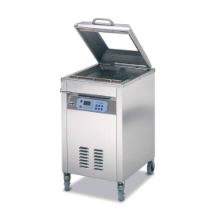
Chamber machines can use either flat or embossed bags, although it’s more common to use flat bags simply due to the difference in price.
Just place the bag in the chamber with the open edge against the sealing bars. When you close the lid and start the cycle, air is pumped out of the entire chamber. As air isn’t being forcibly removed from the bag, any liquids remain in place. This makes a chamber model suitable for packing sauces, soups or other wet foods such as curry.
- Flexible - compatible with most types of food vacuum pack bags, including vacuum bag rolls.
- High capacity chambers allow for larger foodstuffs to be sealed, such as joints of meat or bigger cuts of fish.
- Very fast and easy to use.
- Some models are programmable, helping to prevent damage to fragile foods by very precise adjustments to vacuum pressure.
- Premium models can have adjustable seal bars, providing flexibility in the size and shape of food you can seal.
- Can be countertop or free standing, allowing positioning where it’s most needed.
GOOD TO KNOW: If the bag isn’t positioned correctly, or if the bag splits or tears during the sealing process, it’s possible that liquids can spill inside the chamber. This can draw food into the pump which leads to time-consuming cleaning. Some models have a “quick stop” function to help reduce the impact of spills.
Food Storage
Food stored in an air-free environment lasts longer than in a fridge alone. However, it’s not just temperature and exposure to air which can affect the lifespan of food. Other factors such as moisture content, light and acidity can also have an impact. Exact storage durations can also vary depending on your ingredients. Still, it’s helpful to have a rough guideline as to how much longer certain foodstuffs can be stored once vac packed.
| Food | Usual Storage (days) | Storage if Vac Packed (days) |
|---|---|---|
| Cooked Meat | 4-5 | 9-10 |
| Fresh Raw Meat | 2-3 | 9-10 |
| Fresh Fish | 2-3 | 7-8 |
| Bread | 1-2 | 8-10 |
| Sauces/Soups | 2-3 | 10-15 |
| Fresh Fruit | 4-8 | 14-18 |
Sous Vide
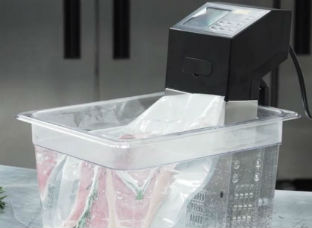
Vac pack machines are essential if you’re planning to cook sous vide. This video shows how vacuum packing and sous vide go hand-in-hand to produce deliciously tender steak.
Frequently Asked Questions

Why do I need two vacuum sealers?
UK legislation was changed to help prevent cross contamination of raw and cooked foods. Whilst it’s possible to use the same vacuum pack machine for all your foods, it’s usually not feasible as the law requires the appliance to be fully disassembled and sanitised by an engineer each time the food type is changed.
Similar to when you use a meat slicer, using a separate machine for each food type is the fastest and simplest solution. It’s a good idea to use kitchen signage to prevent accidental cross-contamination. Of course, if you’re only sealing cooked meat, or only sealing raw meat, you won’t normally need two separate units to comply.
TIP: If you’re planning to buy two machines, it’s a good idea to buy the same type (chamber or external), so you don’t have to buy separate vac bags for each one.
Are vacuum sealers worth the price?
Even with fantastic planning, it’s almost inevitable that there will be some pieces of food left over after a service. Vacuum packing can significantly reduce waste – meaning less money spent on ingredients and food disposal. The price of the machine, alongside the low cost of the bags can easily cover the expense of replacing premium ingredients over time.
Are there other ways to extend the lifespan of food?
Aside from commercial fridges or freezers, vacuum packing is by far the most popular method to make food last longer. However, food dehydrators are also very popular, especially just before ingredients begin to turn. More information about food dehydrators is available on the benefits of a food dehydrator page.
Do you have to use a vacuum pack machine?
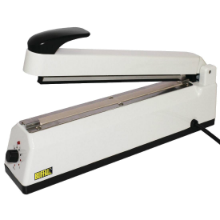
There may be occasions where it’s acceptable to have air in the bag. Perhaps you’re marinading a piece of fish or storing leftover gravy. In these circumstances, you may only require a dedicated bag sealer. Most vacuum pack machines also include a bag sealing function, so you generally wouldn’t need both.
What happens if you use the wrong vacuum pack bag?
Using flat bags with an external vacuum packing machine has no effect - no air will be removed.
What is the warranty on vacuum packing machines?
All professional vac pack machines are sold with a commercial warranty of at least 12 months, although some premium versions may have extended warranties of two or three years. Even when the warranty has expired, you can still get many parts from the Spares and Accessories section.