
Meet WearerTech
Which are the most comfortable work shoes for standing all day? With so many pairs to choose from and long hours on your feet you’ve probably asked yourself this question before.
From high-end domestic brands with professional occupational footwear divisions to dedicated industry specific non-slip shoe makers it can be a struggle to find the answer. As a chef, your shoes need to have the grip of an athletic trainer, the durability of a workman’s boot and the seemingly impossible comfort of stepping on a cloud. In fact, in an ideal world your work shoes would be so suitable you’d be able to forget you were wearing them.
Enter WearerTech™. A brand dedicated to performance footwear for standing, their line of non-slip shoes are directly developed around insight inspired by you. WearerTech "think on your working feet" to help chefs, surgeons, nurses, vets and professionals standing all day long.
So, Who Are WearerTech Exactly?
WearerTech are a collective of non-slip shoemakers, research scientists, designers, biomechanics academics, specialist manufacturers and professionals just like you. People who stand for more than half of their working day and feel the impact in their posture.
Wearertech Innovation Loop
This video explains how Wearertech shoes were made, from research to inception.Since 1978, WearerTech have been researching foot pressure points, the lasting effect of your working environments and many other factors which contribute to your standing foot pain to help you alleviate it. Their mission is to reduce the pain you feel from poorly fitting work shoes, and turn standing all day into a science which works beneficially for your body.

From the brains behind Toffeln clogs comes an insightful team here to innovate the way your feet work at work. To find out more about them, we went to meet faces behind the footwear. Meet:
- Gerry Leflaive, Director at WearerTech. With over four decades of experience in professional apparel, Gerry is well versed in what defines comfort and customer satisfaction.
- Sales Director Bradley Leflaive has worked with Toffeln’s surgical division since 2008. His expertise surrounding ergonomic footwear and how to relieve foot pain with the right shoes is unparalleled in knowledge.
- Professor Christopher Nester BSc PhD is foremost a Podiatrist by trade, since advancing to the Foot and Ankle Research Programme Leader at the University of Salford. His wealth of knowledge regarding the lower extremities has seen him lead multiple international biomechanics research projects.
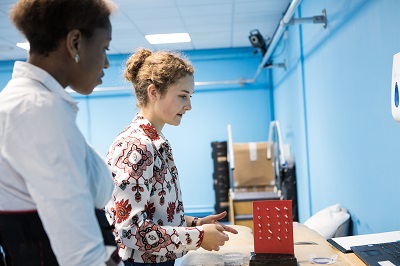
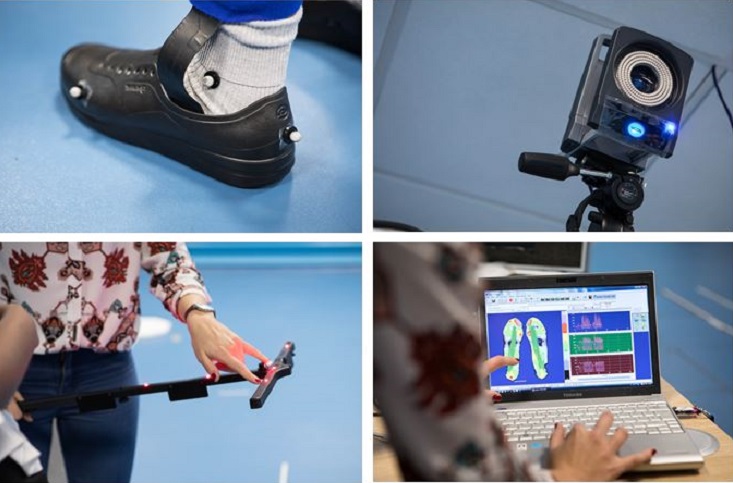
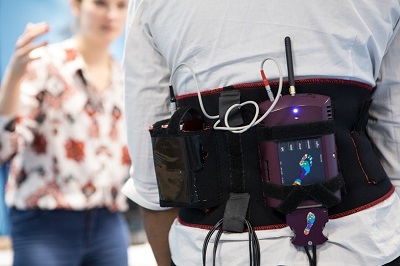
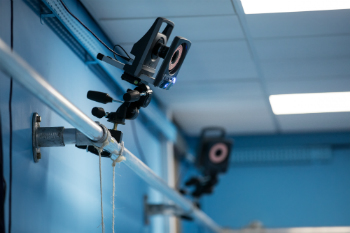
- Applied Research Co-ordinator Jenny Anderson has an exceptional depth of insight into foot and ankle comfort stability. Working with the most advanced technology equipment including infrared motion capture thermographic cameras, her sophisticated analysis of foot movement turns complex understanding into practical wearer insights.
- Marketing Director Justin Rocyn-Jones BA CIM channels WearerTech’s voice of the customer in high quality commercial marketing materials. His empathy for the wellbeing of your feet is not only sincere, but specialised thanks to an impressive healthcare and marketing background.
- Award-winning Dr Anita Williams BSc PhD FCPodM is a Podiatrist and lecturer at the University of Salford. As a previous chair and co-founder of the Podiatry Rheumatic Care Association Anita truly understands the inflammation felt by chefs during the working day and the discomfort their feet face during free time.
- Passionate Head of Product Design Roy Leflaive has been with Toffeln since 1999. His insight into what it means to put pressure on your feet all day has translated into the stylish WearerTech product we see today.
- Head of Product Development Matt Oxbrough ensures your WearerTech work shoe is one of the best shoes for standing on the market. Matt makes sure the way WearerTech’s are developed is commercially responsible with ethical materials.
Where Did WearerTech Come From?
WearerTech was developed out of specific standing occupation industry need for better quality footwear. A division of performance footwear brand Toffeln, WearerTech take researching and refining footwear specifically for the hospitality and catering industries seriously. So seriously in fact, they have published their scientific findings in BioMed Central.
As of December 2017:
- WearerTech have helped over six million individuals pace through long shifts on their feet
- 65% of the 6 million pairs purchased have been bought by hard working nurses
- Chefs and catering professionals have bought 2.1 million pairs of WearerTech non-slip shoes to date
- Nearly 80% of UK surgeons choose WearerTech as their work footwear
How Do WearerTech Carry Out Their Research?
Together, WearerTech and world-leading biomechanical research centre the University of Salford are working on an ongoing Knowledge Transfer Partnership (KTP) to help improve the quality of your occupational footwear; with an end goal of creating the ultimate specialised standing industry customised footwear range. This is achieved through a pioneering cycle called the Wearer Innovation Loop, a strategic research operation with 5 stages to produce the highest quality non-slip shoes available.
From concept to completion WearerTech put their products through its paces in a real life working environment.
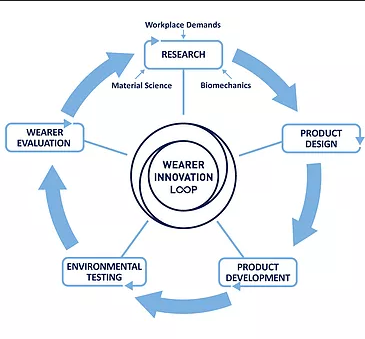
- Stage 1: Research into material science , physical workplace demands on you the wearer, plus biomechanical investigation to understand how the way you stand and move affects your feet and body’s posture. During this stage, infrared thermographic cameras are used to record foot movements of workers right down to miniscule detail.
This allows the researchers to create a pool of data that scrutinises how feet travel not just by the second, but by the nanosecond. Researchers then begin to analyse and compare the differences in standing patterns for results from empirical evidence which translate into real world product advancements. These improvements help make WearerTech non-slip shoes as clever as they are. The final result is an occupational shoe able to combat uncomfortable posture and maximise metatarsal support as much as possible. - Stage 2: Product design based on material science study. Using the understanding of extended periods of standing from the research stage, WearerTech begin to design quality shoes which look good and are beneficial to your body. Incorporating gained knowledge about what defines comfort and which materials are most supportive to standing posture are crucial at this stage. WearerTech win over their customers by crafting the best possible non-slip shoes for standing all day, so synergy from stage to stage is important.
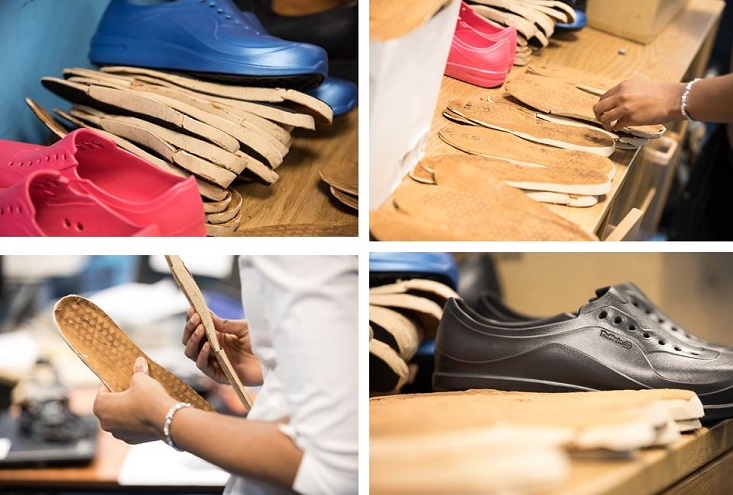
- Stage 3: Developing a new generation of ergonomic non-slip footwear is a challenging task. At their essence, WearerTech non-slip shoes look to meet the demand of protection in the workplace. This said they still need to be stylish enough to appeal as every day occupational footwear. During the Product Development part of the cycle, the materials used are fully put through their strides and approved to high quality, legal standard. As you can see from the image below, WearerTech test out multiple insoles and outsole styles before choosing the one which will give you an optimum level of comfort.
- Stage 4: Environmental testing. At this stage, sample WearerTech’s are tested rigorously in real life working environments such as hospitals to ensure they can withstand the pressure. Designers and product developers check that the non-slip shoes are suited to standing in particular workplaces. For example, if in a professional kitchen things such as how the shoe reacts to high heat, ongoing levels of elevated moisture and foot movement within the shoe are checked. This includes smaller changes, such as feet swelling over long hours and how change in weight distribution on the shoes affects durability quality.
- Stage 5:Wearer Evaluation. This is when WearerTech ask themselves, how can we make our products better? And the Wearer Innovation Loop begins all over again. WearerTech’s research cycle enables them to create a pool of knowledge which they can consistently draw on to enhance their products. Research doesn’t just stop when they go into production.
How Can WearerTech Non-Slip Footwear Help You?
Maybe you have high arches. Perhaps you were born with an uneven foot which makes walking for long periods painful. Or perhaps like me you have flat feet. Whatever your foot trouble, WearerTech has a solution for you.
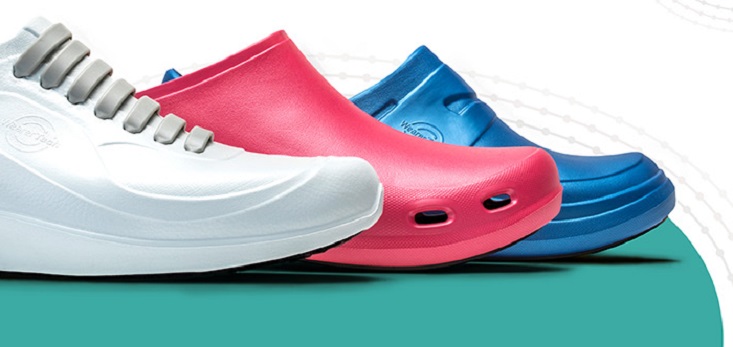
Each of the shoes in the WearerTech range is crafted from a fully sustainable, rubber-like Ethylene and Vinyl Acetate (EVA) copolymer. Used by brands such as Birkenstock and Nike, high grade EVA is a fully diverse material that can be produced in multiple colours and made hard or soft. EVA boasts a variety of benefits for hard working feet, including:
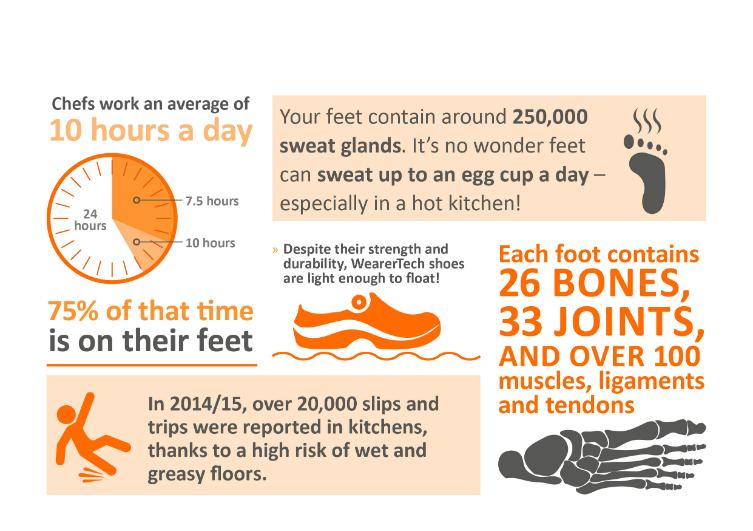
- Being lightweight. At less than 200g per shoe, WearerTech’s are so light they can float in water!
- Being adaptable. EVA moulds to the shape of your foot over time for personalised comfort. It’s full flexibility also makes slipping the non-slip shoe on and off quickly very simple for efficient working practise
- Having a high shock absorbance and stress crack resistance. EVA is a robust material which keeps feet safe from shock effect to reduce impact stress and pain on feet
- Being planet and vegan friendly. EVA is a recyclable material that is ethically sourced and less environmentally harmful than other vinyl shoe materials
- Non-porous quality. Water resistant and easy to keep clean by hand or using the washing machine
- EVA is odourless
- Being soft on skin with enough elasticity to make feet feel fully padded, whilst remaining tough to external hazards
To help you out after a long shift, WearerTech shoes are also machine washable up to 40º. The EVA material used has been treated with an antimicrobial agent to defend against microorganisms and stop harmful bacteria and smells developing within the shoe. But don’t take our word for it. SRC rated, SSR and CE marked too, each WearerTech non-slip shoe is fully compliant to current occupational footwear regulations.
What is an SSR and SRC shoe?
SRC refers to the type of slip resistance regulation. An SRA slip resistant shoe has been tested on ceramic tiles wetted with a soapy (sodium lauryl) solution and approved for use. SRB meanwhile means the shoe has been tested and passed on smooth steel with glycerol. An SRC categorised shoe has been tested and accepted for safe working under both of these conditions, and is the highest level of slip resistance rating currently available.
There is some debate over the definition of an SSR non-slip shoe. Some manufacturers use this abbreviation to refer to Super Slip Resistance – also defined as an SRC non-slip shoe. Others mean Sustainable Slip Resistance when referring to SSR shoes. WearerTech have taken extraordinary steps to ensure their non-slip shoes are sustainable to make and have unrivalled slip resistance.