
How to choose the best bin for your business
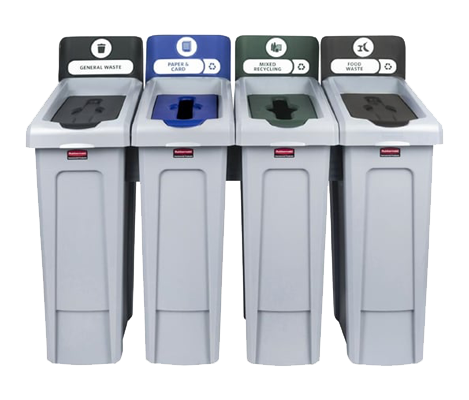
Bins come in all sorts of styles and designs, each one better for different tasks. The type you pick will depend on the kind of waste it’ll hold and where it’s going to be used. Before kitting out your business with the right bins, identify the details and requirements of the space by asking...
- Which waste streams (food waste, food packaging, tin cans, plastic etc.) are generated here?
- What volume of waste is produced here?
- What is the size of the space available?
- How will generated waste be transferred from this area?
- Any specificities of the space, for example, is there potential for bad odours due to food waste?
New Simpler Recycling Legislation: The UK Government has recently introduced new 'Simpler Recycling' legislation. These regulations require all businesses with 10 or more full-time employees to separate 'relevant recycling waste' into four main streams for food waste, mixed recycling, paper & card and general waste for collection.
What type of bin does my business need?
To find the best type of bin for your needs, you need to think about what waste your bin is going to collect and where you plan to use it – be that in your front or back-of-house. Stylish bins that are great for customer-facing environments may not have the durability or capacity to cope with intensive use in a bustling commercial kitchen. On the other hand, high-capacity bins that are ideal for back-of-house use may not have the sleek, compact design needed to blend into a dining room, lobby or bathroom.
What is Simpler Recycling?
Simpler Recycling is a new set of regulations designed to make recycling easier and ensure consistent recycling collections across England. Businesses with 10 or more full-time employees will be required to comply.
The goal is to increase recycling rates by:
- Standardising what is collected for recycling across England
- Ensuring recyclable materials are collected separately from general waste
- Reducing contamination in recycling bins
What does it mean for my business?
Businesses, schools, hospitals and other commercial premises in England will need to separate dry recycling—including paper, card, plastic packaging, glass and metal—from general waste. If a business produces any food waste, no matter how small the amount, this must also be collected separately.
Recycling bins for multiple waste streams
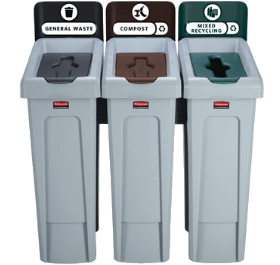
You’re likely to be producing a wide variety of waste streams. From food packaging, food waste, to plastic bottles and paper, introducing a multi-stream system to capture these different streams will ensure separation compliance. Make sure you prioritise clear and consistent signage to further facilitate efficient recycling.
When buying recycling bins, you have two choices.
The first choice is to buy a ‘blank’ container. From there, you can buy coloured lids and stickers to allocate the bin to a material of your choice. This is perfect for customers who only produce a large quantity of one recyclable material, and therefore only need one recycling bin.
For those producing large amounts of many different recyclable materials, our range of recycling stations are ideal. The Rubbermaid Slim Jim® recycling stations comes supplied with labelled and colour-coded lid inserts, billboards, and sticker packs, providing a convenient and efficient solution for waste segregation.
Take Me To Recycling BinsArticle: Want to learn more about compostable disposables? Our comprehensive guide on the benefits of compostable packaging has you covered.


Commercial Waste Bins for High-Volume Waste Disposal
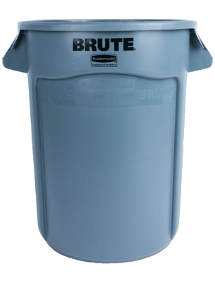
Where large volumes of recyclable waste are produced, high-capacity bins are a smart investment. Look for designs with in-built venting channels and contoured base handles to reduce strain and make emptying easier.
An open-top design allows staff to dispose of rubbish quickly without lifting a lid, which is especially useful during busy service periods. Lids are available separately to help contain odours and prevent spills when moving bins to storage areas.
If you're looking for a bin that meets all of these needs, our range of Jantex Heavy-Duty Bins and BRUTE® Containers is an excellent choice. Available in a variety of sizes, these tough bins are built to withstand the demands of commercial and industrial environments, offering long-lasting durability.
Take Me To Waste BinsDollies and Trolleys
Transporting waste from location to location is a difficult task, particularly where food waste is concerned; the weight can have an impact on your workers’ wellbeing. Utilise dollies and trolleys to minimise that burden and make waste movement easy.
Slimline Kitchen Bins
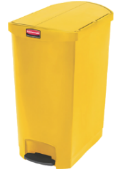
Bins that help make the most of your available space are essential as, under the new legislation, you’ll need to collect multiple waste streams without interrupting day-to-day operations. For busy areas where space is limited, you need containers with a narrow footprint, that will fit snugly into nooks or crannies or sit neatly under counters.
Rubbermaid’s Slim Jim® bins are designed with the modern-day caterer in mind. A slim design gives these bins a remarkably small footprint. This means they can neatly slot into tight areas in front and back-of-house environments – essential for any venue running low on floor space.
Available as either pedal bins or recycling bins, Rubbermaid’s Slim Jim® bins will help you free up room without sacrificing on quality and practicality.
Take Me To Slim BinsPedal Bins
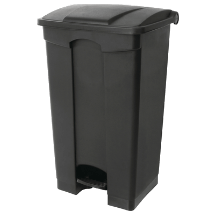
To comply with legislation and prevent contamination and odours, your facility needs a pedal bin that can withstand the demands of a fast-paced environment.
Pedal bins are among the most hygienic options available. The hands-free design helps prevent the spread of bacteria and reduces the risk of cross-contamination—particularly important in food prep areas.
The foot pedal is especially useful when carrying large amounts of waste, as staff can dispose of rubbish without struggling to lift a lid. Pedal operation also reduces fingerprints and sticky residue on the lid, keeping the bin cleaner and more hygienic.
Pedal bins are ideal for kitchens and washrooms because of their tight-fitting lids, which help contain odours and keep waste out of sight. Many models also feature slow-closing lids and innovative hinge designs that prevent damage to walls if opened forcefully.
Take Me To Pedal Bins


Wheelie Bins
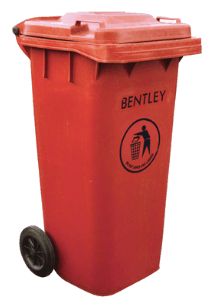
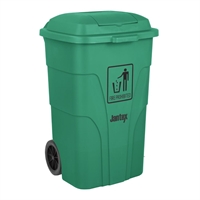
With capacities ranging up to 1100 litres, wheelie bins are ideal for high-volume environments where waste accumulates quickly. These huge capacities will limit the number of times your bins need to be collected to save you money.
Made from heavy-duty plastic, wheelie bins can withstand knocks, drops and bangs without breaking or denting. Many wheelie bins are also UV, frost and chemical resistant, allowing them to be safely used outside or to hold hazardous waste.
Wheelie bins are also available in popular recycling colours such as red, blue, green, yellow. This allows you to assign a colour to one type of recyclable material to stop general waste and incorrect materials contaminating the recycling process.
Large wheels also make wheelie bins easy to move, even when fully laden with waste or used outdoors on uneven ground.
Take Me To Wheelie BinsTIP: Wheelie bins are also a great way of protecting your bin bags from pests.
Swing Bins
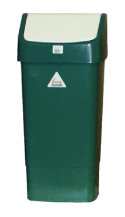
Swing bins feature a simple, compact design and budget-friendly price, making them ideal for bars, front-of-house settings, guestrooms, bedrooms and small offices.
The swing lid fully covers your bin and will close automatically. This conceals waste and contains any unpleasant odours to maintain a pleasant environment for your guests and staff. This swing top can also be easily detached for easy cleaning.
As most swing bins must be opened by hand, they are not preferred for use in kitchens and other areas where the risk of cross contamination is high. If you choose to use swing bins in these areas, you must make sure your staff wash their hands immediately after touching the lid. The small opening of swing bins also means they are not well suited for the disposal of large items.
Instead, swing bins are perfect for collecting smaller, ‘clean’ waste such as paper, small food packaging, plastics, cardboard and cans.
Take Me To Swing BinsTIP: Swing bin lids can become dirty after repeated use. Ensure you train your staff to regularly wipe and clean the lid.
Bullet Bins

Bullet bins feature a discreet yet stylish design that makes them perfect for front-of-house use in cafés, coffee shops, lobbies, hotels and retail venues.
Often with polished or matte finishes, bullet bins are designed to blend into formal environments while still acting as a fully functional waste receptacle.
Bullet bins with touch, push, and roll lids offer a stylish and practical way of keeping in unwanted odours. Alternatively, bullet bins are available with open lids to collect bulkier rubbish or for use in high-volume areas where waste is constantly produced.
While the sleek appearance is perfect for customer-facing settings, the small capacities, lid mechanisms and slim designs of bullet bins mean they are not well suited for use in kitchens and other busy back-of-house environments.
Take Me To Bullet BinsSack Holders
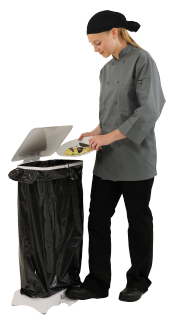
Sack holders are a cost-effective and practical way of collecting your waste. Made with secure fastenings, sack holders allow you to simply store a bin bag beneath the lid and replace with another bag once full.
Sack trolleys (also known as mobile sack holders) are designed to help you collect and segregate waste on the go – perfect for hotels, kitchens, retail venues, hospitals, care homes and food courts. Free standing and wall-mounted sack holders are also available. These work brilliantly when placed in high-traffic areas where large amounts of waste are produced.
Some sack holders also have coloured lids. This allows you to easily separate waste within different areas of your venue for best sanitary practice, or to aid colour-coded waste segregation for more effective recycling.
Take Me To Sack HoldersWhich bin material?
Material plays a big role in choosing the best bin for your business. In a busy hospitality or food service environment, equipment sees heavy use every day, and waste bins are no exception. Flimsy, low-cost options won’t last, and constant replacements only create more waste. Investing in durable bins means a smarter long-term choice.
The two most common materials for bins are plastic and stainless steel, each offering its own benefits depending on your needs.
Plastic Bins
Durable, budget-friendly and easy to clean, plastic bins will make a great addition to any indoor or outdoor environment - from commercial kitchens and washrooms to workplaces and retail venues.
- Weather Resistant: Plastic bins have a high resistance to water and sunlight. This means they can be safely used outdoors all year round.
- Longevity: Plastic bins are durable, long-lasting and malleable, allowing any dents to easily pop out. Plastic also does not show scratches as easily as stainless steel, making maintenance simple.
- Easy To Clean: Plastic is a non-porous material meaning that it will not absorb and retain bacteria. As such, plastic bins are germ-resistant and easy to disinfect.
- Cost-Effective: Plastic bins are a cheaper alternative to stainless steel bins – perfect for venues working on a budget.
- Lightweight: The plastic material makes these bins easy to lift, carry and empty.
- Something To Think About: The durable and cost-effective material used to make plastic bins means they can sacrifice a little on style when compared to their sleek stainless steel counterparts. However, the vibrant look of coloured plastic bins makes them great for venues wanting to liven up their décor.
Stainless Steel Bins
Stainless steel bins are not as commonly used as plastic bins. This is mostly due to the cost increase of using stainless steel. However, stainless steel bins do have several advantages over plastic bins.
- Strength: Stainless steel bins are extremely sturdy and crack-resistant.
- Appearance: Stainless steel bins boast a stylish and elegant look that makes them great for dining environments, washrooms and other customer-facing areas.
- Fire Safe: Stainless steel bins have superb heat and fire resistance. This will help to prevent fires if hot items such as ash or cigarettes are thrown into the bin.
- Something To Think About: The sleek, shiny appearance of stainless steel bins means they can be prone to smudges and finger marks. Using stainless steel cleaner and polish is a quick and easy way of keeping your bins gleaming.
Article: For further information on how to maintain your stainless steel equipment, take a look at our guide on how to clean and polish stainless steel.
Take Me To Stainless Steel BinsWhat size bin?
Size is an incredibly important factor when buying a bin. Picking too small a bin means it will have to be frequently emptied, which can be a time-consuming task for your staff. A bin that is too small may also frequently overflow which can be unhygienic, attract pests and give your business a bad look. On the other hand, buying a bin that is too big will result in unused space and needless added costs.
The most popular sizes of bin range from:
- 0 – 9.9 Litres
- 10 – 24.9 Litres
- 25 – 49 Litres
- 50 – 74.9 Litres
- 75 – 100 Litres
- 100 – 124.9 Litres
- 125 Litres and over
To find the best size bin for your needs, you first need to consider what type of waste it is going to collect. For example, a bin that is being used to collect glass bottles is going to fill up a lot faster than one collecting paper waste. Therefore, if you are a venue that produces a lot of bulky waste, you may want to consider using a larger capacity bin of 75 litres or more.
The type of venue your bin is being used in is also another factor you need to consider. A small kitchen may only need bins with capacities of around 25-75 litres. A larger, high-volume kitchen that produces a greater quantity of waste over the course of a day or service may need bins with capacities of over 75 litres.
You also need to think about how often you empty your bins. A bin that is emptied daily or at the end of each service will need a smaller capacity than one emptied weekly or monthly. Generally, bins that are used indoors will have capacities no larger than 200 litres - as they are emptied frequently. Bins that are primarily used outdoors, such as wheelie bins, tend to have greater capacities as they are emptied less frequently.
It’s also important to consider the employees who will be emptying your bins. Bins that have too large a capacity can be difficult to transport and empty, so you may prefer to use several smaller bins that are easier to carry.

What shape kitchen bin?
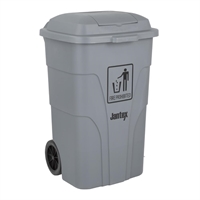
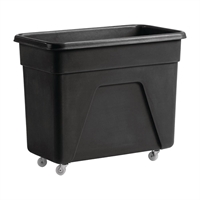
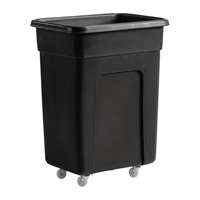
Shape is also an important factor to consider when buying a bin. The shape of a bin often determines where it will be used in your venue.
The flat sides of square and rectangular bins allow them to be placed against walls or in corners. This means they can neatly slot in-between cabinets, cupboards and equipment. This is particularly useful for kitchens, washrooms, dining environments and other venues where maximising space is essential.
Whereas square and rectangular bins are designed to be pushed against walls, round bins are best placed centrally in open areas – such as in the middle of a bustling kitchen. Round bins can also be easily moved around – great for establishments that need to frequently transport their bins into different locations. Round bins also tend to be more aesthetically pleasing than rectangular or square bins – making them better suited for customer-facing settings.
Frequently Asked Questions
How to clean a kitchen bin?
Your kitchen bins can quickly become the home of huge amounts of bacteria and unpleasant smells if not regularly cleaned. Dirty bins can also attract flies and pests which increases the risk of bacteria coming into your kitchen.
To preserve the highest level of cleanliness in your kitchen, you should clean both the interior and exterior of your bins daily.
To learn how to clean and stop your kitchen bin smelling, you should follow these simple steps.
How to clean plastic bins
- Empty the bin bags
- Scrub the interior and exterior of your bin with kitchen cleaner and a scouring pad or brush
- Rinse with warm water, empty and leave to air-dry
- Line with fresh bin bags
How to clean stainless steel bins
- Remove the bin bags
- Scrub the interior and exterior of your bin with warm soapy water, stainless steel cleaner and a microfibre cloth. Be sure to choose a cleaner that contains alkaline and is free from chloride
- Spray with a stainless steel polish and polish along the grain of the surface
- Towel dry the bin to prevent pitting and rusting
- Line with new bin bags
TIP: Buying bins with lids, or purchasing a lid separately, can help to prevent smells.
How to clean a wheelie bin?
Like kitchen bins, wheelie bins can quickly become a breeding ground for dangerous bacteria, bad odours and pests if not regularly cleaned. This can be particularly bad during the summer when temperatures soar.
You should aim to clean your wheelie bin once a fortnight, following these four simple steps:
- Remove any bin bags
- Pour hot soapy water into the bottom of your bin to loosen any dirt
- Scrub the lid, interior and exterior with kitchen cleaner. Using a long broom or mop will help you reach the very bottom of the bin
- Rinse the bin once more with hot water, empty and leave to air dry
Once cleaned, the following tips will help to ensure your wheelie bin stays hygienic.
- Make sure your wheelie bin lid is fully closed at all times. This will prevent flies from entering and laying eggs
- Keep your wheelie bins out of the sun. Bins that are stored directly in the sun will begin to ‘cook’ their contents – leading to more smells which will attract flies
- Regularly clean your wheelie bin lids with a disinfectant. The smell will deter flies and stop them from trying to enter your bin
Where to put my kitchen bin?
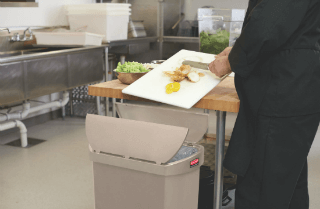
You should place your bins as close as possible to where your waste is produced – such as next to food prep benches, plate return areas, behind bars, cooking stations and tea and coffee stations. This allows for quick waste disposal to save your staff time and improve productivity.
However, you may prefer to place small buckets, bowls and trays on your worktops and empty these into one large bin located in the centre of your kitchen.
Do my bins need a lid?
Any bin that is used outdoors must have a lid to comply with animal by-product regulations.
You are free to use bins without a lid indoors. Many commercial kitchens do not use a lid on their indoor bins as it can be impractical to frequently open and close a lid every time you dispose of waste. Bins with lids can help to minimise bad smells, so you should take this into consideration when buying a bin without one.
Shop all bins now
