Against The Grain – Is Low and Alcohol Free Beer The Future For Brewing?
It’s a fact that beer consumption – and indeed alcohol consumption in general – is in decline, even while the popularity of craft beer continues to increase.
So what’s behind the drop in boozing? And can low alcohol beer and alcohol free beer help turn the fortunes of the brewing industry around?
Read on to find out more.
Are people drinking less?
The short answer is yes. Part of this is undoubtedly down to the shift in the way generations socialise, with Generation Z more likely to favour the internet and online gaming when it comes to ‘meeting-up’ with friends.
But, though the pull of the virtual world may be tempting, many pubs still report serving a mixed spread of drinkers, and there was even a small rise in UK pub numbers at the tail end of 2019, the first in almost a decade.
Craft beer consumption also continues to rise – albeit at a much slower rate than previously – while sales of pints fell from 5.7bn in January 2007, to 3.6bn by March 2019, according to the British Beer and Pub Association, a drop of 36%.
However, while the volume of alcoholic drinks sold is down, spending has actually increased as punters make the move away from mass produced beers to ‘premium’ products. According to a 2019 report by Marstons almost half of drinkers are ‘readily looking to premiumise (trade up) their drink choice’ as they continue the move to ‘drink less but better’.
Article: Want to make the move into serving mocktails? Our article on why you need to serve non alcoholic drinks takes you through how to get started.
What is premium beer?
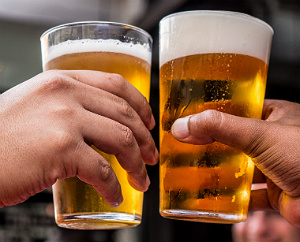
Well that depends on who you speak to. In the wider brewing industry it’s regarded as a beer higher than 4.5 per cent ABV; others claim it’s a beer brewed in small batches, one created by a master brewer, or even that it simply comes down to price. To complicate matters further one industry name says the category doesn’t exist.
While arguments rage, there’s no doubt the biggest shift in the drinks market over the last three years has been the jump in popularity of low alcohol and alcohol free alternatives.
In the UK alcohol free drinks must contain no more than 0.05% ABV, while those that contain between 0.05% and 0.5% ABV are branded dealcoholized.
In February 2019, data from CGA, the leading insight consultancy for the out-of-home leisure market, showed sales of low and alcohol free beer rose 28% from the previous year.
37% of global drinkers are willing to pay extra for an alcoholic drink that will bring extra levels of enjoyment and indulgence - Source: GlobalData, 2019
What’s behind the boom in alcohol free and low alcohol beer?
While it’s undoubtedly health concerns that are driving sales of low and alcohol free beer, it would be wrong to presume people are simply giving up alcohol completely. The Guardian reported in 2018 that around a third of 16 to 24-year-olds now identify as tea total, but it seems many people are simply moderating their behaviour, opting for drink-free days or making the switch to low and no alcohol alternatives.
Beer writer Pete Brown believes that people still want the experience of meeting friends for a pint but are more mindful about when and how much alcohol they put away.

“What’s really driving the demand for it is people who enjoy a drink, but just want to have a bit more balance in their lives.”
“So you go to the pub on a Tuesday night and you want to be with your mates and you want to have a good time, but you’ve got a big presentation the following morning at seven o’clock. If you’re drinking non-alcoholic beer you’re still going to feel like you’re part of the group, you’re still going to feel like you’re part of the occasion.”
“It’s the psychosomatic thing. And if you can do that without alcohol then why not? It’s still going to be more fun with alcohol, but if I drink every day I wouldn’t mind doing that two days out of seven.”
There’s also the matter of availability. From 2017 to 2019 there were 40 new launches in the off-trade (major retailers and convenience stores) many of which are now expanding into on-trade. The most high profile, non-alcoholic product is without doubt Heineken’s 0.0, which launched in summer of 2018 with a £6m ad campaign that targeted, among others, viewers of the World Cup semi-final between England and Croatia.
It was so successful that a report by The Grocer in July of that year revealed that Heineken was only in growth because of 0.0’s phenomenal success. While sales of it’s leading lager fell by £2.65m to £66.1m, 0.0 saw sales growth of £4.07m.
The third factor behind its success is the improvement in quality. Between the Seventies and the late Noughties, alternatives to alcohol were few and far between, and those that were available struck fear into the hearts of nominated drivers across the UK.
For those unwilling to stick to soft drinks there was Barbican, a sweet, malty brew originally produced by Bass; the Billy Connolly-endorsed Kaliber, a highly carbonated lager brewed by Guinness unlovingly remembered by many for its ‘soapiness’ and a draught option in Allied’s Swan Light.
Half of drinkers who participate in Dry January are happy to consider Low/No alcohol options- Source: Marstons' On Trade Beer Report, 2019/2020
How is alcohol free beer made and how has it changed?
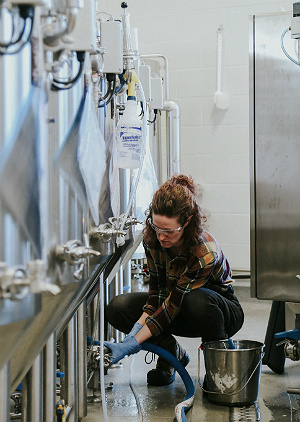
Traditionally brewers would either prevent the beer from fermenting fully, resulting in a sweet unpleasant taste, or boil the alcohol off by heating it up to 70 degrees, leaving an alcohol-free beer that tasted like it’d been stewed. But two techniques are leading the way in transforming the production of low and alcohol free beer.
The first, using a method called reverse osmosis, forces fermented beer through a fine membrane that is permeable to water and alcohol. This leaves a concentrated version of the beer. The alcohol and water are then separated, before the water is reintroduced to the concentrate, resulting in an alcohol free brew that leaves most of the flavour intact.
The second method, known as vacuum distillation, lowers the boiling point of the alcohol using a vacuum chamber. The chamber allows brewers to heat the beer to a much lower temperature while still burning off the alcohol, ensuring the taste is maintained
Both of these processes work but, says Pete Brown, its success is often dictated by the type of beer you’re creating.
“I think lager is the hardest to do because it’s so delicate. Craft beers, porters, stouts, IPAs, you can do things to give it body and character and mask off flavours.”
“(With lager) any off flavours are going to come shining through, which is why most big non-alcoholic lagers taste so horrible. But if you drink porters or IPAs there are a lot of flavour components there that you can play with to create and build a flavourful, interesting beer without alcohol.”
“Although having said that with the new Heineken 0%, you can’t taste the difference between that and the full-strength Heineken.”


What is the future for alcohol free beer?
Very bright indeed. The naysayers may point to decades of failed attempts to get Brits to drink non alcoholic and low alcohol beer, but that is to ignore the massive societal changes the country has undergone.
Whether that’s the influx of migrants, many from countries where attitudes to alcohol are different from our own, greater focus on personal health, changes to the way we socialise or shifting attitudes towards alcohol, it could be argued the market for low and no alcohol beer has never been bigger. The key will be convincing these groups to make the move from sugary soft drinks, so greater prominence for alternatives to full strength beer is vital.
“The people doing the best stuff haven’t got the marketing budget,” says Pete Brown, “but they’re doing very well with word of mouth.”
“There’s a brilliant organisation called Club Soda, which is bringing a lot of this stuff together and producing guides to the best non-alcoholic drinks and where you can find them. But Heineken are putting an awful lot of money behind Heineken 0.0%. And I think fair play to them, because they’re going to normalise the category.”
“They’re going to get people thinking, ‘yeah, this is a proper thing now’. Seriously, they’re putting a ton of budget behind it and eventually that’s going to bring up the whole market.”
Internationally, the bigger brewers are already looking to use their alcohol free beers to take on the behemoths of the soft drinks market, such as Coca-Cola and Pepsi, particularly in countries such as India – where drinking is outlawed in certain states – and Pakistan, where alcohol is only available to non-Muslims.
Globally and domestically the market for this product remains relatively untapped, catnip, it seems, for fearless craft beer giant BrewDog.
Their latest venture BrewDog AF, ‘a pilot concept bar’ on Old Street, London, opened its doors on 6 January, 2020, and at the time of writing is serving up two brand new alcohol-free beers - Wake Up Call and Hazy AF - alongside 13 established low and no alcohol options. The company aims to banish the oft repeated beer drinkers’ complaint, that alcohol-free means taste-free, and will also offer drinkers alcohol free spirits and cider.
The switch into Low/No Alcohol is being led by 18-24-year-olds, with almost one in 10 (9%) having already switched out of alcohol and 22% of those between 18-34 being the most likely to consider switching - Source: Portman Group, 2019
View from the bar
The question on the lips of many drinkers is, ‘what is the point of alcohol free beer?’ So what has the reception been like for this new breed of low alcohol beers in the UK’s pubs?
Steve Williams, landlord of the St Julians Inn, Caerleon, has found there’s very much a market for what the brewing trade calls ‘nablabs’, with customers switching in order to continue enjoying a drink with friends while still being able to drive home from the pub.
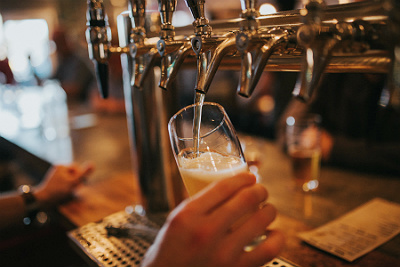
“We’re very much a drive to venue anyway. For a business like ours it’s vital. Even though it doesn’t sell in tremendous volumes we need it as an option.”
“Some people, especially if they’re out in company, like to have something that at least looks like it’s an alcoholic drink so they feel like they’re joining in the fun.”
“We also get people who come in and, it’s not just because they’ve got the car and they’ve got to drive and they don’t want to be caught drinking and driving, it is a lifestyle choice.”
And, having witnessed first-hand earlier attempts by Kaliber and Barbican to brew an alcohol-free beer, like Pete Brown, it’s the quality and range of this latest batch of lagers and ales that has impressed him most.
“The beers don’t taste like liquid Shredded Wheat any more, they taste like the full-fat versions. And if you’ve got a good product to start with... Heineken’s double zero is very popular and the feedback I get from people is that it tastes just like the real thing.”
So does he feel that ‘nablabs’ could help save Britain’s struggling pubs, and could there even come a time when they make up the bulk of beer sales?
“For a street corner boozer I would have thought it wouldn’t make a blind bit of difference. And if they’re quiet it’s likely to be for other reasons – be that they’re in the wrong place now because the demographics of the area have changed, for maybe religious reasons, health reasons or even an industry has gone, it could be anything.”
“As for sales, the trend is going that way, but how rapidly it happens I’ve no idea. I’d certainly say they’ll be on the increase in the coming months and years. I know companies such as Brewdog have some excellent low alcohol products, Nanny State for one.”
“I’ve tried it myself just because I wanted to know what it tasted like and it does taste very good, as do all of the ones that I’ve tried. I mean I’d rather have a cup of tea if I’m not having the real thing, but I do like to try the products that I may end up selling to see what they’re like.”


So what are the best low and alcohol free beer options?
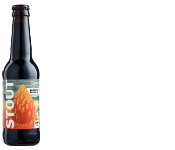 Big Drop Stout
Weighing in at 0.5% ABV this milk stout is low on alcohol and big on taste, with a dark malty flavour balanced by the hints of vanilla. Big Drop are the high water mark when it comes to alcohol free beer according to Pete Brown, who describes them as “my favourite, my go-to”.
“There’s no low-alcohol category in the World Beer Awards. They won Best Stout, beating out five per cent stouts. So that tells you how far they’ve come.”Adnams Ghost Ship
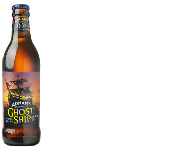
Producing an alcohol free version of an already-trusted brand was a big risk for this Suffolk –based brewer but it’s one that’s paid off, delivering a fruity pale ale that has even managed to excite the beer devotes on Untappd.
It lacks a little of the body of the original, but in terms of flavour you’d be hard pressed to tell the difference.
Or as Pete Brown handily summed it up:
“That is a cracking beer, that’s really, really good!”Heineken 0.0%
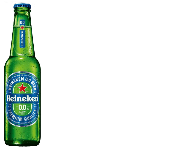
A controversial choice, however for a zero per cent lager it isn’t half bad.
The flavours are very subtle, with sweet notes of malt and a hint of
citrus, an issue not lost on Heineken who have questioned
whether critics who say they can’t tell the difference between this and the full-strength version are criticising the latter or praising
the former.
If your local stocks it opt for the draft version – served using Heineken’s countertop beer dispenser known as ‘the Blade’ – then you’re really in business
Nanny State
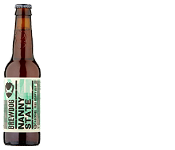
Originally launched in 2009 as a riposte to critics alarmed by the strength of its 18.2% Tokyo stout, Nanny State weighed in at 1.1% ABV.
The ensuing years have seen the alcohol content reduced, but the flavour and body of this IPA is maintained courtesy of five types of
hop and eight types of malt.
One reviewer on Amazon even claims it’s so good they’ve switched from drinking ‘anything normal strength’.
High praise indeed.
FAQs
Is alcohol free beer healthy?
That depends on the relationship you have with alcohol. If you're an occasional drinker who wants to reduce your calorie intake on a night out then no and low alcohol beer is a healthier option, as it contains fewer calories than standard beer. It can also help you stay within the UK's 'low risk guidelines' of 14 units per week for men and women, reducing the risk of damaging your health. Alcohol education charity Drinkaware recommends that people with dependency issues shouldn't rely on low alcohol or alcohol free drinks as an alternative.
Alcohol free beer has to contain at the most what ABV?
It's all down to where you live, but to be declared alcohol-free in the UK beer must contain no more 0.05% alcohol by volume (ABV), while anything containing between 0.05% and 0.5% ABV is branded de-alcoholised. In the USA and Europe 0.5% ABV is considered alcohol free. Low alcohol beer contains between 0.5% and 1.2% ABV.