
How To Store Food in Restaurants
Using the correct food storage products is essential to minimise food waste and ensure optimum food preservation. You need high quality food storage containers, ingredient bins, flour buckets, shelving and storage racks in all shapes and sizes to keep food fresh, separated and ready to prepare. By reducing food handling, separating foods to avoid cross contamination, and holding food at the proper temperature you can help protect food quality and prevent bacteria or pests that may cause foodborne illnesses.
To avoid spoilage, commercial food is always rotated so that food is used before it goes bad in a "first-in, first-out" process. This means that the oldest acceptable food is used first. And food containers help you to manage this process, ensuring you never serve out-of-date food.
TAKE ME TO FOOD STORAGEHOW TO STORE FOOD SAFELY
Choosing the right containers and using the right storage method will help you to extend the life and freshness of food, saving you money by reducing your waste. Food safety is a major factor when storing food, too. Improper handling and preparation are seen as the major causes of foodborne illness, but food storage is often over looked. Incorrect storage is as much to blame as poor food preparation for cross contamination. Therefore, it is crucial for restaurateurs to plan and implement proper storage solutions.
Stock Rotation
Rotating stock is crucial in any kitchen. Using first in, first out system, also known as FIFO, ensures that food closest to its ‘use by date’ is used before it goes off. This simple, yet extremely effective procedure stops old food from being left at the back of shelves or in the bottom of freezers. It also aids in reducing your food waste, as you should be using everything before it goes off.
Food Labelling
Make sure all your kitchen staff know what’s what by labelling all your stock as soon as it arrives. Sticky labels are an inexpensive method of displaying use-by dates. Labelling your stock as soon as you get it and putting it into your FIFO system ensures you have proper control and organisation of your inventory. Food labels can also be used to separate potentially hazardous foods, such as allergens.
Storing Meat
Store your meat at the bottom of fridges or on the bottom shelves of storage racks. Storing meats at the top of shelves or fridges increases the risk of contamination as meat juices can easily drip down on other foods. Therefore it is best to store meats at the bottom of your fridge or shelving unit. Dunnage racks can be used to utilise floor space under shelves if you need more ground-level storage for meat. They raise the content off the floor to prevent pests and damp, too. Where possible, separate fridges should be used for storing raw meats and ready-to-eat foods to prevent any physical contamination.
Storage Temperatures
Storing your food at the right temperature will stop bacteria from growing. If food is stored above 8°C, the risk of food poisoning bacteria growing is highly likely. Because of this, it is a legal requirement that your fridges are kept below 5°C. However, it is recommended that you keep them between 1-4°C.
Frozen food should be kept at around -18°C. It is also important that you don’t overstock your fridges and freezers, as this can prevent proper circulation of air, causing hot-spots where bacteria can thrive. You should always monitor the temperatures of your storage areas, including fridges, freezers, cold rooms and racking, using a fridge, freezer or wall mounted thermometer.
TYPES OF FOOD STORAGE CONTAINERS
Polycarbonate Food Containers

Polycarbonate containers are transparent boxes that offer practical and versatile storage for a wide range of foods. The see-through plastic allows you to easily identify foods and check stock, speeding up any food preparation or stock taking task. And their shatterproof construction makes them extremely safe to use.
Gastronorm sized and resistant to temperatures as low as -40 °C and as high as 100°C, the containers fit into existing storage racks, fridges, freezers and cooking appliances, making them extremely space efficient. Many polycarbonate food boxes have measurement marks on too, which help you to accurately measure food and ingredients such as flour and sugar. Most polycarbonate containers are also stackable, allowing you to maximise your storage space and make food prep more efficient.
Air tight lids help to preserve food by locking in freshness. This is crucial when storing foods that need to stay dry or foods that go stale if left out out. It also prevents pests from infesting your food, helping you to maintain maximum food hygiene.
SHOW ME POLYCARBONATE FOOD CONTAINERSPolypropylene Food Containers

100% BPA free, air tight lids, stackable and resistant to temperatures between -40°C to +70°C, these containers offer an economical alternative to polycarbonate containers. Easy to clean and gastronorm sized, they also offer space efficient storage for a wide variety of foods, fitting into your existing storage and food preparation areas. Polypropylene containers are translucent, allowing you to see inside without opening them.
These food containers are also available with air-tight lids that allow them to be stacked. Perfect for storing any foods and ingredients, polypropylene food tubs can be used in all kitchen environments, from restaurants to homes.
SHOW ME POLYPROPYLENE FOOD CONTAINERSGraduated Food Containers
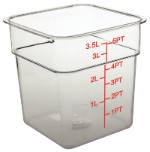
Using graduated food storage containers is an ideal way to monitor how much of your stock is remaining, and can be done without needing to open the lids to ensure the contents stay fresh. With large, clear red measurements on the container in litres and pints, these containers allow a quick view of your inventory, so can help with portion control and save waste.
SHOW ME GRADUATED FOOD CONTAINERSStainless Steel Food Containers

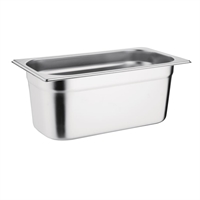
Stainless steel containers, such as gastronorm pans, offer long lasting, durable and easy to clean food storage. Not only do stainless steel gastronorms provide versatile and practical storage, but they can be used at every stage of food preparation. From cold storage, to oven, to service, gastronorms are a must-have for any catering venue. Available in 9 sizes and 6 depths, gastronorm pans help you to store any and all foods in an efficient and hygiene way.
Gastronorm pans come in a variety of styles. Normal pans, perforated pans, with or without handles and in deep of shallow designs. Deciding which pan is right for you will depend on what type of foods you’ll be storing and cooking. A shallow pan is great for serving potatoes at a self-serve buffet and a deep gastronorm pan is better for sauces or beans.
There is also a variety of lids that help lock in heat and make the GN pans stackable. Some lids have holes in the corner for utensils; these are called notched lids and help to lock in heat during food service. All lids have handles and are also shaped to allow other gastronorm pans to be stacked on top.
The thickness of the steel is known as the gauge; the smaller the gauge, the thicker the metal. Gauge determines how strong and durable the pans are, meaning thicker pans are more appropriate for constant use in demanding kitchens. The standard gauge for the catering industry is 22.
| Material Thickness | 1.5mm | 1.4mm | 1mm | 0.8mm | 0.7mm | 0.5mm | 0.4mm |
| Gauge | 16 | 18 | 20 | 22 | 24 | 26 | 28 |
Scroll left and right to view the table
TIP: Wrapping your food and containers with tin foil or cling film can extend the freshness of your food. Foils thicker than 0.0254mm are impermeable to oxygen and water, making them perfect for preserving food.
Ingredient Bins

Food bins offer storage for bulk foods such as grains, rice and flour. They provide compact storage to help you save space, whilst being efficient and easy to use. Available with wheels for easy transport, or without for countertop use, they’re made from extremely strong plastics that resist constant use. And it makes them easy to clean, ensuring effortless food hygiene.
SHOW ME INGREDIENT BINSPreserve Jars

From jams and preserves to biscuits and sweets, preserve jars keep your food fresh. Rubber rings ensure they have an air tight seal which can be replaced when they get worn out. They’re durable too, thanks to tough glass and metal clips. These types of food storage are more commonly used in domestic kitchens, but can make front of house storage more decorative and creative, such as in cake shops or behind bars.
SHOW ME PRESERVING JARS



WHAT SIZE FOOD CONTAINER DO YOU NEED?
Food containers come in a variety of sizes to suit different foods, venues and purposes. Choosing the right sizes will help you maintain efficient storage and practical food service. Gastronorms are available in 9 different sizes, from 2/1 GN to 1/9 GN, with each size having up to 6 different depths. The below chart shows the length and width of each size, as well as the approximate capacity each one can hold at each depth. For example, a 1/1 GN with a depth of 100mm has a 13.5Ltr capacity.
| GN Size | Length (mm) | Width (mm) | Depth | |||||
| 20mm | 40mm | 65mm | 100mm | 150mm | 200mm | |||
| 2/1 GN | 530 | 650 | 5.4Ltr | 12Ltr | 19Ltr | 29Ltr | 43Ltr | 49.5Ltr |
| 1/1 GN | 530 | 325 | 3Ltr | 5.8Ltr | 9Ltr | 13.5Ltr | 20Ltr | 28Ltr |
| 2/4 GN | 530 | 162 | 1.2Ltr | 2.5Ltr | 4Ltr | 6.2Ltr | 9Ltr | 12Ltr |
| 2/3 GN | 354 | 325 | 1.35Ltr | 3.5Ltr | 5.5Ltr | 8.7Ltr | 13Ltr | 15.7Ltr |
| 1/2 GN | 265 | 325 | 1.2Ltr | 2.5Ltr | 4Ltr | 6.2Ltr | 9Ltr | 12Ltr |
| 1/3 GN | 176 | 325 | 660ml | 1.45Ltr | 2.5Ltr | 3.7Ltr | 5.7Ltr | 7.5Ltr |
| 1/4 GN | 265 | 163 | 530ml | 1.13Ltr | 1.7Ltr | 2.5Ltr | 4Ltr | 5.2Ltr |
| 1/6 GN | 176 | 162 | - | - | 1Ltr | 1.7Ltr | 2.2Ltr | 3Ltr |
| 1/9 GN | 176 | 108 | - | - | 600ml | 800ml | 1Ltr | - |
Scroll left and right to view the table
Gastronorm sizing also allows smaller sizes to fit into larger sizes, creating a versatile system that allows for multiple food types to be stored, cooked or served together. 1/1 GN is the most common size of gastronorm, as most freezers, fridges, storage units and cooking appliances have 1/1 GN sized shelves or racking. The below diagrams demonstrate and compare the size differences and how they fit together.
 VIEW THE FULL SIZE GUIDE
SHELVING AND STORAGE
Once you’ve got your food in appropriate containers, you’ll need somewhere to store it. There are a few options available and some may suit you more than others. These include fridges, freezers, cold rooms and shelving. Finding the right storage solution for your food will help you to manage your stock more efficiently and speed up food preparation.
Shelving
Any form of food storage which is properly organised helps business owners run a more productive, efficient and safer operation. Kitchen and stock room shelving is available in a variety of sizes and materials, yet not every set is appropriate for use as commercial food shelving. Food storage racks need to be made of durable materials that are easy to keep clean. Shelving often includes an antibacterial coating to help maintain hygiene in between cleaning. Normally, they come in both plastic and metal and each have their advantages. Although metal racks are more expensive than plastic, they are highly durable, easy to assemble and generally require less maintenance.
Guide: For more information on how to choose your shelving, see our guide to advantages of modular shelving.
Fridges and Freezers
Fridges are designed to keep food fresh. They keep food at food safe temperatures so they last longer in comparison to ambient storage (cupboards). Commercial fridges keep food cool even when the door is opened often. Freezers are designed for long term storage of meats and other food and ingredients. Many fridges and freezers are also gastronorm compatible, so you can efficiently store your food.
Guide: There are many factors to consider when purchasing a fridge or freezer, such as size, capacity and brand. Our buying guides Buying a Commercial Fridge and Picking a Commercial Freezer help you to find the perfect unit for you.
Kitchen Cupboards
Cupboards in your kitchen can provide easy access to your most used foods and ingredients. Made from robust and hygienic stainless steel, they’re easy to fit and maintain. If you’re short on space, choose a cupboard with sliding doors.
You also have the option of wall mounted cupboards or free standing cupboards. Free standing cupboards double up as counter-top space, giving you area to store food, appliances and cookware. However, if you’re kitchen has limited floor space, you can opt for a wall mounted cupboard. These allow you to utilise your walls to create practical storage.
Insulated Food Transport
To ensure safe delivery of your food in transit, there are many options available depending on your storage needs. For example, if you need to transport gastronorm pans, insulated food boxes with rails can accommodate the pans securely and keep them at food safe temperatures for several hours. To extend this time, there are also various accessories available such as chiller and warmer plates that can be used without any means of power.
For transporting pre-boxed takeaway items, food delivery bags offer a reliable solution and are suitable for any type of food. These bags, which include pizza delivery bags, use padded insulated panels to ensure items stay hot all the way to the customer's door. The surface of these bags is designed for minimal maintenance, so they are easy to clean, ideal for a fast-paced takeaway service where time is of the essence. As practical food transport bags, they also feature identity windows and velcro fixing for quick, easy opening.
With this in mind, there are several factors to consider when choosing a food transport bag or box that is suitable for your needs.
TAKE ME TO INSULATED FOOD TRANSPORTFood Delivery Bags
Food delivery bags keep moisture at bay while keeping food hot and fresh. These are highly versatile products for any delivery service as they offer space for a variety of foods, including pizzas, wraps, burgers, chips and other sides.

Nylon vs. Vinyl
When selecting a food delivery bag, the choice of nylon or vinyl can provide different benefits.
Nylon is water resistant and is more breathable than vinyl, allowing more moisture to escape to prevent food from becoming soggy.
Vinyl does not absorb any moisture and therefore is much easier to clean than nylon. As it does not breathe as well as nylon, it is more suitable for shorter delivery journeys.
Insulated Food Boxes
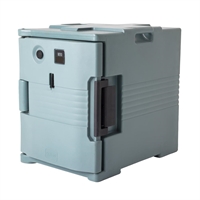
Insulated food boxes are designed for specific needs, able to house gastronorm pans, beverages and sheet pans in different configurations. While some of these food carriers are heated, other boxes can be pre-warmed or chilled to extend hot or cold holding times further.
Holding Capacity
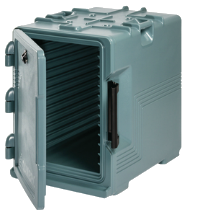
One of the most important things to consider is the size of the party you will cater for. The UPCS400 from Cambro (CG140) holds approximately 180 servings, for example. It is best to select a container size that can be filled to maximum capacity during use, as this keeps the contents warmer for longer.
Hot holding times
The time that you can keep food warm for is another critical factor when looking at the right food transport box for your needs. Cambro insulated containers are designed to maintain safe food temperatures for up to four hours, but this can be extended using accessories such as the camwarmer plates.
Electric pan carriers will allow even longer hot holding times, and provide insurance when the door is opened regularly for frequent access.
Design and transport requirements
It's vital to check dimensions of your food transport boxes, making sure they will fit securely into transport vehicles. How far will your boxes need to be carried? Dollies are a great option for wheeling the boxes up to your transport vehicle and for disembarking.
Four steps for maximum performance
- Use shallow pans and covers - Pans with a depth of 65 to 100mm will retain safer food temperatures in hot holding and serving
- Lids are essential, not only to protect from spillages but also to reduce the risk of cross contamination. This also saves on the cost of using wrap or foil, whilst ensuring secure stacking and storage to make the best use of your space
- Mimimise door openings - Help reduce frequent door opening by using labels or tags, so containers can be easily identified without the door needing to be opened
- Keep empty spaces to a minimum - Air cavities cause food temperatures to equalise. You can prevent this by keeping your carriers at maximum capacity. Thermobarriers can also be used as a divider to increase hot holding times when there are spaces inside your carrier
Care and maintenance
- Clean lids and vent caps to ensure best performance
- Clean your gaskets in hot soapy water, wipe with a soft cloth and dry thoroughly before next use
- Use a food safe sanitiser to remove scents and stains from your food carriers
Guide: For detailed information about any utensils you will need for a commercial kitchen, see our utensils guide.

Reduced Price
