
ENERGY SAVING
Whether it’s to reduce your environmental impact or just lower your running costs, there’s many great ways to optimise your kitchen to use less energy.
From the initial design & installation to long-term running costs, professional kitchens do not come cheap. As such, it's not uncommon for start-ups to save money by buying basic entry-level kitchen appliances. Of course, there’s plenty of occasions where entry-level machines are a great choice, but if your priority is to keep running costs as low as possible, it may be worthwhile looking into a wider range of options to get machines which are more efficient or have extra functionality.
Here are our top four suggestions to help you save energy and reduce your running costs.
INDUCTION
Gas has long been preferred by chefs around the globe. And why not? It has always been historically cheap, highly precise and incredibly fast. But as kitchens get smaller and gas prices start to soar, many professionals have turned to induction cooking as a fantastic energy-saving alternative.
Incredibly efficient, induction cookers use powerful magnets to channel heat directly into the cooking vessel, so there’s no energy lost to the environment. And now, the technology is being expanded further into many different appliances, so it’s not just induction hobs. From induction woks and soup kettles, to induction fryers and induction oven ranges, you can fit your kitchen with a huge variety of energy-saving induction-compatible appliances.
View Induction Cooking
There are many benefits to induction cooking:
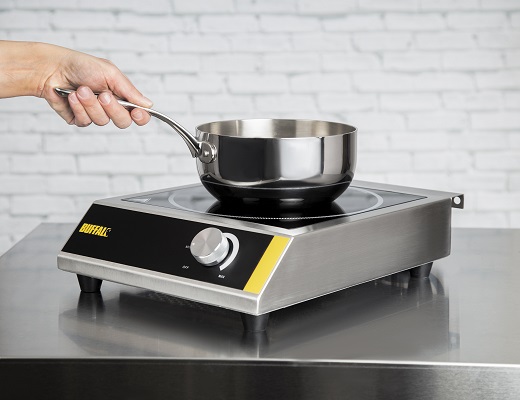
- No direct heat escape: As induction cookers use magnets rather than naked flames or elements, cooking surfaces don't get hot and no heat escapes from the cooker itself into the kitchen. That means a more comfortable working environment and less demand on your ventilation.
- Auto shut-off: Induction hobs only use energy when pans are in position, helping to significantly reduce energy wastage. In addition, if a pan boils dry the auto shut-off will help to prevent damage to pans, as well as the cooker.
- Very precise temperature control: Most induction cookers have digital controls, so it's easy to set exact temperatures and timing. Better accuracy ensures faster cooking and less waste.
- Safe: Perhaps one of the most notable features of gas cooking is the danger of exposed flames and all the safety issues this can cause. Likewise, with electric hobs, the exposed elements can easily cause burns, even several minutes after shut-down. Induction cookers have no such issues, as their cooking surfaces are cool to touch even shortly after use.
- Easy to clean: With no pan supports and smooth, tempered glass surfaces, induction hobs are much easier to clean than gas alternatives.
- Simple installation: As induction cookers are so efficient, they do not usually need specialist installation. Whilst some large, especially powerful versions exist, most induction hobs can be powered without the need for specialist hardwiring or expensive gas connections.
REFRIGERATION EFFICIENCY
Professional fridges and freezers are commonly among the most energy-intensive appliances in the commercial kitchen. After all, they are always on and are usually fighting against hot kitchen temperatures – especially during the warmer summer months. Aside from reliability and functionality, efficiency is commonly one of the most important factors when buying a piece of refrigeration.
The fastest way to judge the efficiency of a fridge, freezer or blast chiller is to check the energy rating. The higher the rating, the more efficient the refrigeration is and the difference between the ratings can be surprising. For example, a highly efficient double-door counter fridge with an A efficiency rating could cost around £280 to run over five years, whereas a similar F-rated counter fridge could cost nearly £1800 in the same amount of time (based on March 2022 prices).
View all Refrigeration
It’s not just energy efficiency to look for either. Even a highly efficient fridge could end up using much more energy if it’s unsuitable for your kitchen. Here are a few other ways to keep running costs down with refrigeration:
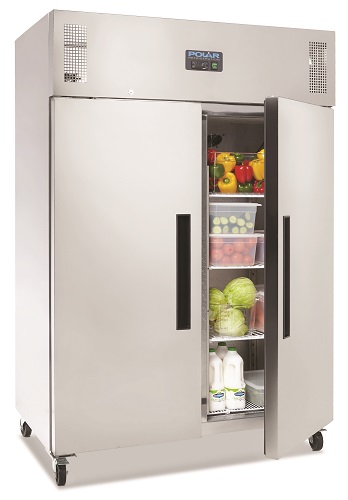
- Climate class: If you’ve got a kitchen that gets particularly hot (32°C or more), take special note of the Climate Class of any fridge or freezer that you’re considering. Only Climate Class 5 refrigeration is designed to work effectively in warmer kitchens. If a Climate Class 4 or below fridge is installed in a hot kitchen, not only will performance and lifespan be affected, the fridge will also burn much more energy trying to hold temperature. By selecting the right fridge for the job, energy can be saved right from the very start.
- Stable doors: Rather than full-length doors, some fridges and freezers are fitted with stable doors – smaller partial doors which access certain parts of the cabinet. These help the unit to hold more refrigerated air inside, rather than having to re-chill warm air introduced due to the door opening. A simple, effective, energy-saving solution.
- Defrosting and maintenance: Refrigeration which isn’t cleaned or maintained correctly can use far more energy than units that have a regular fridge maintenance routine. Whether it’s a dirty air filter or a build-up of ice, anything which makes the fridge work harder just means more energy is being used. A simple defrost and thorough clean can make all the difference. Units with automatic defrost are a great way to save time as part of this routine.
- Positioning: Every kitchen is different, but the positioning of your refrigeration can significantly affect how much energy is used. If energy efficiency is your sole priority, the coolest part of the kitchen would generally be a good option, although access during a prep or service should also be high up on the list of priorities for general kitchen efficiency.
- Consider a cold room: Having multiple identical cabinets certainly expands your capacity, but every fridge will use a considerable amount of power throughout its lifespan. If you have the space, a cold room could give you a vast amount of storage with a relatively small power requirement. Some larger outdoor cold rooms can even run on a single 13A plug, which is much more efficient (and cheaper) than multiple individual fridges.
DISHWASHING & GLASSWASHING
With hygiene being such a critical part of any kitchen, it’s no big surprise that dishwashers and glasswashers can be among the most resource-intensive appliances you’ll use. It’s not just energy – water, chemicals and dishwasher salt are all needed to have reliably consistent cleaning results.
Recent technological innovations have helped to reduce the environmental impact and running costs of professional washers significantly.
View all Dishwashers & Glasswashers
There are some other great ways to reduce how much you spend on washing:
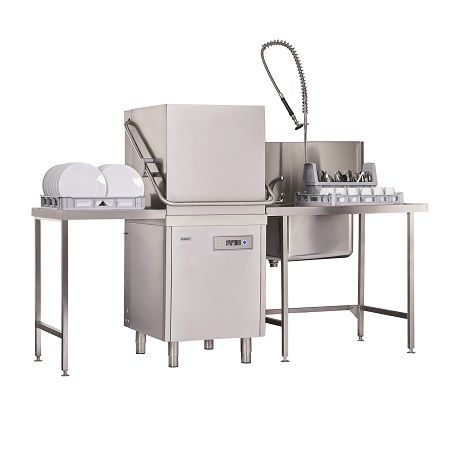
- Full loads: Where possible, try to avoid starting a cycle with partial loads. Washers will usually use similar amounts of energy whether the unit is full or empty, so you can save energy by only washing when you absolutely need to.
- Double skinning: Rather than one solid wall, washers with double skinning have another layer to provide a layer of insulation between the cavity and the exterior wall. This not only improves energy efficiency – it also reduces the overall noise of the washer during use.
- Heat recovery: Some premium washers may have a built-in heat recovery system – a small canopy that captures steam and heat, which is then used to pre-heat the cold inlet water. This also helps to reduce demand on your kitchen cooling and ventilation.
- ECO modes: Many washers have the option to run a more economical, less intensive cycle. Usually taking a little longer, it’s a good idea to run these cycles when demand is low.
- Commissioning: After installation, it might seem easier to just use the default washer settings, although it’s not usually the most effective and efficient way. Every kitchen is different and by getting the washer set up professionally (commissioning), the unit can be configured to your exact needs. Commissioning ensures the correct combination of water, chemical and temperature is configured to deliver first-time results, preventing the need to re-wash items and reducing wasted resources.
VENTILATION & HEAT
Effective ventilation can be an energy-saving game-changer, as everything (and everyone) in the kitchen can be negatively affected by rising temperatures and contaminated air. As mentioned above, the performance of refrigeration in particular can be hugely reduced in kitchens with poor airflow. And once temperatures get too high, fans, air conditioners and other cooling are all switched on – all using energy and adding to your running costs.
Typically, commercial kitchen canopies are required to be fitted above gas ovens, fryers and other large appliances which expel heat, steam and grease. However, it’s easy to think that you only really need to fit canopies where they are legally required. That isn’t always the case – in some circumstances, despite the initial cost, additional ventilation can pay for itself in terms of reduced running costs and the comfort of the kitchen staff.
With so many appliances expelling heat and steam, tackling this quickly can make your kitchen far more comfortable and efficient. Here are some often-forgotten methods to bring down kitchen temperatures:
- Use lids: It sounds simple, but using a lid on a pan or gastronorm can save a surprising amount of energy – not just in terms of the heat expelled into the kitchen. The energy wasted by cooking without a lid is estimated to be around 60% - not to mention food taking longer to cook, too. And don’t forget that using a lid when hot holding food can substantially reduce the energy taken to keep food warm.
- Microwaves: While microwaves aren’t exactly everyone’s favourite cooking method, they are among the most efficient ways to get food hot, fast. Not only can you reheat and defrost food in minutes, microwave ovens are also tremendously compact and don’t produce much heat, making them a great choice for space-limited or hot kitchens. High speed ovens such as the Lincat Cibo are a good alternative where chefs want the speed of a microwave with the browning of a conventional oven or grill.
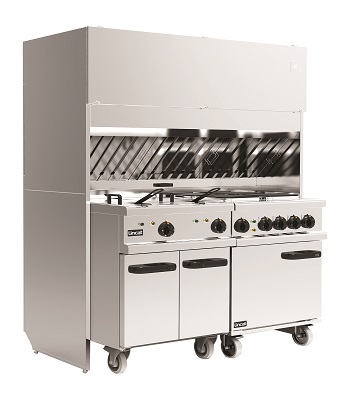
- Built-in canopies: Some larger appliances such as pizza ovens, combi ovens or freestanding fryers have the option of a built-in ventilation hood. Where space under your main canopies is limited, it may be worth considering such additions to help keep kitchen temperatures down.
ANYTHING ELSE?
Much like the beginning of any service, careful planning of your kitchen can make a huge difference in terms of profitability and staff morale. By considering all of the above, there are huge savings to be made over the course of a year, and you can be confident you are doing your bit for the environment too. But that’s not all. For those who really want to push energy-saving to the maximum, there’s some other fantastic ways to eke out even more energy efficiency:
- Switch off at the plug: Some appliances, even when not operating, use energy in stand-by mode. Whether it’s just a display or a LED light, it all takes energy and costs money. By switching appliances off at the plug, you can be sure absolutely no energy is wasted. Note that some programmable appliances may need power to retain their programming. In these cases, try to ensure any ‘sleep’ or ‘eco’ modes are used.
- Lighting: Much like appliances, when not in use, there’s not really much point in lighting a room. Likewise, swapping out old bulbs for energy-efficient LED bulbs can make a big difference over time.
- Training/Signage: An important part of energy efficiency is education. Perhaps it’s just a ‘switch off after use’ sign or instructions on how to use an appliance correctly. Either way, highly visible signage can ensure that if something has to be used, the staff using it will be able to keep waste – and costs – down.
- Combi Ovens: Sometimes, bigger really is better. Whilst combination ovens can take a huge amount of energy, water and chemicals to maintain, they can lead to big savings if used with some clever planning. Why run multiple separate steamers, ovens and hobs when you can achieve the same results with just one machine? In comparison to multiple other appliances, combi ovens take up much less space, are less demanding on your ventilation and are easy to use following training.